
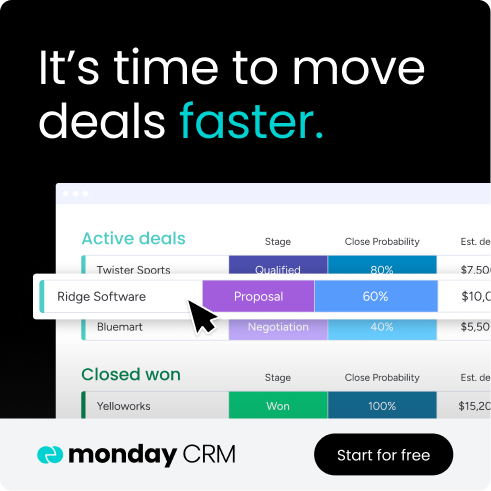
Closing a mortgage means juggling paperwork, regulations, and constant borrower communication. A mortgage CRM gives lending teams one place to track every borrower, document, and deal, and helps lenders separate high-value prospects from incoming leads while automating the follow-ups that keep loans moving.
In this article, we’ll cover what a mortgage CRM does, its benefits, the features that matter most, and the top solutions available today, including flexible options like monday CRMthat adapt to any lending workflow.
Key takeaways
- Centralized borrower data: A mortgage CRM brings borrower relationships, documents, and loan pipelines together from first contact through closing.
- Flexibility vs. specialization: General CRMs offer flexibility and speed, while mortgage-specific tools ship with lending templates and compliance messaging out of the box.
- Automation and compliance: Both matter more than ever in 2026 as loan cycles lengthen and lead costs rise.
- Adaptable platforms: Flexible tools like monday CRM can be configured for mortgage workflows without rigid, lending-only lock-in.
- Fit and pricing: Costs range from free trials and low per-seat plans to specialized tools around $96 per user per month, so the right choice depends on your team size, deal complexity, and customization needs.
What is a mortgage CRM?
A mortgage CRM is software designed to help mortgage and lending professionals manage borrower relationships from first contact through closing.
Unlike generic CRMs, mortgage CRM systems support industry-specific workflows like lead tracking, loan pipeline management, document handling, and compliance tracking, giving loan officers a single place to manage clients, communications, and deals throughout the lending lifecycle.
The role of a mortgage CRM in 2026
In 2026, a mortgage CRM is no longer just a contact database or deal tracker. Rising compliance requirements, longer loan cycles, and higher lead costs mean mortgage teams need systems that actively reduce risk and friction.
Modern mortgage CRM software combines pipeline visibility, compliance tracking, and AI-driven automation to help brokers prioritize the right borrowers, identify stalled deals earlier, and maintain accurate audit trails without manual work.
As AI adoption grows across financial services, mortgage CRMs are increasingly used as decision-support tools, helping loan officers focus on high-value opportunities while automation handles routine tasks.
How mortgage-specific CRMs differ from general CRM software
The main difference between general CRM software and mortgage-specific CRM tools is focus: general CRMs give you flexible building blocks you can shape into any process, while mortgage CRM programs ship with lending-specific artifacts already built in. General platforms rely on customization and automation to fit the loan process, whereas mortgage-native tools include preconfigured borrower data models, compliance messaging, and lender integrations from day one.
| Capability | General CRM software | Mortgage-specific CRM |
|---|---|---|
| Borrower and 1003 data | Generic contact and deal fields you configure | Native 1003 and MISMO data handling |
| LOS and POS integration | Connected through API or third-party connectors | Prebuilt connectors for systems like Encompass |
| Milestone and compliance messaging | Built with automations and templates | Preconfigured loan-milestone and compliance templates |
| Customization speed | Fast, no-code changes to any workflow | Fixed lending workflows that are slower to adapt |
Flexible general CRMs like monday CRM sit in between: teams can configure boards, pipelines, and automations to cover mortgage workflows without the rigid lock-in of a lending-only system.
Benefits of using a CRM software for mortgage brokers
If your team is still tracking clients and lending data in a spreadsheet, you’re probably missing out on a ton of valuable data. Shifting from spreadsheets to all-in-one mortgage CRM software not only helps mortgage businesses improve client relationships but also allows teams to work more efficiently by prioritizing tasks and leads.
Let’s take a look at some of the core benefits of using CRM software for mortgage professionals:
- Streamline lead management: Organize all your leads in one place so that you never miss a high-priority opportunity.
- Improve client relationships: Build better connections with your clients by gathering data to add a personal touch to customer interactions and automating follow-ups.
- Increase productivity: Automating manual data entry and repetitive work can free up more of your time for high-value activities.
- Strengthen compliance: Built-in tools like document tracking and detailed customer histories can help you stay on top of compliance requirements and industry regulations.
- Gather real-time insights: Access dashboard overviews, comprehensive reports, and data-driven deal forecasts to make informed decisions and close deals quickly.
- Remain flexible and scalable: Adapt a CRM to your business’s needs with customizations so that it can grow as your company expands.
- Visualize your pipeline: Don’t guess where leads are in your pipeline; instead, rely on your CRM to visualize progress so you can take action when deals get stuck.
Core features to look for in a mortgage broker CRM
When comparing mortgage CRMs, start with your team’s goals and then look for these core features:
- Lead management: Capture, score, and automatically route leads to the right loan officer based on priority, availability, or region.
- Mortgage pipeline management: Visualize every loan from first inquiry to closing with customizable stages and early warnings for stalled deals.
- AI and workflow automation: Automate follow-ups, reminders, and status updates while AI recommends next-best actions for your team.
- Mobile app: Update deals, upload documents, and respond to borrowers from anywhere.
- Communication and collaboration tools: Bring client communications, shared tasks, and document collaboration into one place.
- Seamless third-party integrations: Connect to loan origination systems like Encompass, credit reporting services, and e-signature tools so borrower data flows automatically.
- Compliance tracking: Look for centralized document storage, role-based access, audit logs, and TCPA and DNC support to keep every borrower interaction documented.
7 best mortgage CRM systems
Mortgage professionals need to use a CRM to manage their daily tasks like lead management, document handling, marketing campaigns, and more. However, selecting the right CRM for your business can be tricky and time-consuming.
In the table below, we’ll compare the best CRMs for mortgage brokers side by side. For a more detailed look at each CRM, keep reading.
| Platform | Use case | Free trial | Starting price |
|---|---|---|---|
| monday CRM | Customizable AI-powered CRM that scales with your business | 14 days | $12/seat/month |
| Salesforce | Comprehensive enterprise-level mortgage CRM solution | 30 days | $25/user/month |
| HubSpot Smart CRM | Mortgage CRM with integrated marketing and sales tools | Free plan | $45/user/month |
| Pipedrive | Simplified lead tracking and sales pipeline management | 14 days | $14/user/month |
| Surefire CRM | Mortgage-specific CRM with a focus on compliance and marketing | Free demo | Contact for pricing |
| Jungo | Mortgage professionals looking for a Salesforce-powered solution | Free demo | $96/user/month |
| Shape | AI-driven CRM for mortgage teams looking for a simple solution | Free demo | Contact for pricing |
1. monday CRM
Best for: Mortgage teams that want a customizable, AI-powered CRM that scales with their business.
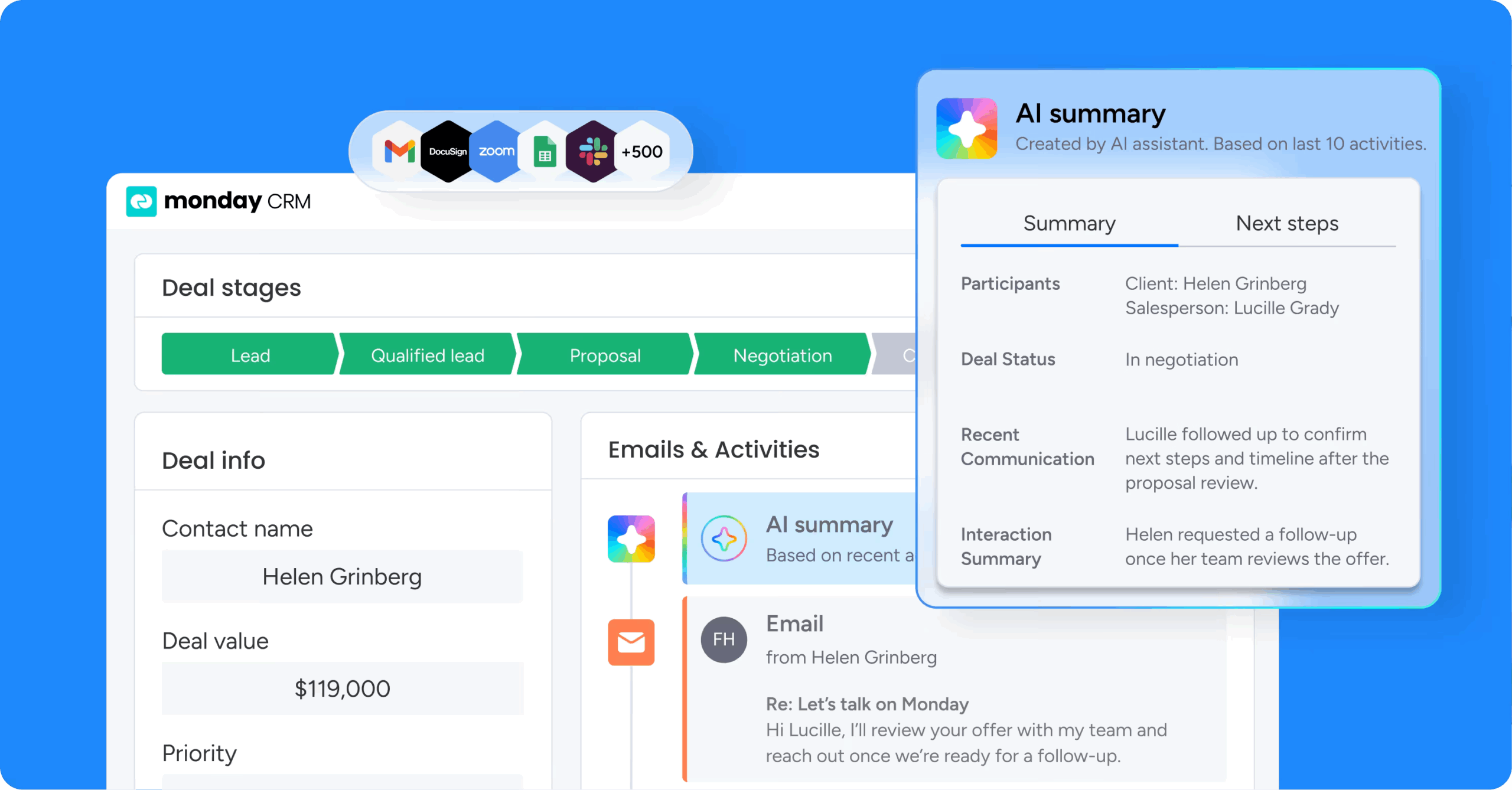
monday CRM is an all-in-one platform that helps mortgage brokers manage client relationships, automate lending workflows, and organize important documentation. Its intuitive, no-code setup makes it easy to tailor to your specific loan process, so teams can adopt it quickly without lengthy implementation.
Use case
Customizable AI-powered CRM that scales with your business, from independent brokers to larger lending teams.
Why it stands out
- Flexibility without lock-in: Build a lending pipeline that matches your exact loan process, then adjust it as regulations, products, or team structures change, with no developers or consultants required.
- AI that does the heavy lifting: Score and route leads, extract data from borrower documents, and flag stalled deals automatically, so loan officers spend less time on admin and more time closing loans.
- Fast adoption and room to grow: An intuitive, no-code setup means teams can get started quickly, and affordable per-seat pricing makes it easy to scale from an independent broker to a larger lending team.
Key features
- No-code AI automations: Build quick AI automations with AI blocks to uncover customer sentiment, initiate follow-ups, or extract important data from files.
- AI lead management: Score and prioritize new incoming leads, then route them to the right team member based on availability, department, or skill level.
- monday agents: Use Sales Agent and Lead Agent to source, qualify, and prioritize leads and book meetings directly from the CRM.
- monday sidekick: Draft emails, plan next steps, and build automations from natural-language prompts with a context-aware AI assistant.
- AI Deal Insights and PDF data extraction: Flag stalled or at-risk deals, and pull details from loan documents like pay stubs and tax returns to auto-populate your boards.
Pricing
monday CRM offers a free 14-day trial, with paid plans starting at $12/seat/month. Annual billing lowers the effective per-seat cost, so growing teams can plan spend as they scale.
2. Salesforce
Best for: Larger mortgage teams handling multiple complex operations at once.
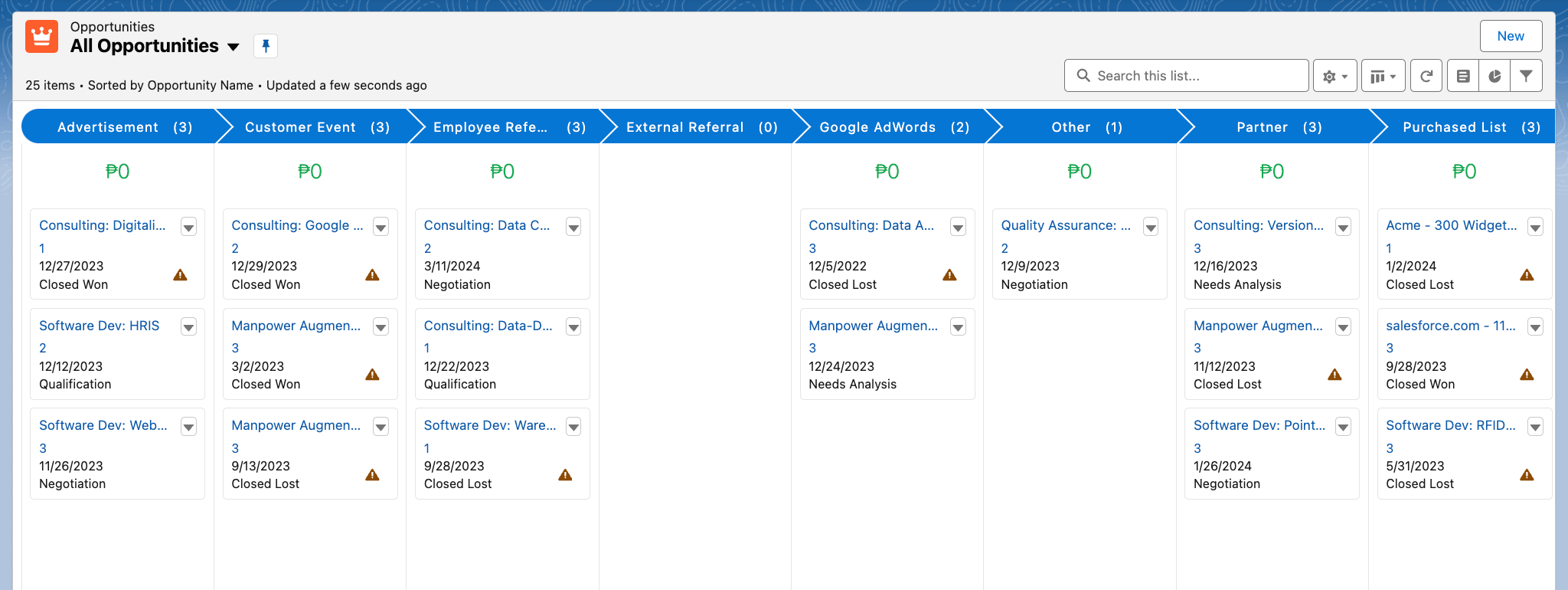 Salesforce offers a robust set of products that can be combined to create a powerful mortgage CRM, such as Sales Cloud, Financial Services Cloud, and Digital Lending. Its ability to mix and match products makes it a comprehensive, flexible solution for different types of mortgage teams.
Use case
Comprehensive enterprise-level mortgage CRM solution.
Key features
- AI lead nurturing: Salesforce’s built-in Einstein AI tool can help track and nurture leads and suggest cross-selling opportunities.
- AI agents: Use Agentforce to integrate digital AI agents that can handle initial lead contact, lead nurturing, customer follow-ups, and suggest actions on deals.
- Automation tools: Automate routine tasks like sending reminders, processing documents, or managing follow-ups.
Pricing
Salesforce offers a free 30-day trial, with paid plans starting from $25/user/month. Costs vary depending on which products and add-ons you combine.
Considerations
- Complexity and long implementation cycles typically require admins or consultants.
- Cost escalates quickly across add-on clouds and seats, which can feel heavy for small brokers.
3. HubSpot Smart CRM
Best for: Mortgage teams that want marketing, sales, and service tools in a single platform.
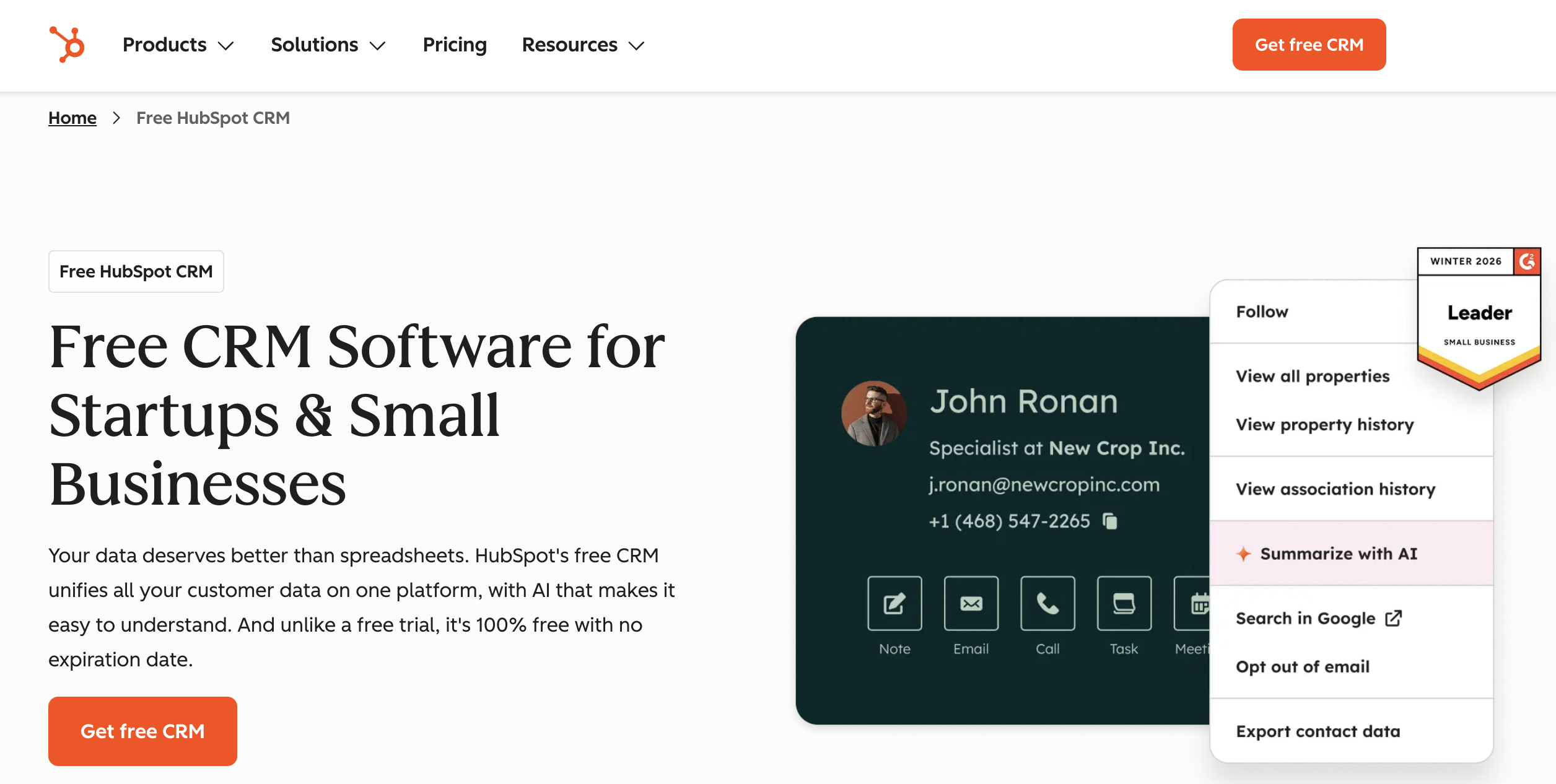
HubSpot Smart CRM provides user-friendly tools to manage client relationships while enabling smoother team collaboration. It’s well-suited for mortgage teams that want to focus on marketing campaigns, such as email or drip campaigns.
Use case
Mortgage CRM with integrated marketing and sales tools.
Key features
- AI data agent: Ask questions in natural language to get answers from customer history, email, and documents.
- Email tracking: Automatically track client interactions to streamline communication and follow-ups.
- Pipeline management: Visualize and manage your mortgage sales funnel easily and identify roadblocks in deals before they escalate.
Pricing
HubSpot offers a free plan with basic tools, so teams can get started without a trial period. Paid plans start from $45/seat/month.
Considerations
- Costs rise sharply as contacts and paid hubs or seats scale.
- No mortgage-specific features like LOS integration or compliance workflows out of the box.
4. Pipedrive
Best for: Small mortgage teams and independent agents who want a simple way to manage their sales pipeline.
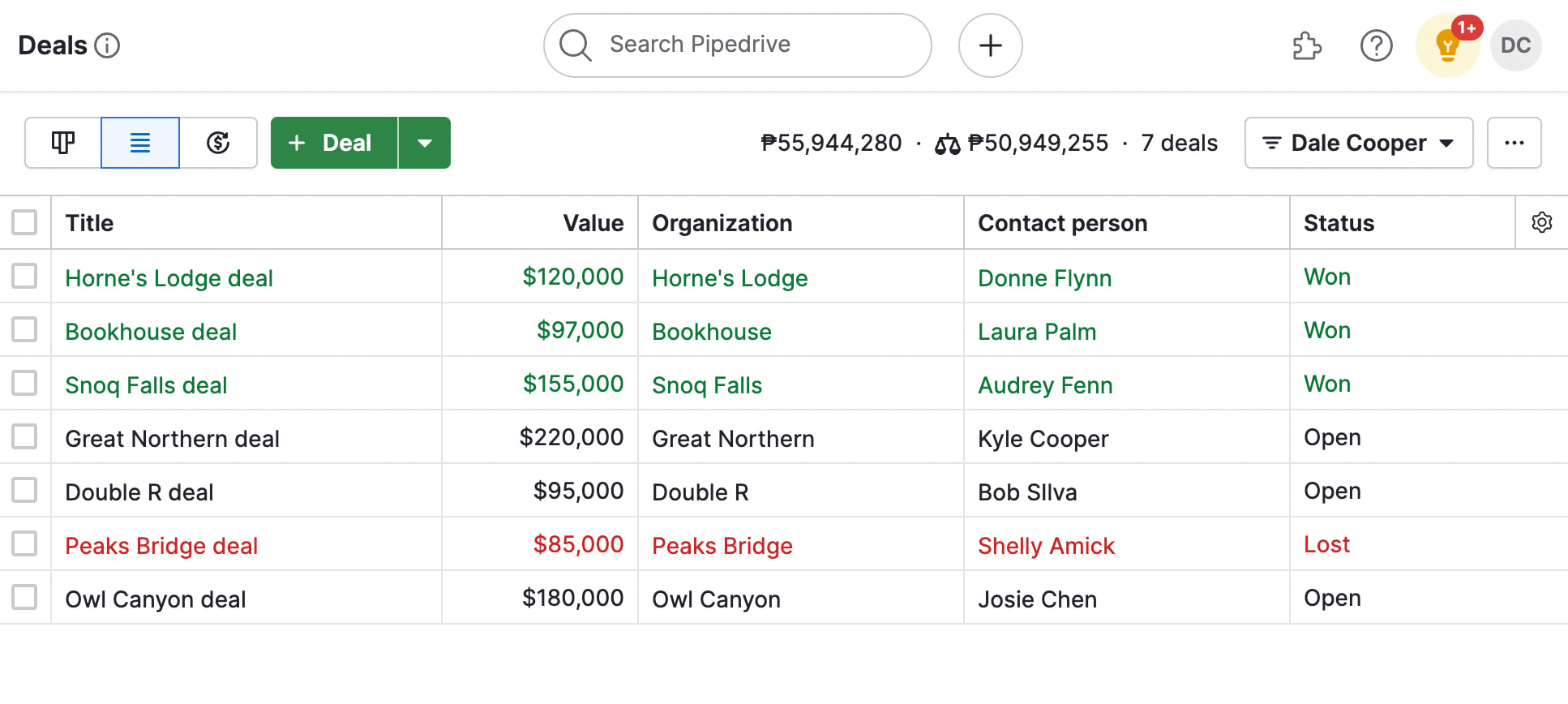 Pipedrive focuses on ease of use and simplicity, making it a great choice for small mortgage teams or independent agents looking to manage sales pipelines effectively. Its intuitive interface allows users to focus on closing deals rather than managing software.
Use case
Simplified lead tracking and sales pipeline management for small mortgage teams and independent agents.
Key features
- AI sales advisor: Nora, Pipedrive’s AI advisor, helps teams with instant answers, deal recommendations, and even demos of platform features.
- AI-powered productivity: AI capabilities are integrated throughout the platform to enhance productivity without adding complexity.
- Visual sales pipeline: Track leads at every stage on a user-friendly pipeline to see all your deals at a glance.
- Integrations: Pipedrive has over 500 available app integrations to make it easy for mortgage brokers to continue working with the tools they already use.
Pricing
Pipedrive offers a 14-day free trial, with paid plans starting from $14/seat/month. Higher-tier plans add more automation and reporting capabilities as your team grows.
Considerations
- Not mortgage-specific, so it lacks LOS and compliance features out of the box.
- Reporting and customization are lighter than enterprise CRMs.
5. Surefire CRM
Best for: Mortgage teams that want a lending-specific CRM with built-in compliance and marketing tools.
Surefire CRM(now part of ICE Mortgage Technology) is a platform designed for mortgage professionals that helps loan officers and mortgage lenders grow their businesses. Its specialized features cater specifically to the mortgage industry, ensuring compliance and efficiency.
Use case
Mortgage-specific CRM with a focus on compliance and marketing automation and outreach.
Key features
- Marketing automation: Boost outreach with automated campaigns and a library of pre-built, customizable marketing content tailored for mortgage professionals.
- Compliance tools: Ensure adherence to industry regulations with automated compliance checks.
- Loan milestone workflows: Trigger automated communications as loans move through each stage of the process.
- Sales and loans features: Focus on sales and loans with built-in alerts, reporting, outbound calling, referral partner management, and more.
Pricing
Surefire CRM offers a free demo, but pricing is not listed publicly. Plans and pricing are available on request.
Considerations
- Pricing is quote-only, with no public transparency.
- Can feel legacy for small teams that want quick customization.
6. Jungo
Best for: Mortgage professionals who want a Salesforce-powered CRM built for lending.
Jungo is a Salesforce-based CRM tailored specifically for mortgage and lending professionals. It combines the flexibility of Salesforce with industry-specific tools, making it a strong fit for teams that want mortgage-focused workflows on a familiar platform.
Use case
Mortgage professionals looking for a Salesforce-powered solution to manage leads, loan documents, and referral partner relationships.
Key features
- Lead management: Capture, track, and segment leads from sources like Zillow, LendingTree, and others.
- Task automation: Automate follow-ups, reminders, and routine loan tasks so your team spends less time on manual admin.
- Loan document management: Simplify the loan process with integrated tools for storing, managing, and collaborating on documents.
- Co-marketing: Create custom flyers, emails, and marketing assets to build profitable relationships with referral partners.
Pricing
Jungo offers a free demo, but no free trial or free plan. Paid plans start at $96/user/month.
Considerations
- The $96/user/month entry price is the highest on this list, and a Salesforce license may be additional.
- Salesforce dependency can add setup overhead and require admin support.
7. Shape
Best for: Smaller mortgage teams that want a simple, AI-driven CRM.
Shape CRM provides an AI-led solution for teams and lenders managing mortgages. The platform is simple and designed to meet the needs of smaller teams, bringing lead management, marketing, and sales automation together in one user-friendly solution.
Use case
AI-driven CRM for mortgage teams looking for a simple solution to qualify, score, and prioritize mortgage clients and leads.
Key features
- AI lead scoring: Score incoming leads in real-time using Shape’s AI so that your team can focus on the deals most likely to convert.
- AI communications: Send texts, answer inbound calls, or dial outbound to leads using AI to easily connect with potential clients at the right time.
- AI call analytics: Generate quick summaries on customer calls, notes, and next steps to understand where you stand with each lead.
Pricing
Shape offers a free demo, but pricing is not listed publicly. Plans and pricing are available on request.
Considerations
- Pricing is quote-only, with no public transparency.
- Best suited to smaller teams and may not scale to complex enterprise needs.
Residential vs commercial mortgage broker CRM differences
The type of mortgage lending you focus on, such as residential or commercial, directly impacts the CRM features and workflows your team needs to manage deals efficiently.
This table breaks down key differences in features:
| Residential mortgage broker CRM | Commercial mortgage broker CRM | |
|---|---|---|
| Client structure | Individual borrowers and households | Businesses, investors, and property ownership groups |
| Deal volume | High-volume pipelines with standardized loan applications | Lower volume, high-value deals with longer timelines |
| Workflow complexity | Predictable, repeatable stages from pre-qualification to closing | Multi-stage, highly customized deal workflows |
| Relationship management | Tracking referrals from real estate agents and partners | Mapping multiple stakeholders and decision-makers per deal |
| Marketing needs | Personalized campaigns for properties, seasonal buyers, and first-time homebuyer programs | Targeted outreach based on property type and investment strategy |
| Automation priorities | Pre-qualification workflows, rate quote delivery, and follow-ups | Task orchestration across long deal cycles and approval stages |
| Document handling | Standard borrower documents (income verification, credit, disclosures) | Complex financial documentation (rent rolls, appraisals, P&L statements) |
Although many mortgage CRM systems can support both lending models, the key is choosing a platform that allows flexible customization without adding unnecessary complexity.
How mortgage teams use a CRM from lead intake to post-closing
Here’s an example of how a mortgage team can use monday CRM to manage the loan lifecycle from lead intake through post-closing, without relying on manual follow-ups or disconnected tools:
- Lead intake and routing: Mortgage loan officers get leads from website forms, referral partners, real estate agents, and paid campaigns, and a CRM captures each one automatically. New leads are then scored and routed to the appropriate loan officer based on availability and deal type.
- Application and document processing: As borrowers upload documents like pay stubs or tax returns, key information is extracted and added to the deal record automatically, reducing manual data entry and errors.
- Active deal management: Throughout the application process, communication history and deal status are tracked in one place. Automated alerts highlight stalled deals or potential issues that require attention.
- Follow-ups and closing coordination: Workflows trigger reminders for outstanding documents, approvals, or signatures, helping teams keep deals moving toward closing without constant manual outreach.
- Pipeline visibility and post-closing follow-up: Loan officers and managers monitor deal progress in a visual pipeline, while automated post-closing workflows support ongoing client communication and relationship management.
Affordable mortgage CRM options for small businesses and independent brokers
Small mortgage businesses and independent brokers need a CRM that fits a small budget, scales with a growing team, and is quick to implement. That’s why small teams should consider flexible options like monday CRM or Pipedrive. Lending-specific platforms like Jungo or Surefire CRM, similar to the tools in our guide to the best real estate CRM software, may seem like the obvious choice, but they can feel rigid for teams that need to move fast and customize their setup.
monday CRM is far more customizable and comes with a lower cost per seat, so independent brokers and small mortgage teams get the software they need without blowing their budget. As your team grows, it’s easy and affordable to scale monday CRM alongside it.
Why monday CRM works for mortgage teams
Mortgage teams lose time to fragmented tools, manual data entry, and rigid systems that slow the loan process. monday CRM brings leads, borrowers, and lending pipelines into one flexible platform that loan officers can shape around how they actually work.
Because it’s no-code and AI-native, monday CRM supports both independent brokers and larger lending teams without forcing a fixed, mortgage-only process. Teams can start quickly, adapt as regulations and loan volumes change, and keep every deal moving toward closing.
AI document extraction
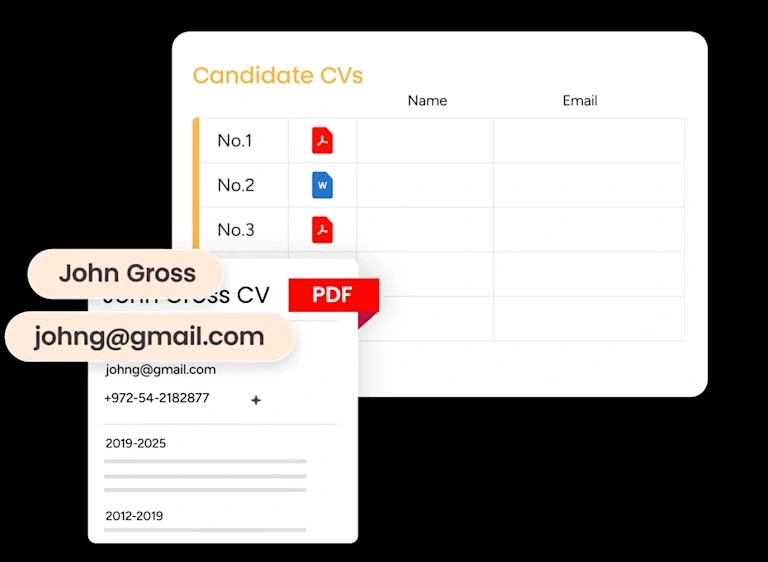
Mortgage files are packed with pay stubs, tax returns, and bank statements. AI automations extract key details from these PDFs and auto-populate them on your deal boards, which cuts manual data entry and reduces errors during application processing.
monday agents for lead qualification
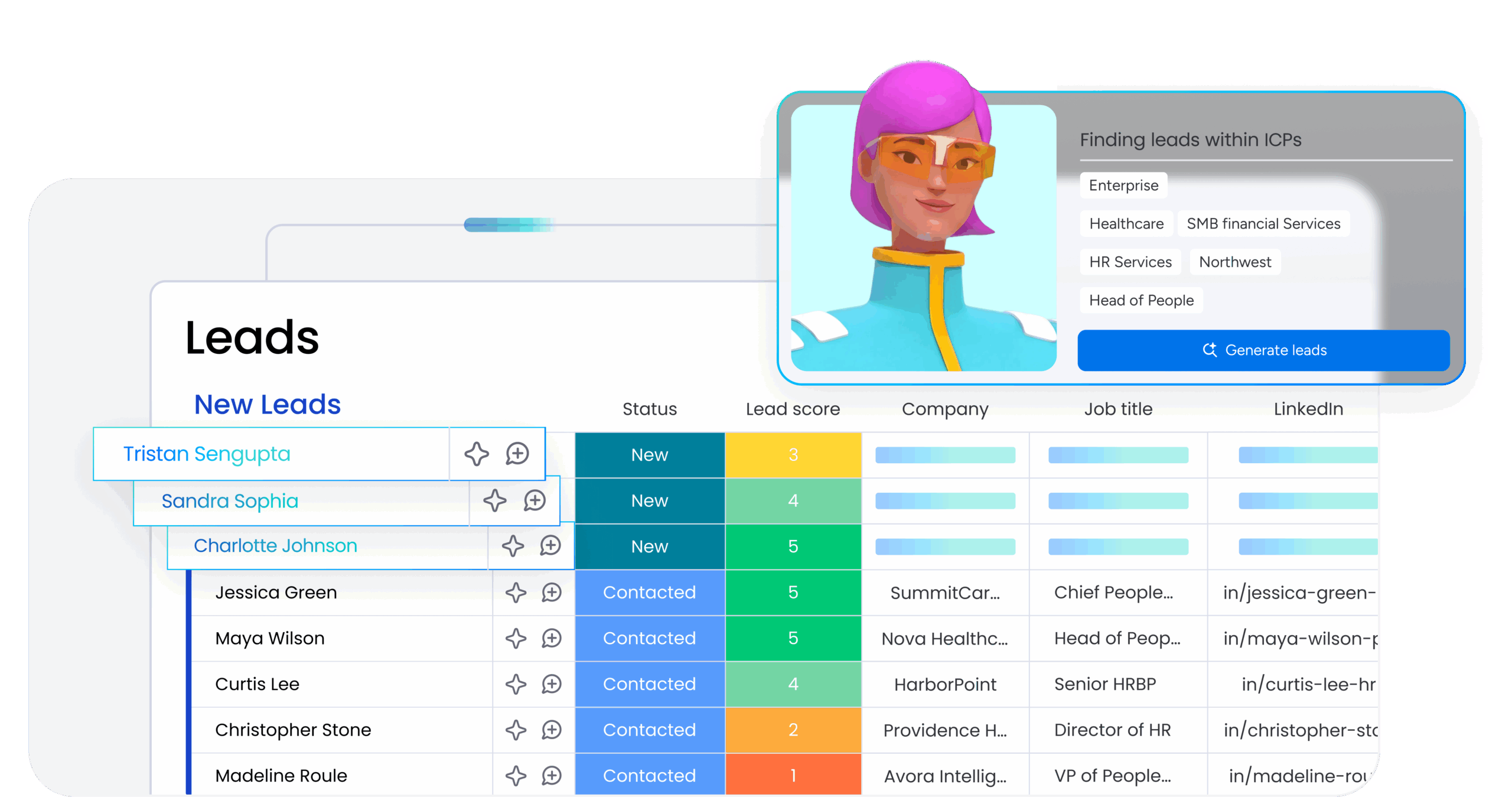
Lead costs keep rising, so every borrower inquiry counts. monday agents, including Sales Agent and Lead Agent, source, qualify, and prioritize leads directly inside the CRM, helping loan officers spend their time on the borrowers most likely to close.
AI Deal Insights for stalled loans
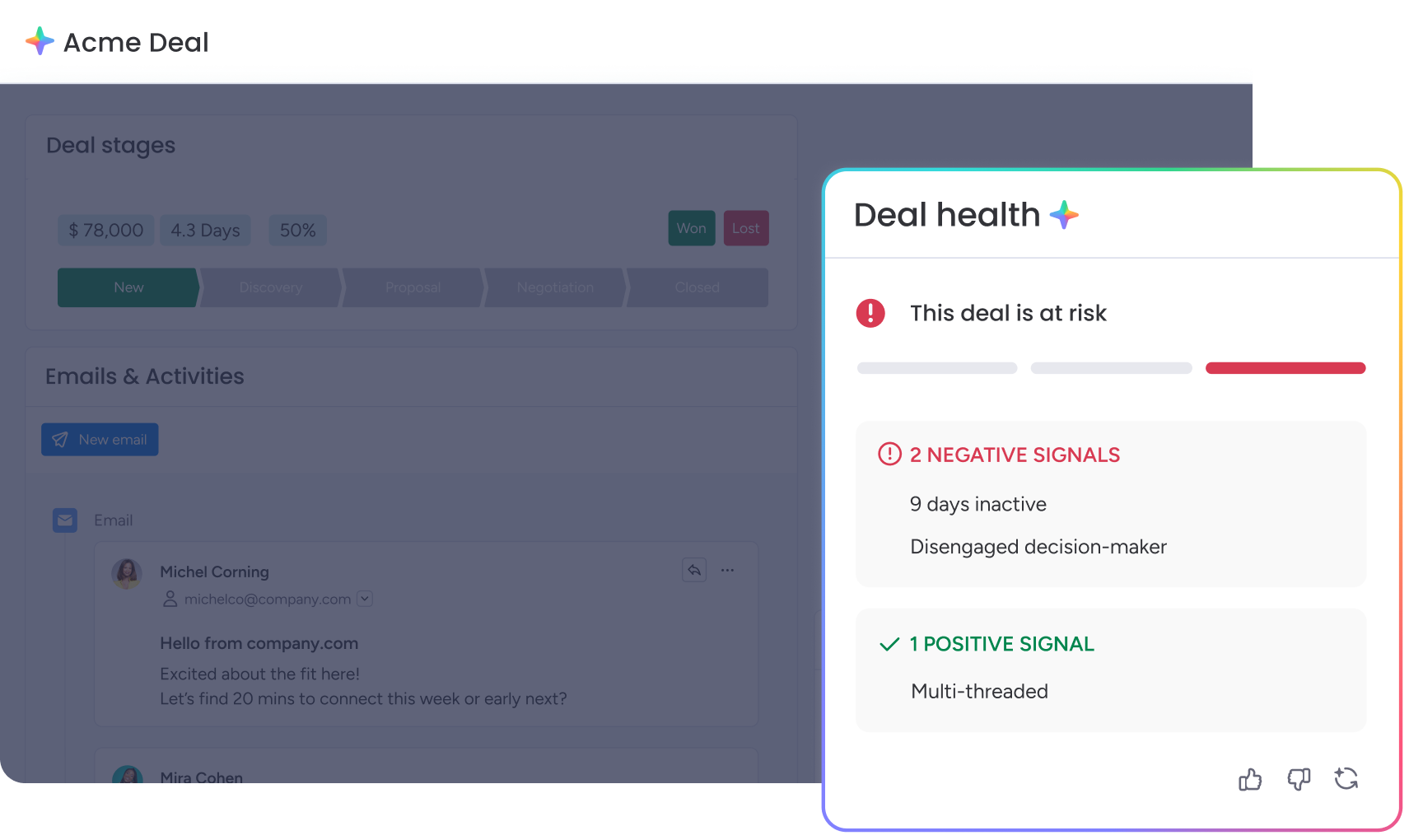
Longer loan cycles make it easy for a deal to quietly go cold. The AI Deal Insights widget flags stalled or at-risk loans early, so loan officers can follow up on missing documents or approvals before opportunities slip away.
monday sidekick for next steps
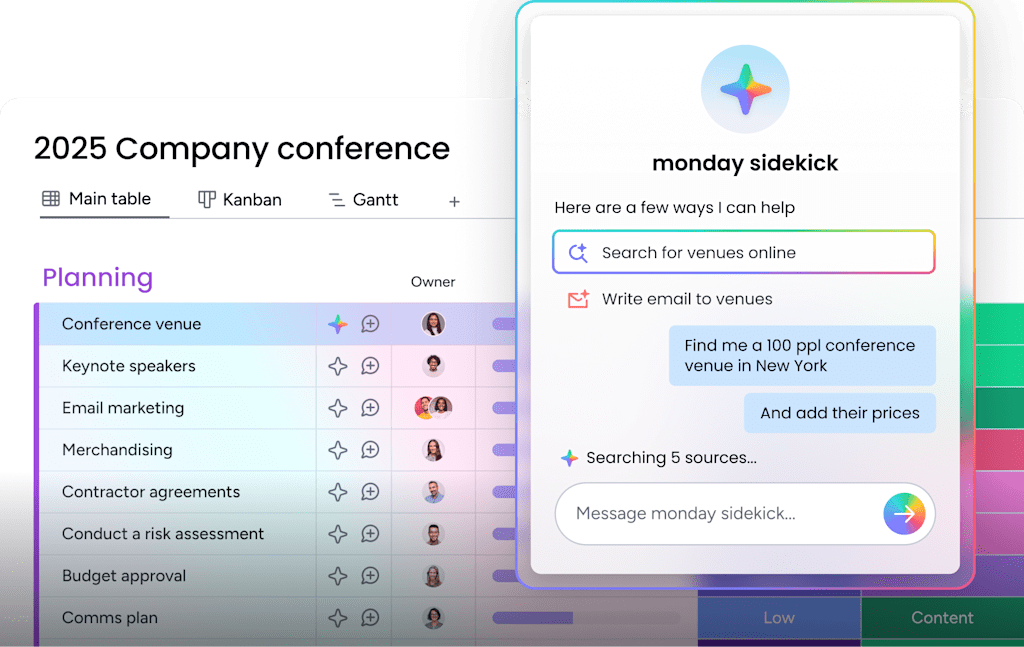
monday sidekick is a built-in AI assistant that helps loan officers plan next steps on complex deals, pull up borrower history just by asking, and build automations from natural language prompts. It keeps routine admin off your plate so you can focus on borrower conversations.
Move mortgage deals forward faster with monday CRM
Not every CRM will be right for every mortgage team. Moving from manual, fragmented tools to an automated, unified system helps teams work more productively, reduce errors, and keep every loan moving toward closing. The right platform should support your workflows today and scale easily as you grow.
monday CRM brings that together with AI automations that handle routine admin, real-time pipeline visibility for accurate forecasting, and 200+ integrations that connect the tools your team already uses. Because it’s no-code and fully customizable, mortgage teams can adapt it to any lending workflow without technical overhead, then extend it as new AI capabilities emerge.
FAQs
What makes a CRM "mortgage-specific" compared to general sales software?
Mortgage-specific CRMs are built with features tailored to the lending industry, including loan pipeline visualization, compliance tracking for regulations, integrations with loan origination systems, and automated workflows for tasks like rate quotes, pre-approvals, and document collection. That said, many general CRMs can help brokers accomplish the same thing with the added flexibility of customizable workflows that can fit a range of needs and scale as teams grow.
How does mortgage CRM automation help in reducing the loan closing cycle?
Mortgage CRM automation speeds up the loan process by eliminating manual tasks like follow-up emails, status updates, and document requests. It triggers timely reminders for missing paperwork, automatically routes applications to the right team members, and keeps all stakeholders informed. With CRM automations, mortgage brokers can prevent delays so that loans move smoothly from application to closing.
Can a mortgage CRM assist with regulatory compliance and audit trails?
Yes, mortgage CRMs help maintain compliance by centralizing document storage, tracking all client interactions, and creating detailed audit trails with timestamps and version histories. They can automate compliance checks, ensure proper disclosure delivery timing, flag potential regulatory issues, and provide documentation needed for audits or regulatory reviews.
How do AI features like predictive lead scoring improve mortgage sales?
AI-powered features like lead scoring can analyze behavior, engagement patterns, and historical data to identify which leads are most likely to convert. This helps loan officers prioritize outreach, focus on high-value opportunities, and personalize approaches and marketing campaigns based on forecasted needs, ultimately increasing conversion rates and revenue.
How secure is client financial data within a cloud-based mortgage CRM?
Cloud-based mortgage CRMs typically employ bank-level security measures, including data encryption both in transit and at rest, multi-factor authentication, role-based access controls, and regular security audits. Reputable providers comply with industry standards like SOC 2 and maintain certifications to protect sensitive financial information from unauthorized access or breaches.
How does monday CRM handle mortgage workflows?
monday CRM handles mortgage workflows by letting teams build a customizable lending pipeline that runs from lead intake to post-closing. No-code automations route leads, extract data from loan documents, and trigger follow-ups, while real-time dashboards give loan officers and managers full pipeline visibility.
Is monday CRM a good mortgage CRM for small brokers?
monday CRM is a good mortgage CRM for small brokers because its per-seat pricing and no-code setup let independent teams start quickly and scale as they grow. It adapts to lending workflows without the cost or complexity of enterprise platforms.