Most sales teams don’t have a lead problem. They have a lead management problem. Contacts pile up across forms and spreadsheets, follow-up happens whenever someone remembers, and by the time a rep reaches out, the buyer has moved on. Harvard Business Review found that responding within an hour makes you 7 times more likely to qualify a lead, and a lead generation sales funnel gives that process the structure it needs by defining who enters, who owns each step, and what counts as qualified.
Here’s how to build and optimize one in 5 steps: define your ICP, map the journey, create stage-matched content, automate routing, and track what converts. With monday CRM, capture, qualification, and reporting live on the same record, so marketing and sales work from the same rules and leads keep moving.
Key takeaways
- Stage rules beat volume: A funnel that moves 100 qualified leads into pipeline drives more revenue than one collecting 1,000 names with weak follow-up.
- Handoffs decide conversion: Most funnels lose momentum right at the handoff from marketing to sales. When sales gets the full lead story, including source, activity history, and qualification notes, deals move forward instead of stalling.
- Automation handles repetition: Automate routing, reminders, and stage updates so your team focuses on qualification calls and relationship work, the parts that still need people.
- Touchpoint mapping shows where leads stall: If you can’t track stage movement by source, owner, and conversion rate, you can’t fix the leaks.
- Shared visibility on monday CRM changes behavior: When marketing sees what becomes pipeline and sales sees the full lead story, both teams make smarter calls.
What is a lead generation sales funnel?
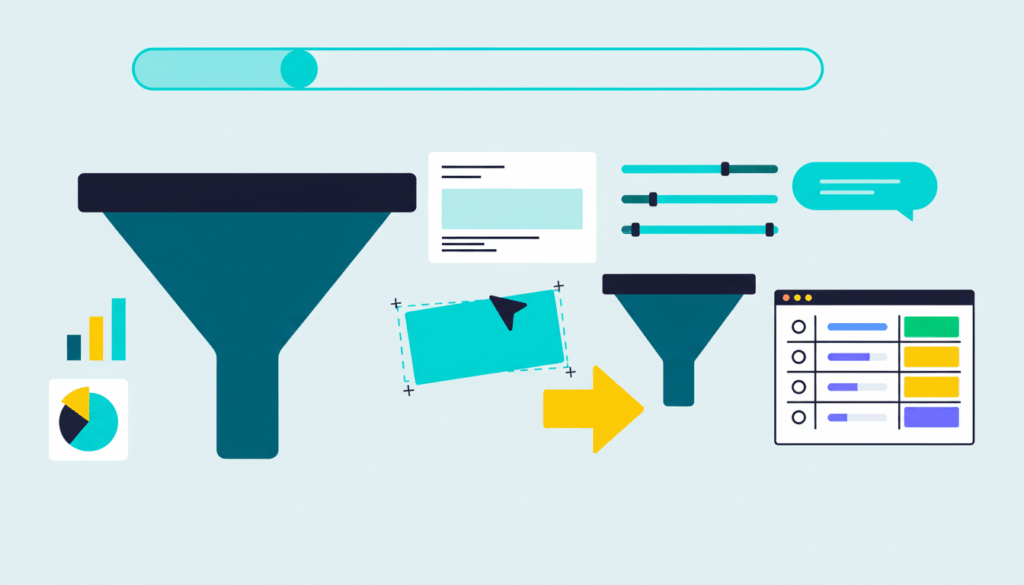
A lead generation sales funnel attracts prospects, captures their details, nurtures interest, qualifies fit, and moves the right ones toward a sales conversation. It’s a connected process, not a collection of random tactics.
A lead generation sales funnel turns anonymous interest into qualified pipeline through stage rules, follow-up logic, ownership, and reporting.
Three terms get used interchangeably, but they mean different things. Get this right or the rest won’t work.
| Term | Definition |
|---|---|
| Prospect | Someone who may fit your target audience, but hasn't shared contact details or intent |
| Lead | Someone who shared contact information or took a trackable action |
| Qualified lead | A lead that matches your fit and intent criteria for sales follow-up |
Buyers don’t move in a perfect line. But you still need stage rules for consistent follow-up and clean reporting. The funnel works best when each step is part of a clear lead management process. If one step is vague, the whole thing slows down.
Here’s how it moves from first touch to active pipeline:
- Attract attention: Bring the right audience in through content, ads, referrals, or outbound.
- Capture information: Collect details through a form, chat, or sign-up.
- Nurture interest: Stay relevant with emails, education, and follow-up.
- Qualify the lead: Confirm fit, interest, and buying potential.
- Hand off to sales: Assign ownership with full context attached.
- Create pipeline: Turn the lead into an active opportunity.
A funnel on a whiteboard looks tidy. Making it work across forms, inboxes, and spreadsheets takes more than a diagram. That’s why revenue teams run this on monday CRM: stages, automations, emails, and dashboards all in one place instead of six.
How is a lead generation funnel different from a sales funnel?
These terms overlap, but they do different jobs. Report on them like they’re the same thing and your data gets messy fast.
Here’s a quick reference before we dig into handoffs and ownership.
| Concept | Primary goal | Starts | Ends | Typical owner |
|---|---|---|---|---|
| Lead generation funnel | Capture and qualify interest | First touch | Sales-accepted lead | Marketing, SDRs, RevOps |
| Sales funnel | Move qualified buyers toward a deal | Sales acceptance | Closed won or lost | AEs, sales managers |
| Sales pipeline | Manage active deals | Opportunity created | Deal closed | Sales team |
Where most funnels actually break down
Most funnels lose momentum at the handoff. A good handoff includes more than a name and email. It should carry:
- Source: Campaign, referral, event, or channel.
- Company and role: Who they are and where they work.
- Activity history: What they viewed, downloaded, clicked, or replied to.
- Qualification notes: Why they match your criteria.
- Recommended next step: What the rep should do first.
If marketing and sales define “qualified” differently, leads bounce between teams instead of moving forward. Make ownership explicit so follow-up stays fast and leads don’t turn into a blame game.
What are the stages of a lead gen funnel?
Most teams can name their stages. Fewer can explain what moves a lead from one to the next. That second part is what counts. A simple 3-stage model helps teams plan content, handoffs, and reporting without overbuilding the process.
Top of funnel: Attract and capture
Buyers first notice you here and decide whether to engage. Attract the right people and collect just enough information to continue the conversation.
Common entry points include:
- Newsletter sign-ups
- Content downloads
- Webinar registrations
- Contact forms
Middle of funnel: Nurture and qualify
This is where you separate curiosity from buying intent. Educate, segment, and decide who deserves immediate follow-up. Use email sequences, case studies, and scoring based on fit and engagement.
Bottom of funnel: Convert to a sales-ready opportunity
This is where leads take an action that kicks off a direct sales conversation. Common conversion triggers include:
- Demo requests
- Consultation bookings
- Quote requests
- Trial starts
Revenue teams centralize this with forms, meeting booking, and connected records so the next owner gets the full story before the first conversation. The next owner gets the full story before the first conversation.
How to build and optimize a lead generation sales funnel in 5 steps
Let’s move from theory to build plan. By the end, you’ll have stage definitions, content, routing rules, and reporting your team can actually run.
Step 1: Define your ICP and lead qualification criteria
Your ICP (ideal customer profile) defines who you want. Qualification defines who deserves sales time right now. Skip either one and your funnel fills with the wrong people.
Get specific across three buckets:
- Fit: Industry, company size, geography, role, budget.
- Intent: Demo request, pricing page visit, repeat high-intent engagement.
- Disqualifiers: Wrong market, student email, no buying authority.
Step 2: Map the lead journey across every touchpoint
Every click, form, email, and call is a touchpoint. If you can’t map the journey, you can’t see where leads stall or why they stop moving.
| Touchpoint | Stage | Owner | Data captured | Next action |
|---|---|---|---|---|
| Ad or referral | Awareness | Marketing | Source | Landing page visit |
| Form submission | Capture | Marketing | Contact details, role | Nurture |
| Email reply | Nurture | Marketing or SDR | Engagement | Score update |
| Demo request | Conversion | SDR | Use case, company size | Route to rep |
| Meeting booked | Handoff | SDR or AE | Date, attendees | Discovery prep |
Step 3: Create stage-matched offers and content
Content should match buyer intent. Otherwise, your funnel feels busy but not useful. Match your assets to the buyer’s stage:
- Top of funnel: Guides, templates, checklists, webinars.
- Middle of funnel: Case studies, comparison pages, nurture emails.
- Bottom of funnel: Demos, pricing explainers, consultations.
Step 4: Build capture, nurture, and routing workflows
This is where the funnel becomes operational. What happens right after a form fill? That answer should live in your system, not someone’s memory.
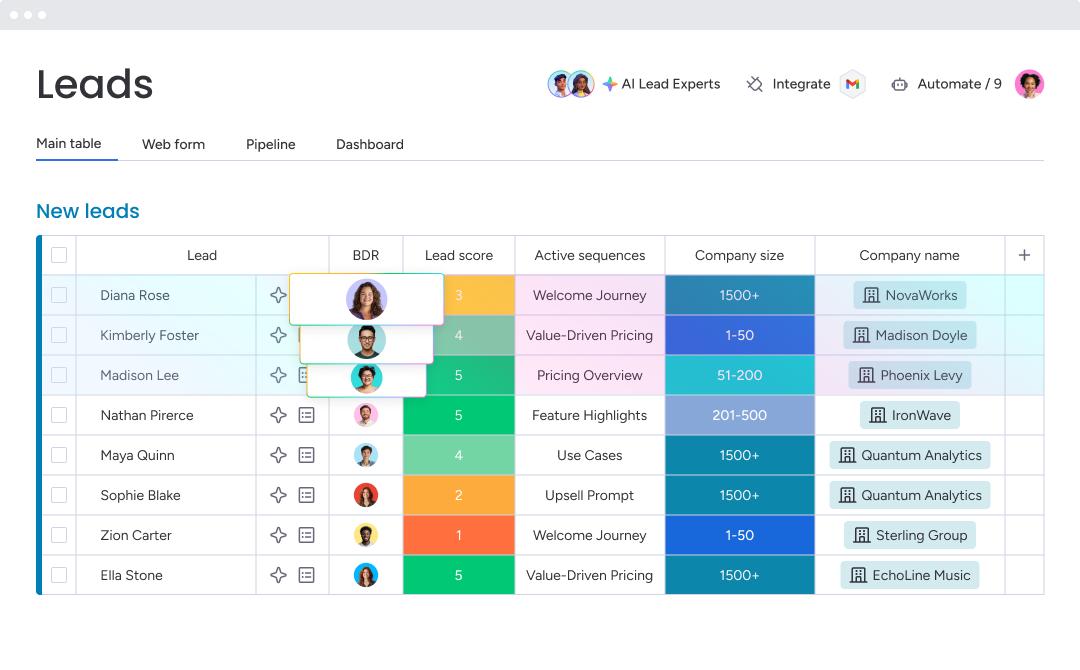
Revenue teams set this up with forms, automations, and assignment logic that route leads based on fit and territory. AI Autofill actions like “Assign label,” “Assign person,” and “Extract information” help categorize and route leads faster, without adding manual steps to the process.
Step 5: Track funnel metrics and fix the leaks
Seeing stage movement is what lets you fix the leaks. Reporting should show what enters the funnel, what progresses, and what becomes pipeline.
Focus on these four metrics:
- Source performance: Which channels bring in the highest-quality leads.
- Stage conversion: Where leads drop off between stages.
- Lead response speed: How fast reps follow up after a lead qualifies.
- Pipeline created: How much revenue-ready opportunity the funnel generates.
What is the best way to improve top of funnel conversion?
Want to improve top of funnel conversion? Prioritize lead quality over raw volume. More names don’t help when the wrong people fill your forms.
Tighten your ICP targeting and strengthen your message-to-offer match. Keep low-intent lead generation forms short, then ask more only when intent is high. Interactive content like calculators, assessments, and quizzes can help buyers self-qualify. But only when it adds real signal, not just engagement for its own sake.
How long should an automated nurturing email sequence be?
Start with 3 to 5 emails, then branch based on behavior. The right length depends on your sales cycle, offer type, and buying intent.
Skip the rigid one-size-fits-all sequence. Use exit signals to move people forward the moment they’re ready:
- Booked meeting: Stop nurturing, start selling.
- Pricing request: Route to a rep fast.
- Repeated high-intent engagement: Bump them up the priority list.
- Disqualification: Remove them so reps stay focused.
How to build a B2B lead generation funnel
A B2B sales funnel usually involves more people, more review, and more time. Lead quality depends on both the individual and the account they belong to. You need stakeholder-specific content and firm handoff rules.
Here’s how to map content to each buying committee role:
| Committee role | What they care about | Best content or action |
|---|---|---|
| Champion | Solving the problem | Proof points and examples |
| Evaluator | Technical fit | Product walkthroughs |
| Approver | Business case | ROI summaries |
| Budget owner | Cost and terms | Pricing details |
| End user | Daily workflow impact | Experience-focused demos |
How AI supports a lead generation sales funnel
AI helps teams move faster, but it shouldn’t make important judgment calls alone. The sweet spot for lead generation automation is repeated work, fast summaries, and signal detection. On monday CRM, AI handles that through actions tied to the work itself:
Add 1-2 more framing sentences before the bullet list explaining what these AI capabilities help teams accomplish and why they matter for lead management.
- AI outreach drafting: The writing assistant helps reps draft relevant follow-up.
- AI summaries: AI timeline summary condenses calls, emails, and notes into a scannable recap.
- Human review: Teams approve sensitive messages, major stage changes, and customer-facing decisions.
Automation handles repetition. People handle decisions.
Run your lead generation sales funnel on monday CRM
A funnel only works when your team can run it every day. monday CRM gives marketing, SDRs, and AEs one place to capture leads, track stage movement, and manage follow-up. Everyone works from the same record, so no lead gets lost between tools.
That shared setup helps teams move from scattered activity to a repeatable process across marketing, sales, RevOps, and post-sale teams on the monday.com Work OS.
| Funnel need | How monday CRM supports it |
|---|---|
| Lead capture | Forms, integrations, lead collection from multiple sources |
| Qualification | Shared fields, scoring workflows, AI Autofill actions |
| Follow-up | Individual and mass emails, dynamic fields, templates, tracking |
| Ownership | Automated routing, reminders, assignee rules |
| Context | Emails & Activities, notes, meetings, connected records |
| Reporting | Dashboards, Sales funnel widget, Sales pipeline widget |
That shared view matters most at the handoff. When a lead moves from marketing to sales, the next owner sees the source, activity history, and qualification notes right away. Reps spend their time on conversations instead of hunting for context. Here are a few key monday CRM features that help with building and managing a strong lead generation sales funnel.
AI autofill for faster qualification and routing
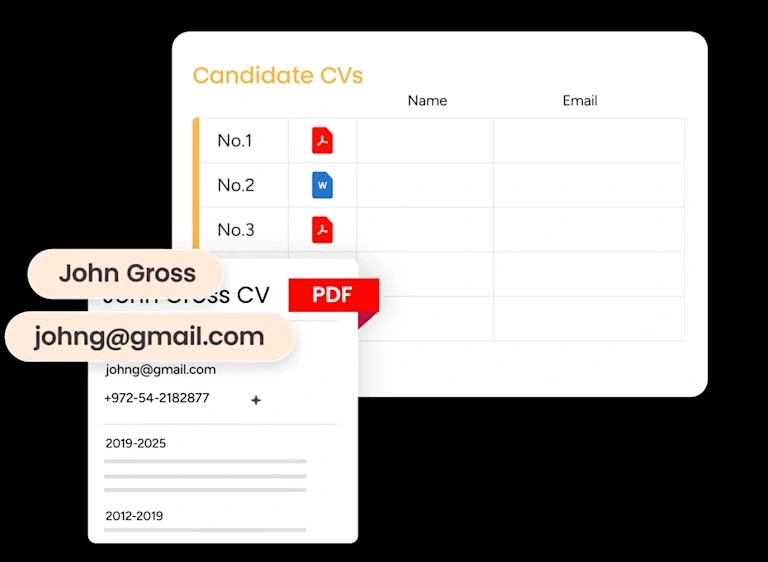
AI Autofill actions like “Assign label,” “Assign person,” and “Extract information” categorize new leads as they come in. Your team can tag leads by fit, route them to the right owner, and pull key details from messy form responses without manual data entry. That keeps new leads moving the moment they arrive.
AI timeline summary for instant lead context
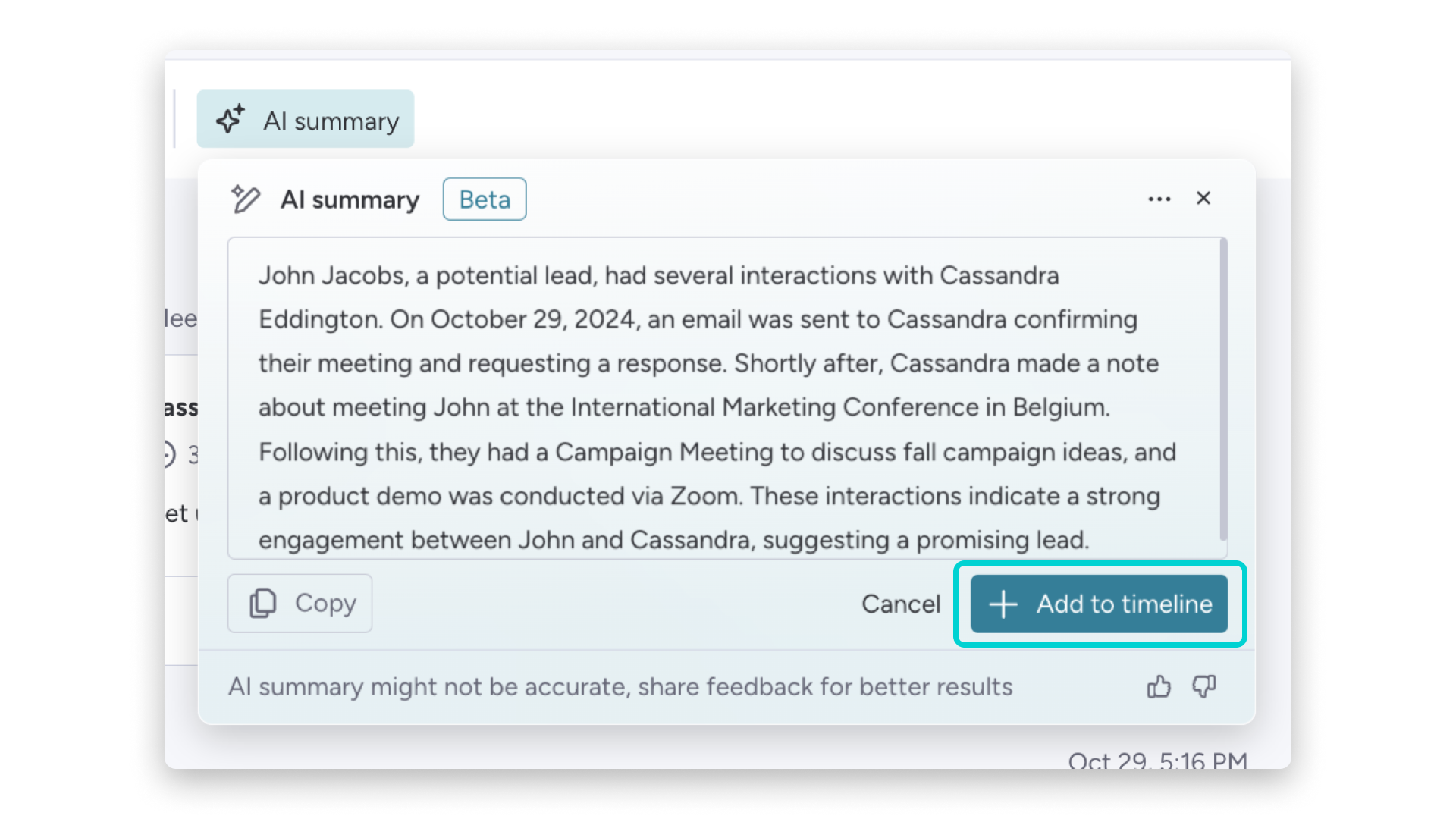
AI timeline summary condenses emails, calls, and notes into a quick recap on each lead record. Reps can scan the full story in seconds before their first outreach or discovery call. That cuts the time spent digging through activity history and helps every handoff start with context.
Writing assistant for faster, more relevant follow-up
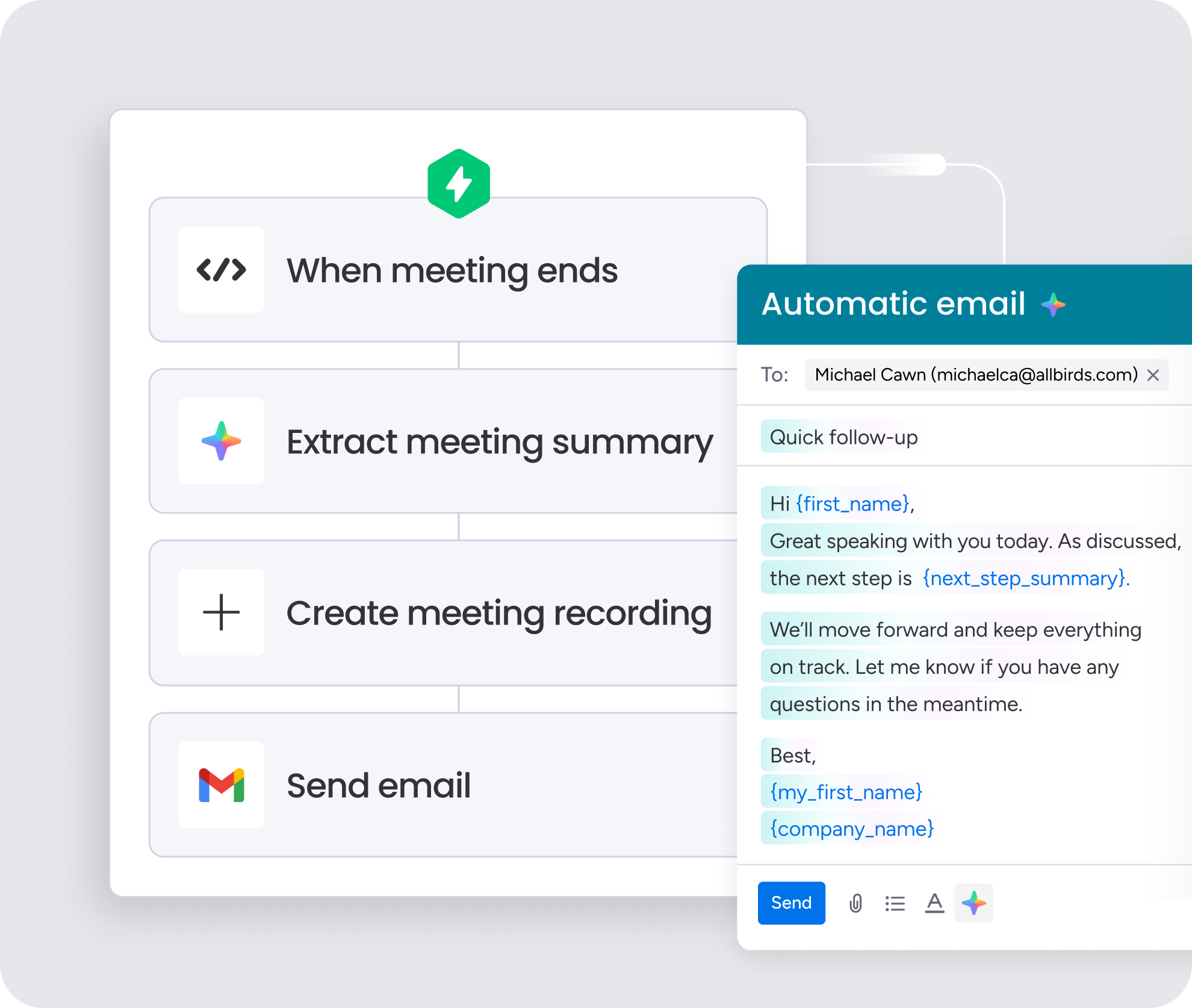
The writing assistant helps reps draft outreach and follow-up emails that match where each lead sits in the funnel. Reps start from a solid draft instead of a blank page, then tailor it before sending. Faster follow-up means fewer leads go cold while they wait for a reply.
Sales funnel widget for visibility into stage conversion
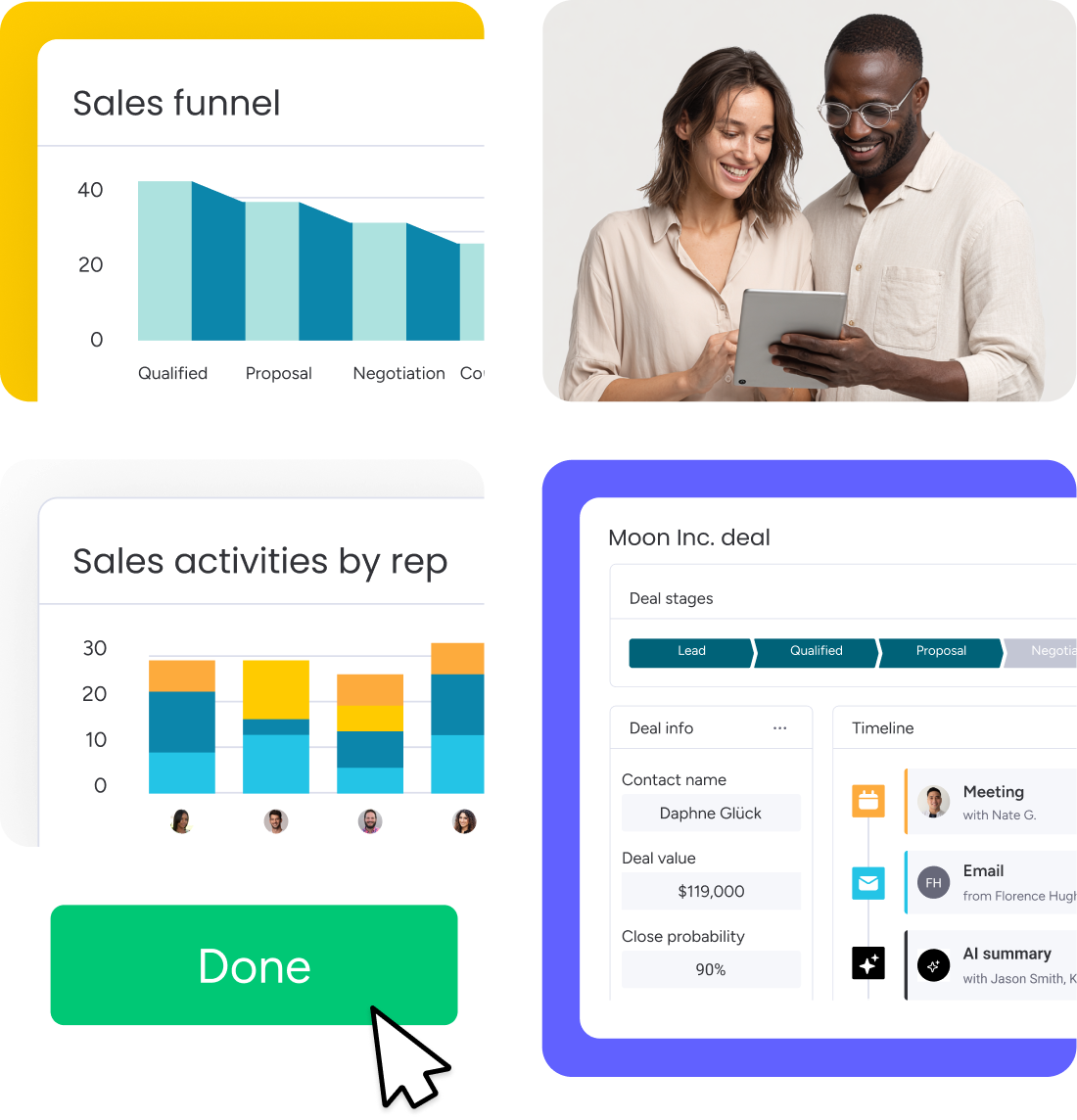
The sales funnel widget shows how leads move through each stage, so you can spot where they stall. Pair it with source and owner data to see which channels and reps drive the most pipeline. Marketing and sales review the same numbers and fix leaks together.
Make lead generation easier to run and measure
A strong lead generation sales funnel does one job well: turns interest into qualified pipeline through defined stages, visible ownership, and measured follow-up. A well-built process wins over a polished funnel graphic every time. But a well-built one your team actually runs will.
The best funnel isn’t the one with the most stages or the most sophisticated scoring model. It’s the one your team can run, measure, and improve week after week. That’s where monday CRM fits in, not as another system to manage, but as the place where the whole process connects.
Try monday CRMFAQs
What is the difference between a lead generation funnel and a sales funnel?
The difference between a lead generation funnel and a sales funnel is scope. A lead generation funnel gets people to qualified lead status. A sales funnel takes qualified leads through discovery, evaluation, and close. A lead funnel in sales moves prospects from first interest to qualified lead status through capture, nurture, qualification, and handoff.
What are the 5 stages of a sales funnel?
The 5 stages of a sales funnel are awareness, interest, consideration, intent, and purchase. Each stage needs defined entry and exit rules.
How do you do lead generation in sales?
To do lead generation in sales, you attract the right buyers, collect their information, qualify fit and intent, and move them into follow-up. It works best as a repeatable system. It works best as a repeatable system.
What is the difference between a lead generation funnel and a sales funnel?
The difference is scope. A lead generation funnel gets people to qualified lead status. A sales funnel takes qualified leads through discovery, evaluation, and close.
What platforms are best for creating a lead generation funnel?
The best platforms centralize forms, records, ownership, communication, automations, and reporting in one place. That's exactly how monday CRM works: lead history, routing, and dashboards all connected.
Can AI help with lead generation?
Yes, AI can help with lead generation by scoring leads, drafting outreach, summarizing conversations, and supporting routing. It works best when people still review sensitive actions and qualification decisions. It works best when people still review sensitive actions and qualification decisions.