Plenty of reps close their laptops with a packed activity log but almost nothing in the pipeline. They spend hours researching contacts, updating records, and rewriting follow-ups that keep sales moving without creating much forward motion. That’s why AI platforms for business development are getting real attention. The useful ones help teams find qualified prospects, write outreach, capture deal context, and spot pipeline slowdowns while there is still time to respond.
We’ll walk through 9 platforms that actually support pipeline growth, plus the capabilities worth paying for and the trade-offs to watch. We’ll also show how to choose the right fit for sourcing, forecasting, or keeping sales and post-sale work connected, starting with monday CRM.
Key takeaways
- AI acts, not just records: The best business development platforms score leads, draft outreach, and flag stalled deals without waiting for a rep to ask.
- Match the tool to the bottleneck: Pinpoint where momentum breaks down, whether in sourcing, conversion, or forecasting, then choose the platform that fills that gap.
- Embedded AI wins adoption: Reps use AI that lives inside their daily workflow, so look for platforms that avoid tab-switching and manual copy-paste.
- Specialized tools need a CRM partner: Platforms like Clay, Apollo.io, and Gong excel at one stage but do not manage the full pipeline on their own.
- Unified platforms reduce risk: Keeping lead data, deal activity, and post-sale work in one system means fewer handoff failures and a more accurate forecast.
What are AI tools for business development?
Most sales platforms just keep records. AI for business development? It takes action. If your team’s stuck logging notes or chasing cold leads for hours, that difference decides whether they hit quota or burn out.
The value shows up in the repetitive work that quietly drains productivity. These tools can score leads on the spot, draft outreach, and warn you when a deal is losing steam.
- Instant lead scoring: Identify who is actually ready to buy using real data.
- Automated email drafting: Create personalized follow-ups in seconds without leaving your workspace.
- Proactive deal flagging: Spot stalled opportunities before they disappear from the pipeline.
This goes beyond saving a few hours each week. It gives your team room to spend their energy on conversations that close deals. More importantly, the technology doesn’t sit idle until someone asks for help. It surfaces buying signals on its own and tells you exactly what to do next. Instead of another database to maintain, you get a system that actively works beside your team.
9 best AI platforms for business development
Adding random software to your stack won’t repair a weak sales process. What matters is finding platforms that align with each stage of your business development lifecycle, from early enrichment to late-stage forecasting. Use the quick comparison below to understand how these 9 tools differ in AI depth, adoption curve, and ability to scale.
| Platform | Best for | Key AI capability | Starting price |
|---|---|---|---|
| monday CRM | Revenue teams wanting a unified CRM with embedded AI | AI lead sourcing, deal summaries, pipeline forecasting | From $9/seat/month |
| HubSpot | SMBs wanting CRM and marketing in one ecosystem | AI email drafting, lead scoring, guided selling | From $20/seat/month |
| Salesforce | Enterprises with complex, multi-team sales operations | Agentforce autonomous agents, Einstein AI forecasting | Custom pricing |
| Pipedrive | SMBs needing a simple, visual, activity-based pipeline | AI deal scoring, email assistant | From $14/user/month |
| Clay | Outbound teams building hyper-personalized prospect lists | AI enrichment from 100+ data sources | From $149/month |
| Apollo.io | SDR teams running high-volume outbound sequences | AI email sequences, intent data, contact database | Free plan; paid from $49/user/month |
| Gong | Sales teams wanting conversation intelligence and coaching | AI call analysis, deal risk signals, rep coaching | Custom pricing |
| Zoho CRM | Budget-conscious teams needing scalable AI automation | Zia AI assistant, lead scoring, workflow automation | From $14/user/month |
| Perplexity | BD teams using AI for real-time market and prospect research | AI-powered web research with cited sources | Free plan; Pro from $20/month |
1. monday CRM
Best for: Revenue teams that want one unified CRM with AI built into daily work.
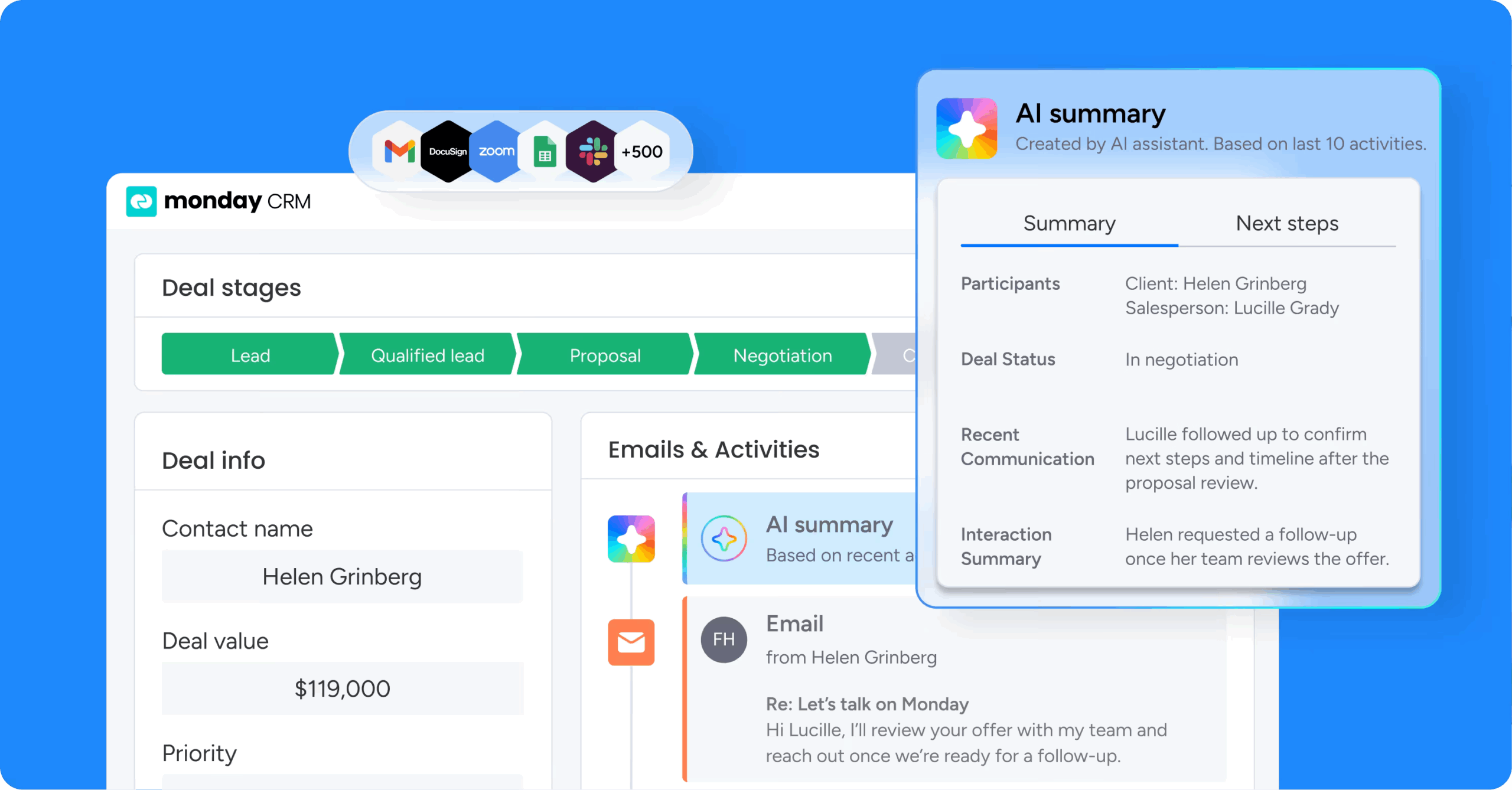
monday CRM brings the full business development lifecycle together, from sourcing leads to closing deals and managing post-sale accounts, all inside one platform. It serves revenue teams from SMBs to enterprises and keeps lead data, deal activity, and customer conversations centralized, so handoffs do not become scavenger hunts. Just as important, teams can shape the CRM around how they work instead of bending to fit the software.
Use case
monday CRM gives revenue teams one place to capture leads, qualify them, move deals through a visual pipeline, and handle post-sale work like onboarding, renewals, and collections. AI supports the day-to-day tasks inside that workflow, especially when reps need to write, summarize, or categorize a high volume of communication.
Key features
- Lead capture and enrichment: Gather leads from website forms or social campaigns, then auto-enrich them through Crunchbase so your team can qualify and route leads in seconds.
- AI email composer: Draft follow-ups directly from Emails & Activities, where the full deal context already lives.
- AI Timeline Summary: Turn the full history of emails, calls, meetings, and notes into a concise summary, so managers can get up to speed in minutes.
- Autofill with AI: Use AI on board columns to detect sentiment, extract information, summarize updates, translate text, and assign labels or owners without manual entry.
- Sales dashboards and forecasting: Build code-free dashboards with leaderboard, funnel, and sales pipeline widgets to see forecast vs. actual sales and spot where deals are stacking up.
Pricing
monday CRM starts at $9/seat/month on the Standard plan, with AI capabilities included on Standard, Pro, and Enterprise plans. Every account receives 500 free AI credits per month, and you can buy additional credits as needed.
Why it stands out
- One CRM for pre-sale and post-sale: Lead management, deals, onboarding, renewals, and collections all live in the same place.
- AI inside the work: AI lives in Emails & Activities and board columns, so reps never copy and paste context into another tool.
- Flexible for changing sales cycles: Pipeline stages, automations, and dashboards evolve with your go-to-market without weeks of setup.
2. HubSpot
Best for: SMBs that want CRM and marketing in one ecosystem.
HubSpot combines CRM and marketing automation in a single ecosystem, giving sales and marketing teams a shared view of every contact. Its AI is strongest in the middle of the funnel, where it helps reps decide who to contact next and what to say.
Use case
HubSpot routes marketing signals directly into sales workflows so your team knows who deserves attention and how to approach them.
Key features
- AI email drafting and sequences: Create personalized outreach from past interactions and contact data.
- Predictive lead scoring: Rank prospects by their likelihood to buy.
- Guided selling: Surface suggested next steps so reps always know where to focus.
Pricing
Sales Hub Starter costs $15 to $20/seat/month and includes 500 monthly HubSpot Credits. Professional starts at $90/seat/month (billed annually) with 3,000 credits and a required $1,500 onboarding fee. A free tier of core CRM tools is also available.
Considerations
- Costs climb fast as the team grows. Some AI tools are still in beta, and advanced features sit behind Professional or Enterprise tiers.
3. Salesforce
Best for: Enterprises with complex, multi-team sales operations.
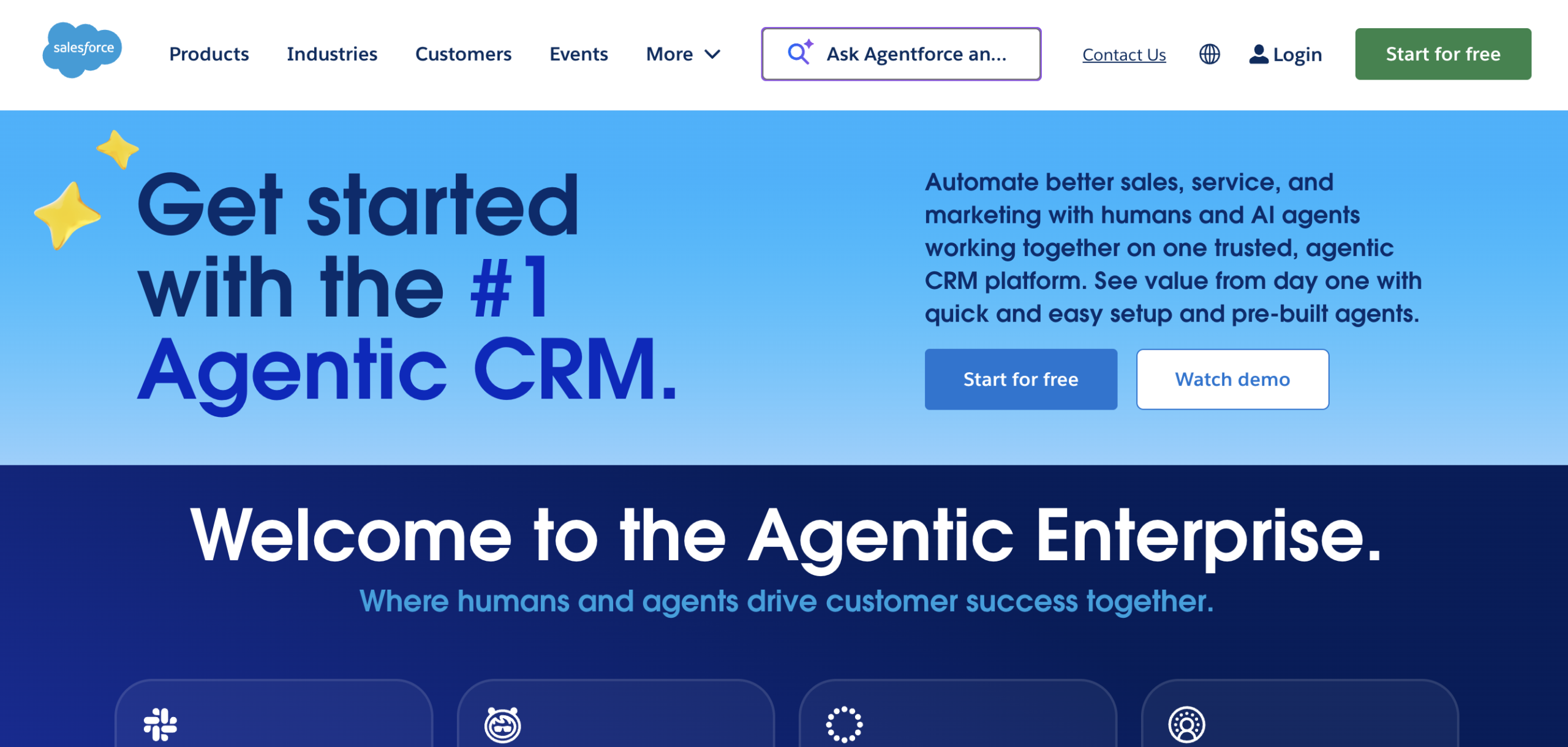
For large enterprise sales organizations, Salesforce offers an integrated AI platform with autonomous agents that can act, not just recommend. It is built to support sprawling teams, layered processes, and deep customization.
Use case
Salesforce is designed for large enterprises that require autonomous AI agents, predictive forecasting, and highly customizable sales workflows.
Key features
- Agentforce autonomous agents: Actively research accounts, update records, and trigger workflows based on deal signals.
- Einstein AI for lead scoring: Score leads by conversion likelihood so reps prioritize the right accounts.
- Einstein AI for forecasting: Predict pipeline outcomes using historical and real-time deal data.
Pricing
Pro Suite costs $100/user/month and Enterprise costs $175/user/month. Agentforce for Sales is available as an add-on at $125/user/month, and a free trial is available.
Considerations
- Activating AI tools requires Data Cloud setup first, and many advanced capabilities only appear in Enterprise or Unlimited tiers. Deployment often stretches across months and demands dedicated Salesforce admins.
4. Pipedrive
Best for: Small sales teams that want a simple, visual pipeline.
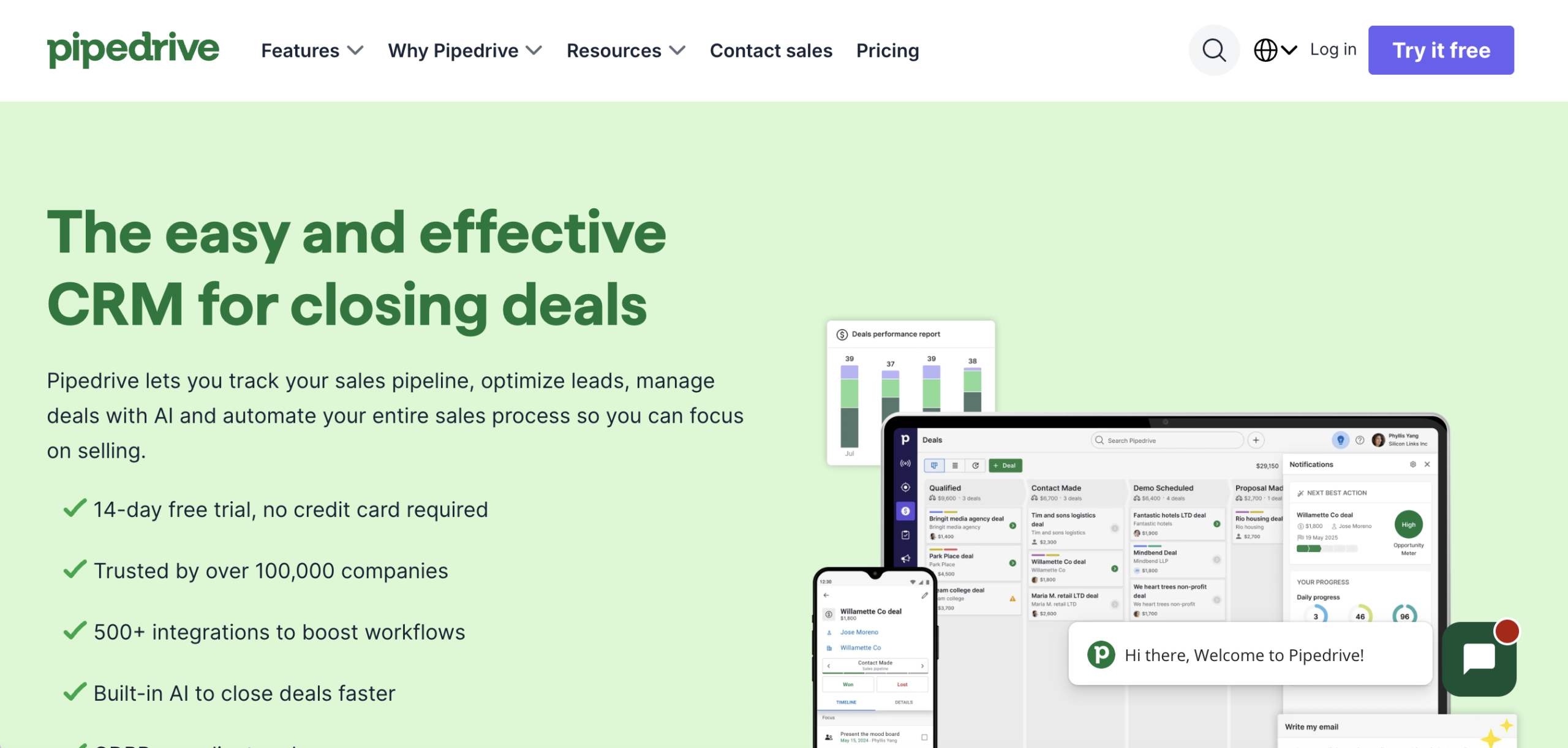
Pipedrive strips sales management down to a clean, visual pipeline that helps small teams stay focused on moving deals forward. Its AI features handle the essentials without major technical complexity.
Use case
A strong fit for small sales teams that need a simple way to manage pipeline and close deals.
Key features
- Visual drag-and-drop pipeline: Reps can instantly see where each deal stands using a Kanban-style interface.
- AI deal scoring: Score opportunities by close likelihood so reps know which deals deserve attention first.
- AI notifications: Flag neglected deals before they go cold in the pipeline.
Pricing
Pipedrive’s Growth plan costs $39/user/month and Premium costs $49/user/month, both billed annually. A free trial is available so teams can test the platform before committing.
Considerations
- More advanced AI tools are restricted to Premium and Ultimate. Teams that need agentic lead sourcing or cross-functional workflows will probably outgrow Pipedrive’s AI feature set.
5. Clay
Best for: Outbound teams that want automated prospect research and enrichment.
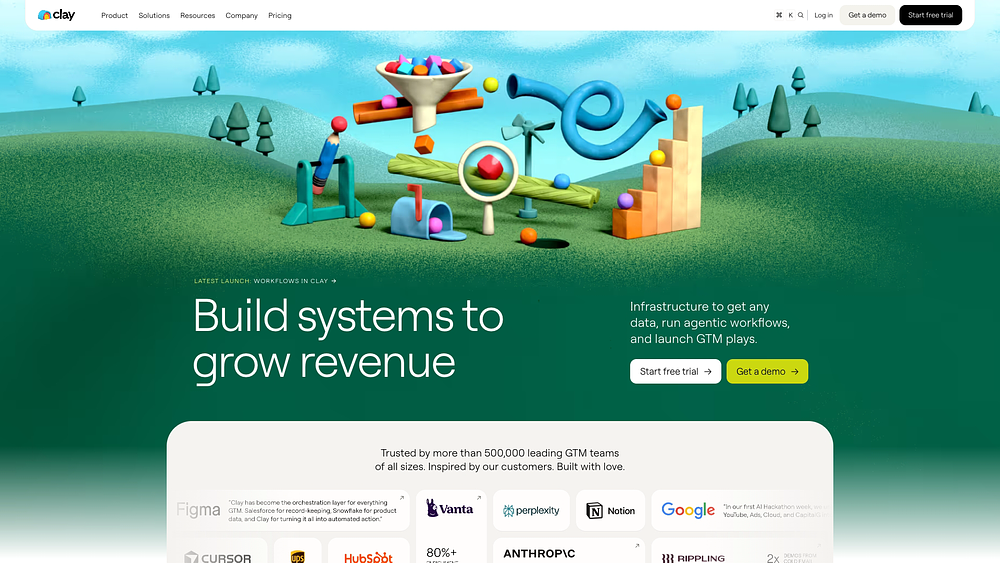
Clay turns prospect research into an automated workflow, pulling enriched data from 200+ sources so BD teams can focus on closing instead of searching.
Use case
Automates the research and enrichment portion of outbound prospecting, then uses AI to create personalized outreach copy.
Key features
- Waterfall enrichment: Check multiple data providers in sequence across 200+ sources and stop at the first verified result.
- AI-generated outreach copy: Write personalized email copy for each contact based on enriched prospect data.
- AI research automation: Pull company and contact insights into your lists without manual searching.
Pricing
Clay’s Launch plan starts at $167/month and Growth starts at $446/month. A free plan is available for teams that want to explore the platform first.
Considerations
- Clay covers sourcing and enrichment, but it doesn’t manage deals or track pipeline. Teams usually pair it with a CRM, which means maintaining clean data flow between systems.
6. Apollo.io
Best for: SDR teams running high-volume outbound sequences.
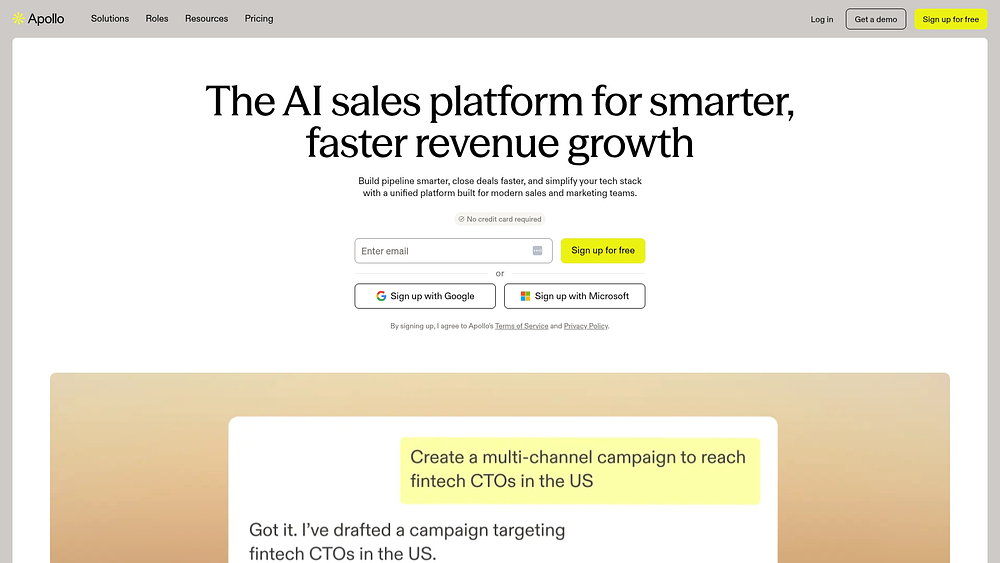
Apollo.io gives SDR and BDR teams one place to source, research, and contact prospects. Its database includes more than 275 million contacts, so reps can build targeted lists without leaving the platform.
Use case
Built for outbound-heavy go-to-market teams that need to source qualified contacts and automate multi-touch sequences.
Key features
- AI email sequence builder: Create personalized outreach and automate multi-touch sequences.
- Intent data signals: Identify accounts showing buying behavior so reps can reach out at the right moment.
- Contact database search: Filter more than 275 million contacts to build prospect lists that match your ideal customer profile.
Pricing
Apollo.io offers a free plan for teams that want to explore the platform. Paid plans start at $49/user/month for Basic (30,000 credits/seat/year) and $79/user/month for Professional (48,000 credits/seat/year).
Considerations
- Apollo.io includes basic CRM functionality, but teams handling complex sales cycles will still need a dedicated CRM beside it.
7. Gong
Best for: Sales teams that want conversation intelligence and coaching.
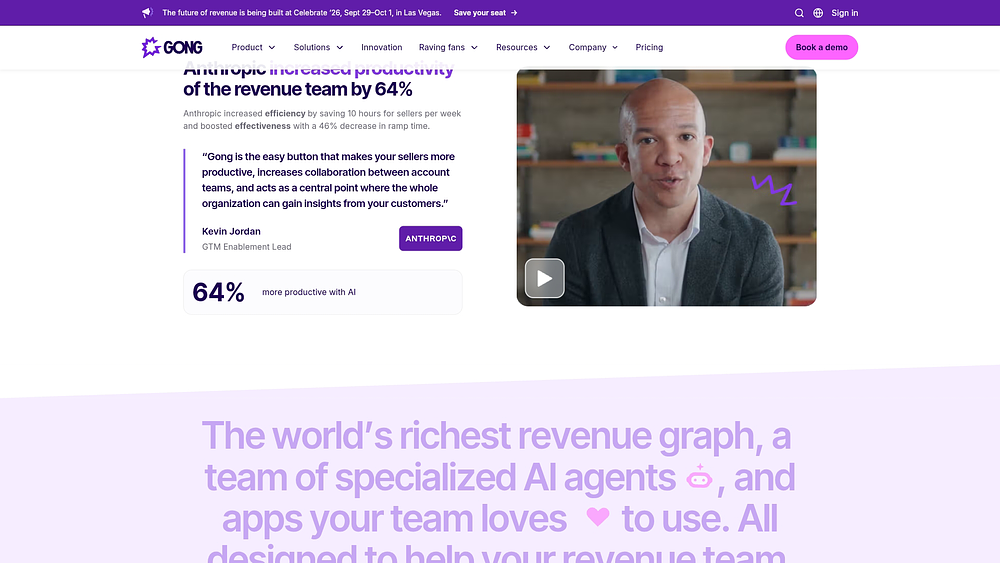
Gong turns customer conversations into usable revenue intelligence. It analyzes calls, emails, and meetings to surface coaching insights and risk signals for sales leaders.
Use case
Records and analyzes customer conversations at scale, helping sales leaders catch deal risk earlier and coach reps using real interactions.
Key features
- AI call recording and transcription: Capture and transcribe every call, making conversations searchable.
- Deal risk signals: Highlight conversations where prospects raise objections or hesitate.
- Rep coaching insights: Surface patterns from real calls so managers can coach with specific examples.
Pricing
Gong uses quote-based pricing, so there is no public per-seat rate. Teams need to contact the Gong sales team for a custom quote based on their size and needs.
Considerations
- Gong is a specialized point solution centered on conversation intelligence. It doesn’t manage pipeline or source leads, so teams need to run it alongside a full CRM.
8. Zoho CRM
Best for: Budget-conscious teams that want scalable AI automation.
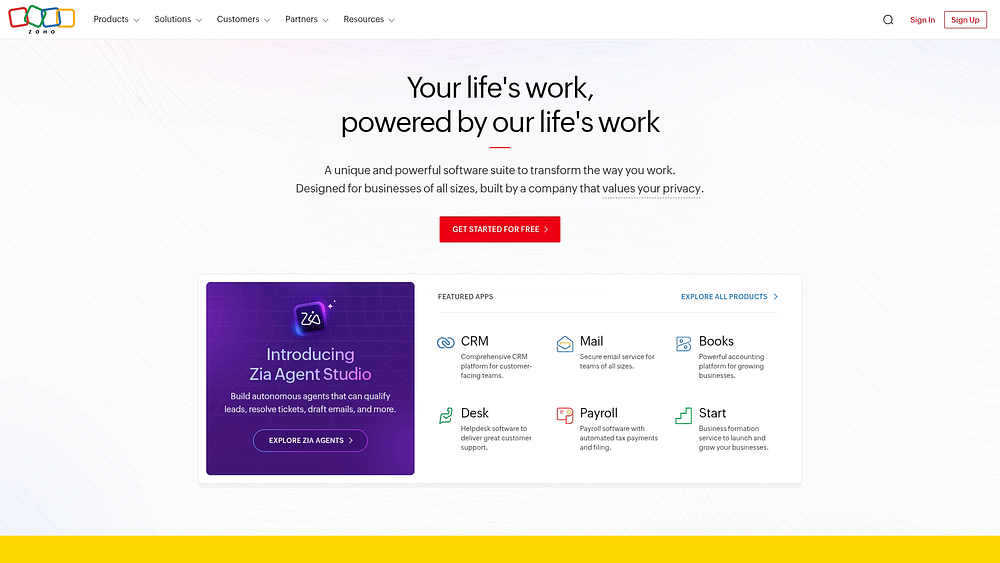
Zoho CRM delivers strong AI capability at a price that stays friendly to tighter budgets. It places Zia, Zoho’s native AI assistant, directly into pipeline management and lead qualification.
Use case
Made for SMBs that want AI-powered lead scoring and automated follow-ups without paying enterprise-level prices.
Key features
- Zia AI assistant: Scores leads by likelihood to convert and recommends next-best actions.
- AI lead scoring: Ranks prospects so reps know which accounts deserve attention first.
- Workflow automation: Takes over repetitive tasks such as lead assignment and follow-up reminders.
Pricing
Zoho CRM’s Standard plan costs $14/user/month, and Enterprise costs $40/user/month with the full set of AI features included. A free trial is available so teams can test the platform before committing.
Considerations
- The interface can feel less intuitive than platforms designed primarily around adoption. Advanced AI capabilities require higher-tier plans.
9. Perplexity
Best for: BD teams that want real-time market and prospect research.
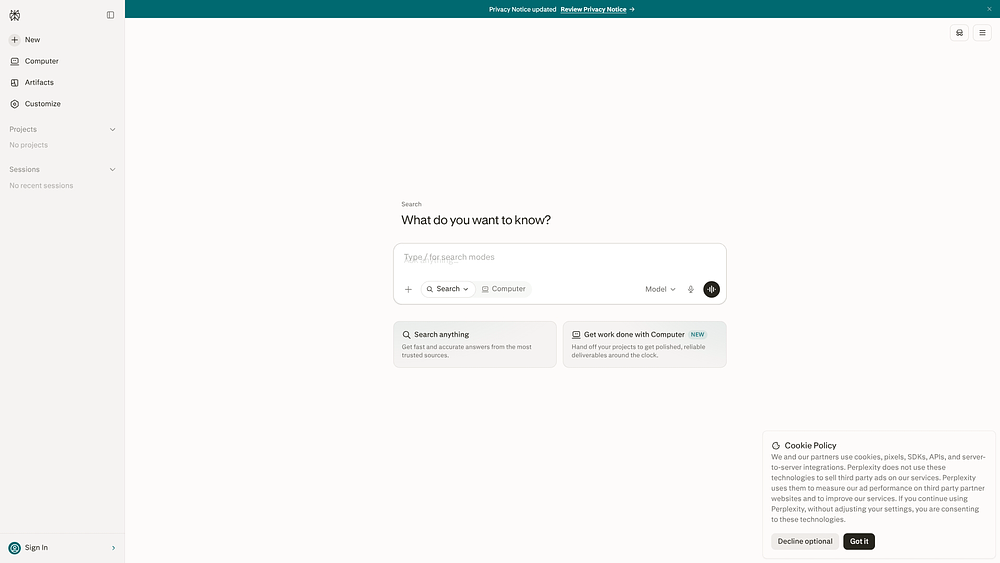
Perplexity works as an AI research engine, compressing hours of digging into minutes of cited, verifiable answers. It pulls live web data and company news to support sharper deal strategy.
Use case
Accelerates the research phase of BD by delivering real-time, cited intelligence on prospects, markets, and competitors.
Key features
- AI web search with cited sources: Searches the web and synthesizes answers with inline citations.
- Pro Search for multi-step research: Breaks complex questions into sub-questions and draws from multiple sources.
- Real-time company intelligence: Surfaces recent news and market developments so reps can tailor outreach to current events.
Pricing
Perplexity offers a free plan for teams that want to explore the platform. Pro costs $20/month and includes Pro Search and unlimited queries, while Enterprise Pro costs $40/month per seat and adds SSO/SCIM and admin controls.
Considerations
- Credit usage can climb fast with heavier automation, especially for large prospect dossiers, which makes it a variable cost worth watching.
Why business development AI adoption is accelerating
For years, AI in business development felt more like a promise than a practical tool. That’s changed. Modern systems no longer just flag missed opportunities; they take on the work itself, executing inside the workflows teams already use.
Moving from passive suggestions to autonomous AI execution
A recommendation only helps if someone has time to act on it. Suggesting a follow-up is useful, but sales automation AI that drafts and logs the message is far more impactful. That leap from reminder to execution is what gives your team more capacity.
- Eliminate manual entry: AI handles the admin so reps can focus on relationships.
- Expand team capacity: Support more pipeline without increasing headcount.
Revenue teams often use monday CRM to close this gap. Instead of adding tasks to the to-do list, the system carries them out.
Embedding AI into existing workflows to drive team adoption
Access to technology is rarely the barrier. Friction is. If a rep has to leave their workspace, move data between tabs, and return to document the outcome, that workflow dies within weeks.
The platforms that gain traction put AI inside the work itself. monday CRM embeds AI directly into the workflows revenue teams already depend on, so reps can generate emails, summarize deal stages, and pull insights without changing tabs. Align the tool with how people already work, and adoption follows.
Consolidating fragmented tools to protect pipeline momentum
A lead sourced in one system, managed in another, and analyzed in a third creates unnecessary risk. Every handoff adds lag and raises the odds that a promising deal slips away.
- Centralize sourcing and outreach: Keep early-stage conversations linked to the main pipeline.
- Reduce integration headaches: Stop losing time forcing separate tools to sync.
Teams often see stronger results when they use monday CRM to bring these workflows together. The payoff is a single source of truth that stays accurate with far less effort.
7 capabilities to look for in an AI platform for business development
Not every AI platform contributes across the full sales cycle. Some excel at prospecting, then fall apart when forecasting or deal handoffs enter the picture. Use these capabilities to evaluate tools against what really matters.
- Automated lead sourcing and enrichment: The platform should find prospects that match your ideal customer profile and fill in company and contact details before a lead ever hits a queue.
- Predictive lead scoring: AI should learn from historical wins to rank leads by conversion likelihood, so reps stop treating every lead as equal.
- Personalized outreach at scale: Look for AI email drafting with direct access to prospect data, so no one copies details between tools.
- AI call notes and deal summaries: Automatic recaps keep records consistent and let new reps or managers get up to speed in seconds.
- Real-time forecasting dashboards: Live views of deal velocity and funnel conversion let you step in while deals can still be saved.
- Seamless sales-to-post-sale handoffs: Closed deals should move to account managers, finance, and legal without losing context.
- No-code customization and permissions: Leaders should be able to update workflows in seconds and control access as the team grows.
How to choose the right AI platform for your business development team
Different AI platforms solve different problems. Maybe your reps are buried in manual prospecting. Maybe leadership cannot trust the forecast. Start by isolating the exact point where deals lose momentum so you can match the solution to the real bottleneck.
Feature depth alone is not enough. If your reps never adopt a powerful tool, the value never materializes. Before comparing options, consider how much setup and change your team can realistically absorb.
- Identify the biggest bottleneck: Focus on the stage where deals stall or reps lose time.
- Evaluate ease of adoption: Choose a system that adapts to your people, not the other way around.
- Consolidate your tech stack: Stop juggling disconnected apps that create data silos.
Many revenue teams turn to monday CRM to unify the full sales cycle in one intuitive workspace. Put AI inside the system reps already use, and the pipeline tends to move faster.
Turn AI into pipeline growth with monday CRM
Plenty of platforms handle one slice of business development well, then leave teams stitching the rest together with spreadsheets and scattered email threads. monday CRM takes a different approach by putting the full customer journey in one workspace, from sourcing leads to managing post-sale accounts.
Because AI sits inside the daily workflow, reps get help where they already work instead of jumping between tools. That keeps pipeline data accurate and gives your team more time for conversations that actually close deals.
Source and qualify leads with AI sales agents
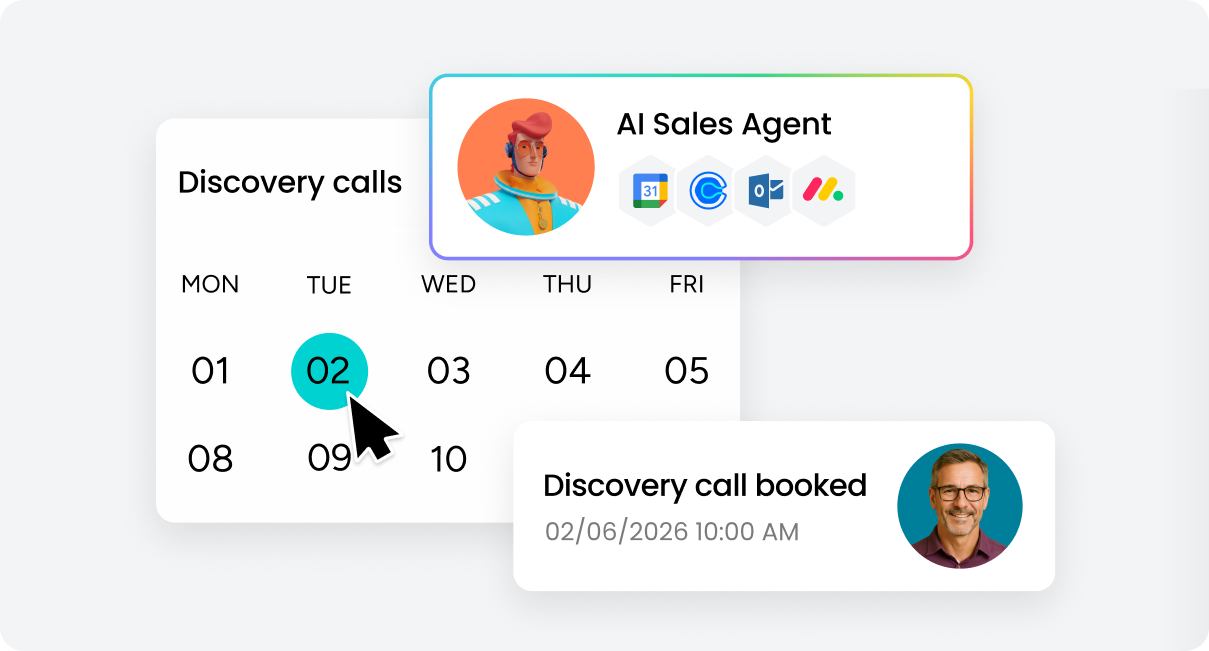
Hand-building prospect lists eats hours that reps could spend selling. Lead Agent sources and enriches high-quality leads through Crunchbase, pulling in company size, revenue, and key contacts without manual research. Sales Agent then qualifies those leads and books meetings based on your playbook, so reps focus on prospects with real buying potential.
Get instant deal context with AI Timeline Summary
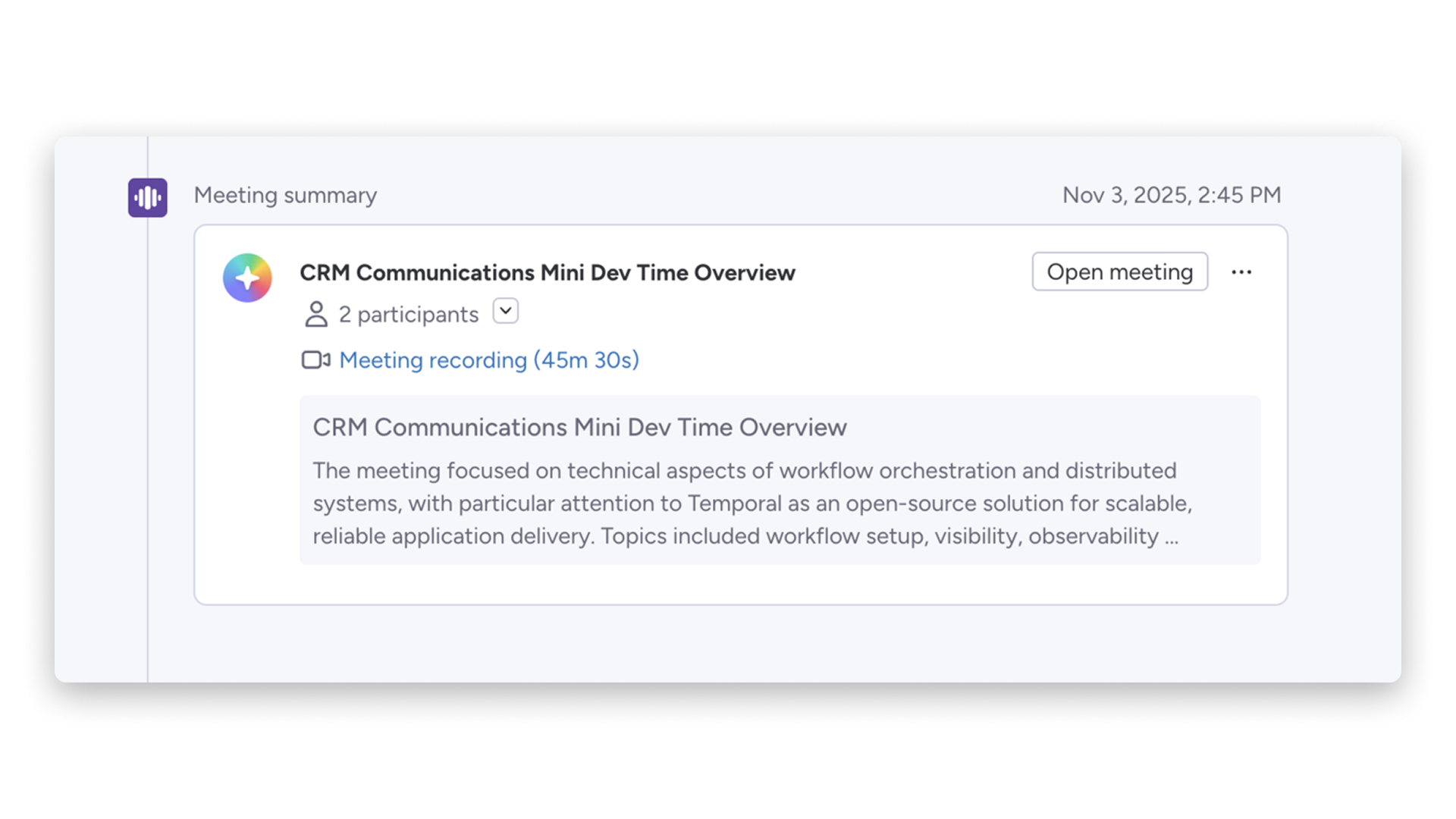
Fast-moving pipelines need context on demand. AI Timeline Summary condenses every email, call, meeting, and note tied to an account into one concise overview. Reps and managers can get up to speed in seconds instead of digging through threads, which keeps handoffs and deal reviews moving.
Keep records current with Autofill with AI
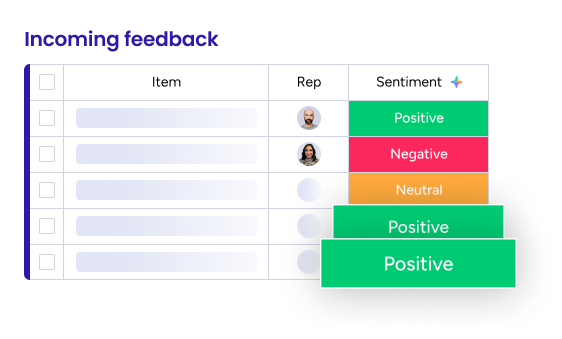
Stale CRM data weakens every forecast. Autofill with AI works directly in board columns to detect sentiment, extract details from long emails or contracts, and generate email copy from a simple prompt. Records update themselves after each interaction, so no one has to type up notes after every call.
Work from your inbox with monday MCP
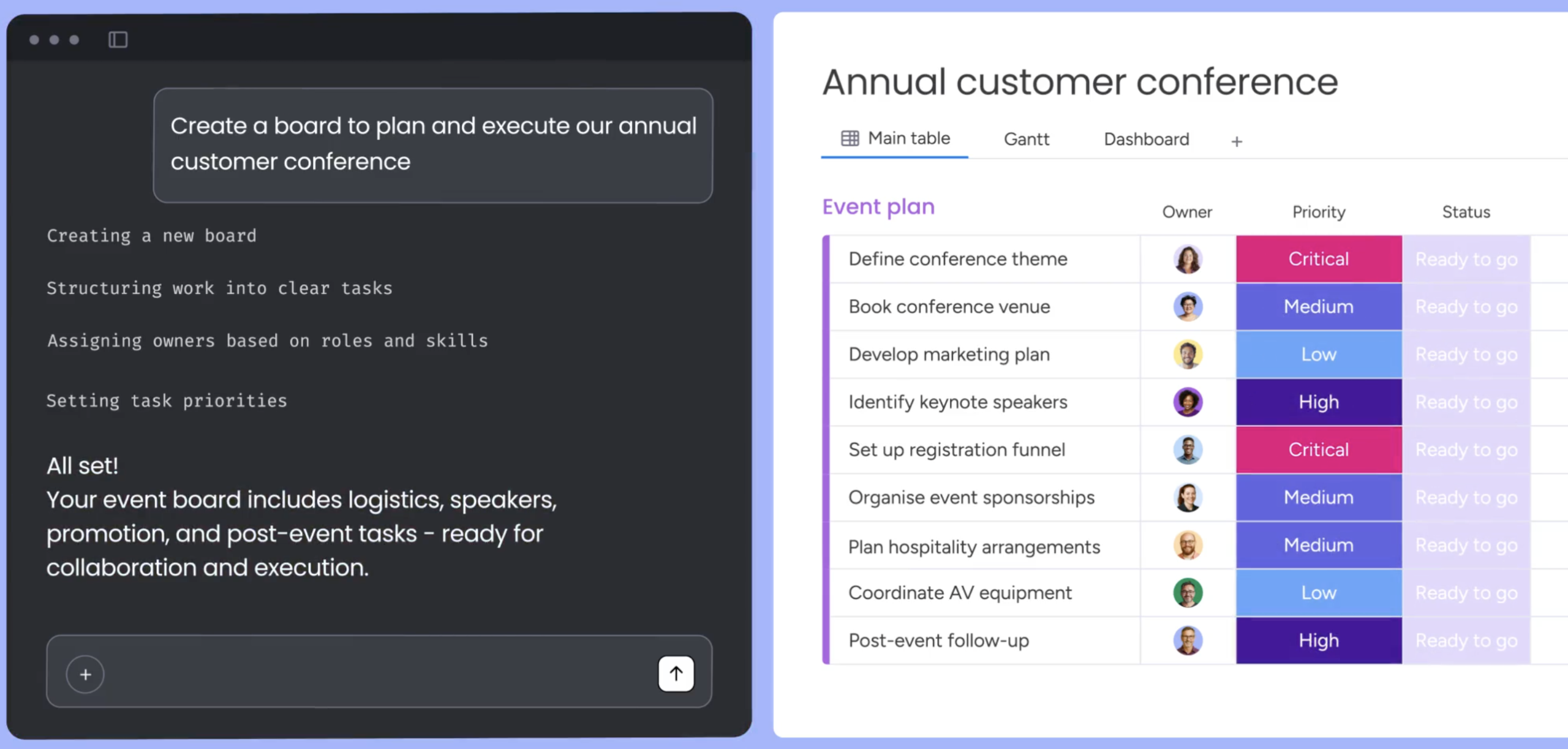
Teams should not have to choose between their CRM and the AI assistants they already use. monday MCP securely connects monday CRM to tools like Claude and ChatGPT. A rep can ask Claude to create a lead from the latest email, then watch it appear in the pipeline, with no copy and paste required.
Build a pipeline that keeps moving
The best AI platforms for business development do more than store records. They source leads, draft outreach, flag stalled deals, and keep forecasts honest, so reps spend less time on admin and more time in real conversations. The right choice starts with knowing where your pipeline loses momentum, whether that is prospecting, conversion, or the handoff after close.
Specialized tools can sharpen a single stage, but a unified system keeps lead data, deal activity, and post-sale work connected and accurate. monday CRM brings that full journey into one flexible workspace, with AI built into the work your team already does every day.
Try monday CRMFAQs
What are the top AI platforms for business development?
The top AI platforms for business development cover several functions across the prospect-to-close lifecycle. That includes full-lifecycle CRMs with embedded AI features as well as specialized platforms built for outbound sequencing, contact enrichment, and conversation intelligence.
What are the most popular AI platforms for sales and business development?
The most widely used AI platforms for sales and business development tend to support different stages of the revenue cycle. Popular choices include platforms that pair lead scoring with automated email generation, along with specialized platforms for deal coaching and autonomous outreach.
How can AI be used in business development?
AI can support business development by automating prospect research, scoring leads from intent signals, drafting personalized outreach at scale, and forecasting pipeline health in real time. In practice, that replaces hours of manual admin with automated execution, freeing your team to focus on conversations that move deals forward.
What is the difference between AI for business development and sales automation?
The key difference between AI for business development and sales automation is adaptability. Traditional automation follows fixed if/then rules, while AI agents can research prospects, write personalized emails, and adjust actions based on new information without needing a human trigger at every step.
Do business development teams need multiple AI platforms, or can one platform cover the full lifecycle?
Whether a business development team needs multiple AI platforms or one unified platform depends on where the biggest bottlenecks sit. Specialized platforms can be excellent at individual stages, while a unified platform like monday CRM covers the full lifecycle, from sourcing through post-sale account management, reducing context-switching and keeping teams aligned around the same data.
How can business development teams keep AI outputs accurate and compliant?
Accuracy and compliance come from setting review checkpoints, enforcing strict data permissions, and selecting platforms with enterprise-grade security standards. For example, monday CRM is HIPAA compliant, holds SOC 2 Type II certifications, and never uses customer data to train AI models, ensuring your pipeline data remains completely yours.