
Buyers now arrive at sales conversations already informed. They’ve researched options, compared vendors, and often shortlisted a favorite before a rep ever picks up the phone. So what is a sales cycle in this environment? It’s the repeatable set of steps your team follows to turn a prospect into a paying customer, and it’s the framework that keeps deals moving when buyers control more of the journey.
A clear cycle gives you visibility into where every deal stands and where it stalls. Understanding each stage, measuring cycle length, and managing the process with a flexible CRM like monday CRM turns unpredictable months into consistent, forecastable revenue.
Key takeaways
- Sales cycle basics: A sales cycle is your repeatable roadmap that transforms prospects into customers through seven distinct stages: prospecting, connecting, qualifying, presenting, resolving objections, closing, and following up.
- Cycle length and conversion rates: Understanding your sales cycle length and stage-by-stage conversion rates enables accurate forecasting and helps you identify exactly where deals get stuck or fall apart.
- Short vs long cycles: Short sales cycles work for simple, low-value transactions with few decision-makers, while long cycles suit complex, high-value solutions involving multiple stakeholders.
- Smart cycle management: Smart sales cycle management combines real-time tracking, automation, marketing alignment, AI assistance, and continuous training to close more deals faster while protecting relationship quality.
- monday CRM: monday CRM’s AI sales agents and AI Deal Insights surface at-risk deals and next steps, giving revenue teams the visibility to accelerate the cycle while keeping human relationships intact.
What is a sales cycle?
A sales cycle is the repeatable series of steps your team follows to turn a prospect into a paying customer. This means tracking every interaction from first contact through final purchase, giving you a roadmap for consistent sales success.
The sales cycle focuses on the specific stages prospects move through, while a sales process covers your overall sales methodology and strategy. One tells you where to go, the other tells you how to get there.
It also helps to separate a sales cycle from a sales pipeline. The cycle is the sequence of stages a single deal travels through, while the pipeline is the visual snapshot of every active deal sitting in those stages right now. You use the cycle to understand the path and the pipeline to see who’s on it.
Why your sales cycle matters
The reason some sales teams consistently hit their targets while others struggle often lies in how well they understand and manage their sales lifecycle. A defined lifecycle transforms guesswork into predictable results. New sales reps get up to speed faster. Most importantly, you’ll spot exactly where deals get stuck. monday CRM helps you visualize these patterns so you can fix what’s slowing deals down.
The 7 stages of the sales cycle
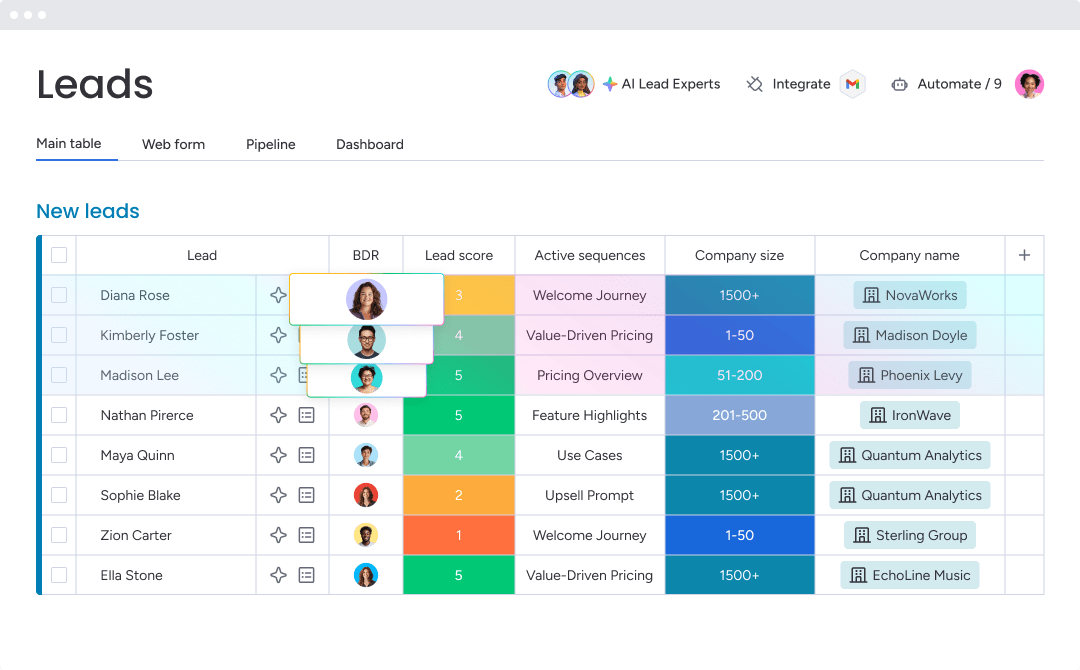 The 7 stages of the sales cycle are prospecting, connecting, qualifying, presenting, resolving objections, closing, and following up. Together they mirror how buyers naturally move from first awareness to a signed deal and beyond.
Every successful sales cycle follows a logical progression that reflects how buyers make decisions. Understanding these stages helps you guide prospects smoothly toward a purchase.
The order matters as much as the stages themselves. Each step builds trust and information for the next, so skipping ahead, such as presenting before you’ve qualified, is one of the most common reasons deals stall. Map your own stages to these seven, then track how deals move between them.
Step 1: Prospecting and finding leads
Sales prospecting means finding potential customers who could benefit from what you sell. Channels include LinkedIn outreach, referral programs, event networking, and inbound leads. monday CRM’s lead scoring helps you focus on prospects most likely to buy.
For example, a mid-market team might blend inbound demo requests with targeted outreach, then route the highest-fit leads to the right reps automatically so no opportunity waits in a queue.
Step 2: Connecting with prospects
Making contact is about starting a conversation, not delivering a pitch. Touchpoints include email, phone, social media, and video messages.
For example, a short, personalized email that references a prospect’s recent company announcement tends to earn more replies than a generic template sent to everyone.
Multi-channel outreach also works in your favor. A thoughtful mix of email, a phone call, and a relevant LinkedIn message reaches prospects where they’re most responsive, and it signals persistence without becoming noise.
Step 3: Qualifying opportunities
Lead qualification confirms budget, authority, need, and timeline. monday CRM lets you track qualification criteria consistently across all deals with custom fields.
A helpful benchmark at this stage is the 10-3-1 rule: roughly 10 qualified leads tend to produce 3 active opportunities and 1 closed deal, which sets realistic expectations for how much you need at the top.
Qualifying early also protects your cycle length. A prospect without budget or authority will drag on for weeks before going quiet, so confirming fit up front frees reps to spend their time where it counts.
Step 4: Presenting and demonstrating value
Presentations show prospects exactly how you’ll solve their specific problems. Focus on outcomes, not features, and include all stakeholders who influence the decision.
For example, tailoring one demo to a finance stakeholder’s ROI questions and an IT stakeholder’s security questions keeps a multi-person buying group aligned around the same outcome.
This is also where you confirm you’re speaking to everyone who can influence the decision. Ask directly who else needs to weigh in, then give your champion the material they need to sell the solution internally when you’re not in the room.
Step 5: Resolving objections
Objections are questions in disguise. Common categories include price concerns, timing issues, feature questions, and implementation worries.
For example, a pricing objection often signals unclear value, so restate the specific outcome the prospect gains before you discuss any adjustment to terms.
Step 6: Closing the deal
Sales closing means finalizing all the details. Steps include proposal creation, contract negotiation, stakeholder approval, and administrative details. monday CRM’s deal management ensures nothing falls through the cracks.
For example, sending a contract through an e-signature integration shortens the gap between a verbal yes and a signed deal, which keeps momentum on your side.
Step 7: Following up and nurturing relationships
The sale isn’t over when the contract is signed. Smooth handoffs and regular check-ins uncover expansion opportunities. To go deeper on this stage, see sales project management.
For example, a 30-day check-in call can surface an upsell or a warm referral while the win is still fresh and the relationship is strong.
Strong follow-up also feeds your next cycle. A happy customer becomes a reference, a case study, or a repeat buyer, which shortens the qualifying stage for the deals that follow.
Short sales cycle vs long sales cycle
Not all sales cycles are created equal. Sales cycles get longer when deals involve higher prices, more decision-makers, and greater product complexity, and they get shorter when the purchase is simple and low-risk. The comparison below shows how the two shapes differ across the factors that matter most.
| Factor | Short sales cycle | Long sales cycle |
|---|---|---|
| Typical timeline | days to a few weeks | several weeks to many months |
| Decision-makers | one or a few | multiple stakeholders across teams |
| Deal size | lower value | higher value |
| Product complexity | simple and quick to evaluate | complex, with demos and approvals |
| Sales approach | fast and transactional | consultative and relationship-driven |
As a rule of thumb, smaller deals often close in one to three months, mid-market deals in three to six months, and complex enterprise deals in six to twelve months or more. Complexity is the biggest driver, since larger purchases move through cross-functional buying groups rather than a single decision-maker.
Neither shape is inherently good or bad. A short cycle suits high-volume, transactional sales where speed wins, while a long cycle fits high-value deals that need trust, proof, and consensus. The goal is to match your approach to the deal in front of you, then remove any delay that isn’t earning that trust.
Even as complexity grows, cycles are compressing overall. 6sense’s 2025 study found the average B2B buying cycle dropped from 11.3 months in 2024 to 10.1 months in 2025, driven by faster, AI-assisted buyer research rather than less of it.
How to measure average sales cycle length
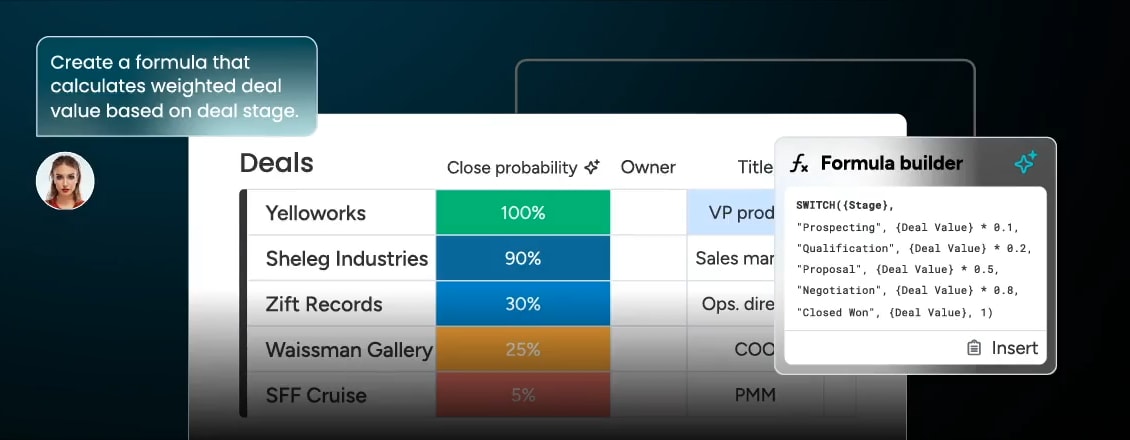 Average sales cycle length tells you how long it typically takes to close a deal. This metric helps you use a sales forecast template to spot improvement opportunities. Calculate it by adding the total days for all closed deals and dividing by the number of deals.
Once you have your number, compare it against your own history and against the 2025 global B2B benchmark cited earlier, which sits at roughly 10 months. If your cycle runs longer than similar teams, that gap points you toward the stage where deals slow down.
Segmenting the metric makes it more useful. Track cycle length by deal size, industry, and lead source so you can see which segments move quickly and which need attention.
Watch the trend over time, not just the single number. A cycle that’s creeping longer month over month is an early warning that something in your process, your market, or your buyer mix has changed, and it gives you time to respond before it shows up in missed targets.
5 tips to manage the full sales cycle
Managing the full sales cycle well means combining the right processes, technology, and team habits. The five tips below give you a practical way to keep deals moving without losing the relationships that win them. Each one targets a common point where cycles stall.
Smart sales management combines the right processes, technology, and team habits into a repeatable system.
1. Track each stage with real-time data
Real-time CRM reporting shows you exactly where deals stand at any moment. Monitor key B2B sales metrics for each stage so you can act before a deal goes cold.
Stage-by-stage conversion rates are especially revealing. If most deals stall between the demo and the proposal, that’s a coaching and content problem you can fix, not a mystery you have to guess at each quarter.
2. Lean on automations to reduce manual work
Repetitive tasks slow reps down, and sales automation can handle them for you. On monday CRM, you can set up round-robin lead routing, automatic follow-up reminders, and activity logging so reps spend their time selling. The Outbound Prospector AI agent goes further by sourcing and reaching out to prospects directly from the CRM.
3. Align marketing and sales early
When marketing and sales share goals and definitions, leads arrive more qualified and fewer opportunities slip between teams. Agree on what a qualified lead looks like, then hand off with the full context attached so reps skip the discovery a marketing touch already covered.
Shared reporting keeps both teams honest. When marketing sees which sources produce closed deals, not just clicks, it can send more of what actually moves the cycle forward.
4. Use AI for faster, sharper responses
AI accelerates your sales cycle, and adoption is now mainstream. 6sense’s 2025 Buyer Experience Report found that 94% of buyers use LLMs during their buying process and 89% of purchases included AI features, so buyers increasingly expect quick, informed replies. monday CRM’s AI Deal Insights surfaces at-risk deals and recommended next steps, so reps respond to the right opportunities first.
5. Provide continuous training
Continuous training keeps reps sharp as buyer expectations shift. Teams that invest in regular enablement adapt faster to new tools, new messaging, and new objections, which keeps the whole cycle moving at a steady pace.
Make training specific and ongoing rather than a one-time event. Short, regular sessions built around real deals, including the ones that didn’t close, help reps recognize patterns and apply them the next time a similar opportunity appears.
How AI and CRM transform the selling cycle
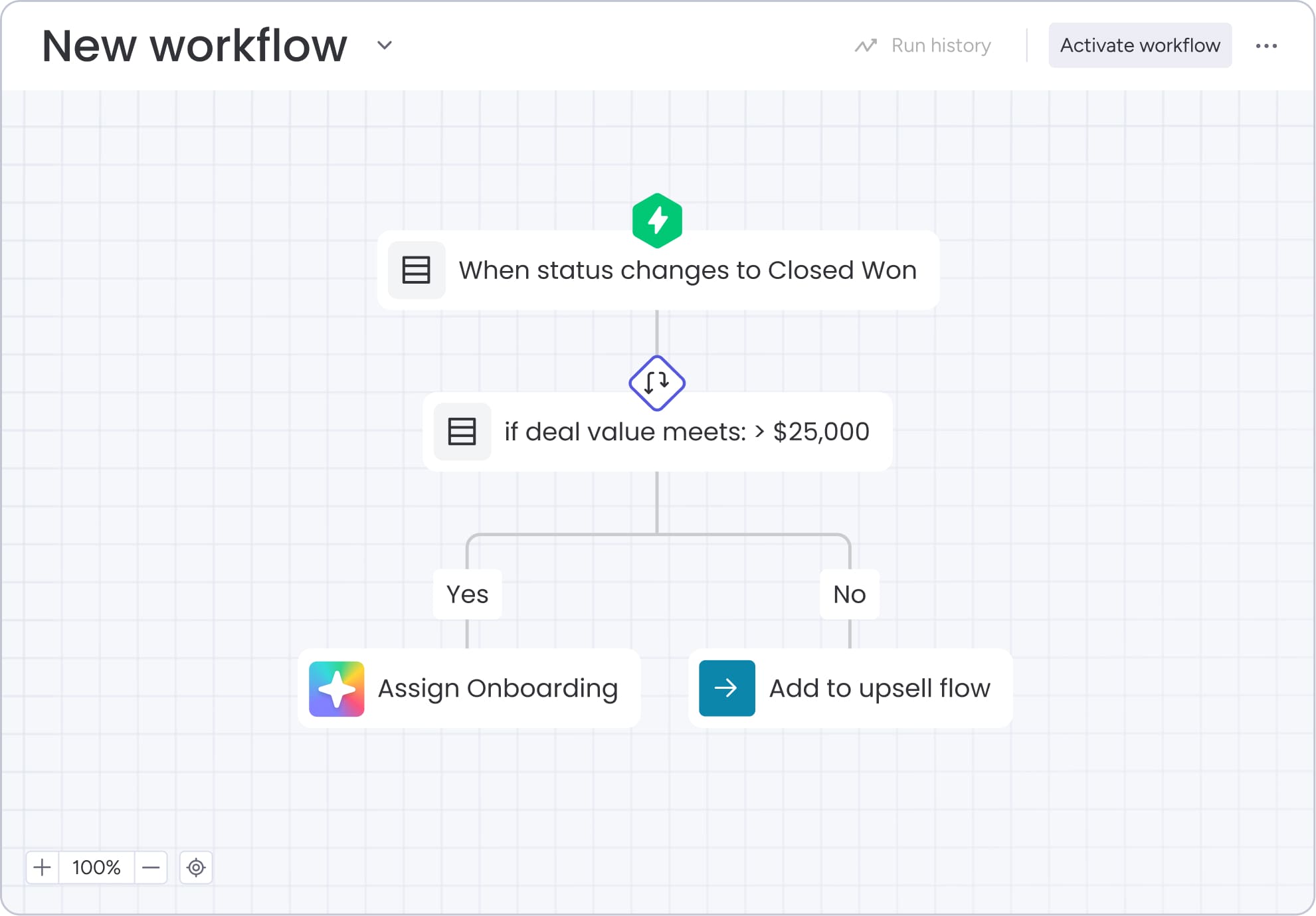 When AI meets CRM, the combination creates capabilities that seemed out of reach just a few years ago. monday CRM brings these AI capabilities to teams of all sizes, and the drag-and-drop, color-coded interface keeps the learning curve short.
The impact shows up in the numbers. ICONIQ Growth’s 2025 State of Software research found that high-AI-adoption companies ran roughly 20-week sales cycles versus 25 weeks for lower-adoption peers. Faster cycles come from removing manual steps, not from rushing buyers.
On monday CRM, that translates into concrete tools. The AI Notetaker captures call summaries automatically, AI-generated drafts speed up follow-up emails, and AI Deal Insights flags deals that need attention. AI sales agents such as Pipeline Guardian and Outbound Prospector handle sourcing, prioritization, and pipeline hygiene directly inside the CRM, so reps keep their focus on conversations.
The value of pairing AI with a CRM is that both act on the same live data. When your pipeline, contacts, and activity history sit in one place, AI can spot a stalled deal, draft the next email, and recommend who to call next without a rep stitching the information together by hand.
This matters most in complex cycles. When a deal involves several stakeholders and dozens of touchpoints, AI keeps the full context organized so nothing gets lost between a discovery call in week one and a contract review in week ten.
Shorten your sales cycle with monday CRM
monday CRM brings every stage of the sales cycle into one adaptable workspace, from first touch through post-sale expansion. Your team can shape pipelines, stages, and reporting around the way you already sell, instead of bending to a rigid structure.
Because customization is no-code, revenue leaders can update a process the same day it changes, without waiting on IT. That speed keeps your CRM matched to how your team actually sells, so deals keep moving instead of waiting on tooling.
AI Deal Insights
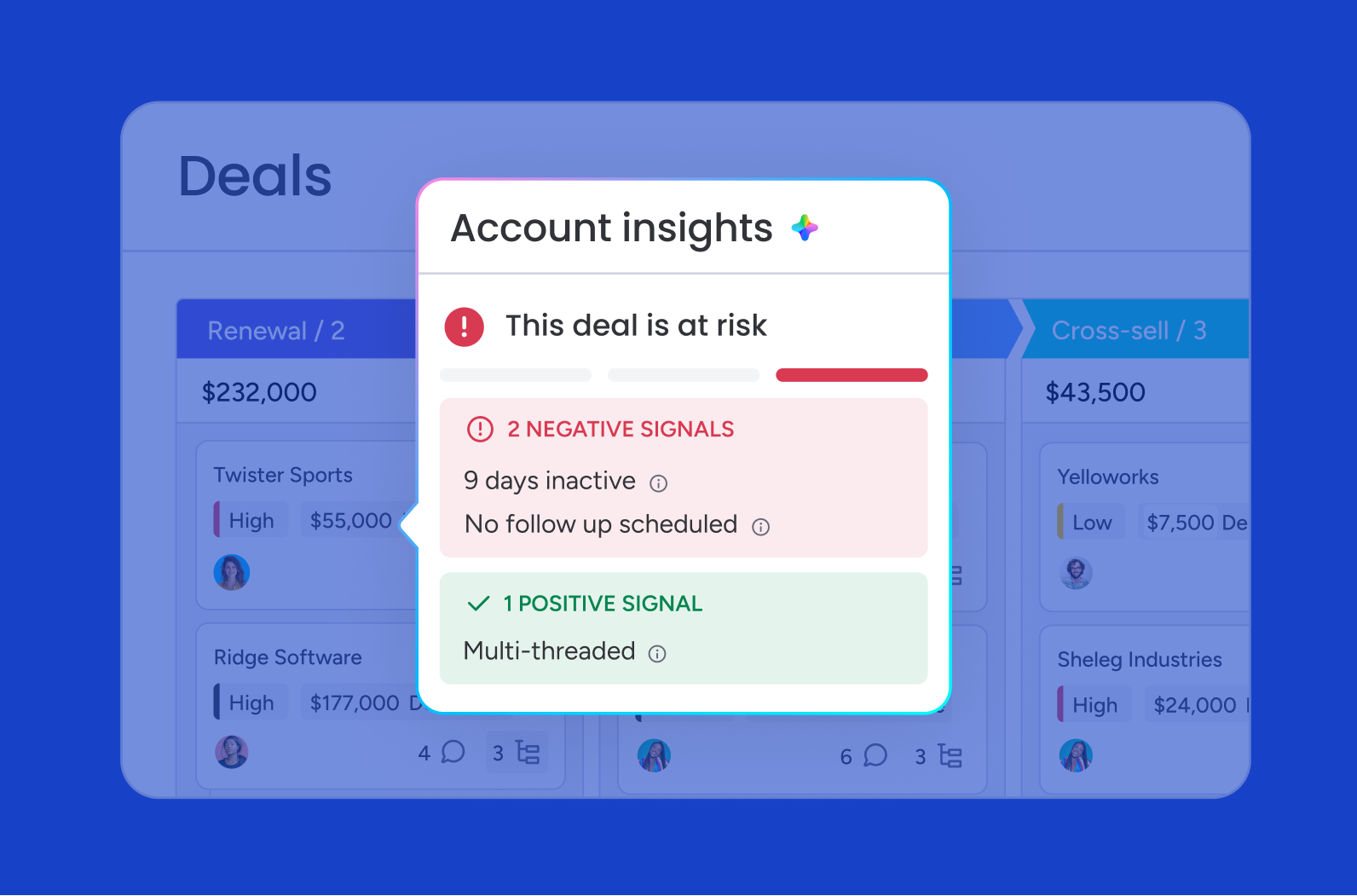
AI Deal Insights surfaces at-risk deals and recommended next steps before opportunities stall. Reps see which deals need attention first, so they spend time where the cycle is most likely to slip. This turns stage-by-stage tracking into clear action.
AI sales agents
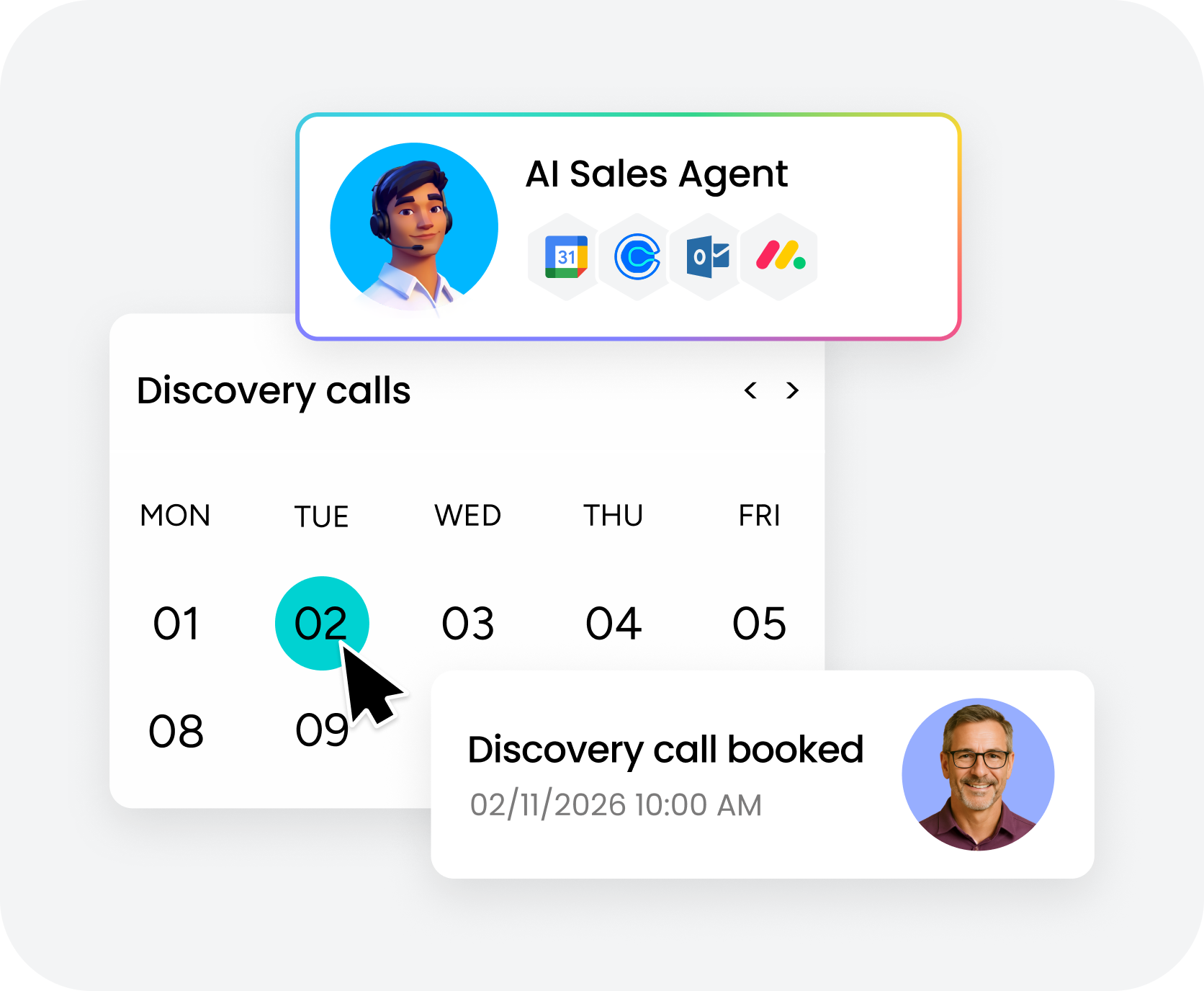
Pipeline Guardian, Deal Desk Automator, and Outbound Prospector source, qualify, and prioritize deals from inside the CRM. They handle prospecting and pipeline hygiene, the early and middle stages where cycles often lose time. Reps stay focused on conversations while the agents keep the pipeline clean and current.
AI Notetaker and deal summaries
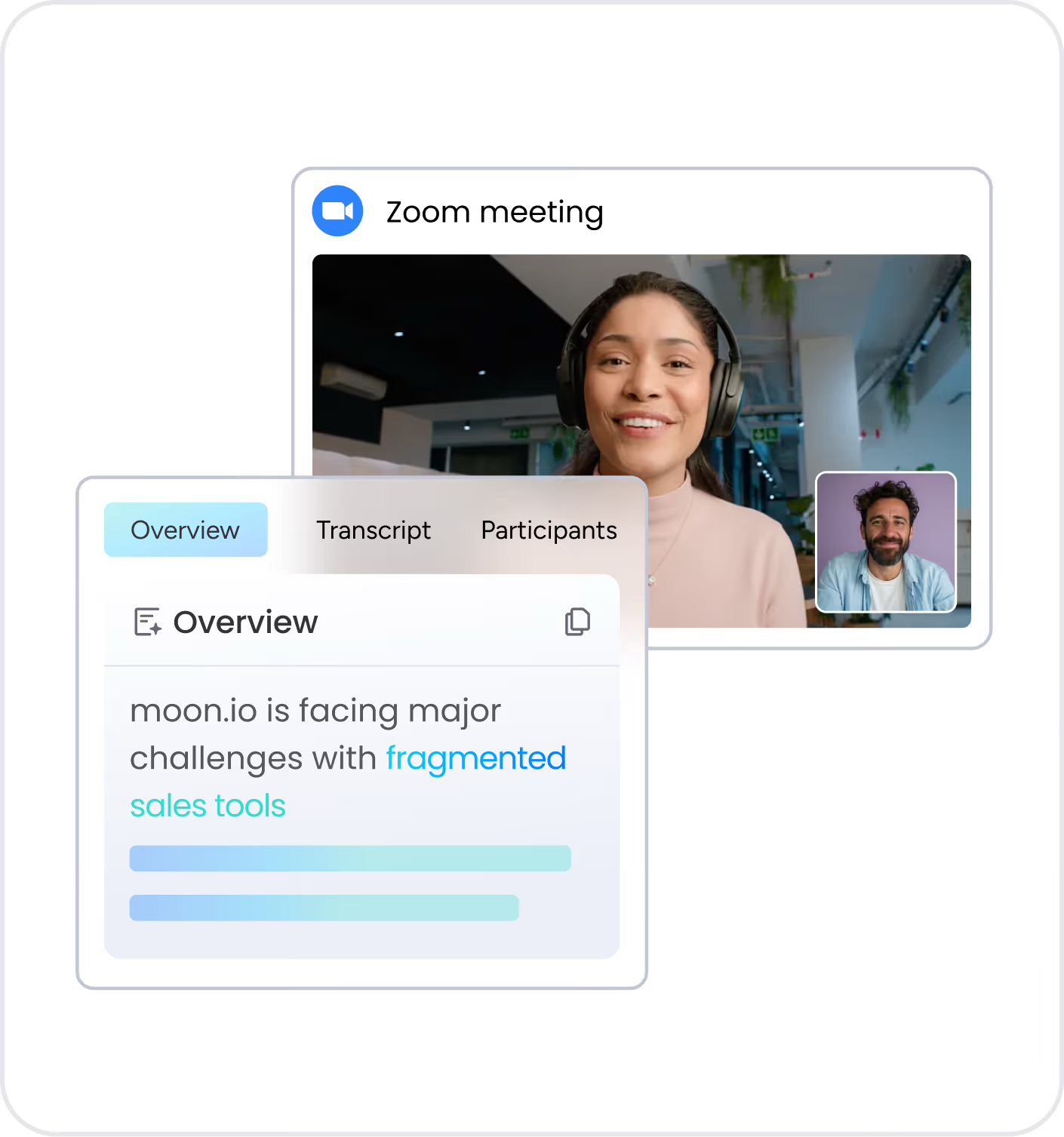
The AI Notetaker captures call notes and generates summaries automatically, so context never gets lost between stages. Anyone picking up a deal can see what was discussed and what comes next. That keeps handoffs smooth and follow-up fast, even in long, multi-stakeholder cycles.
monday MCP
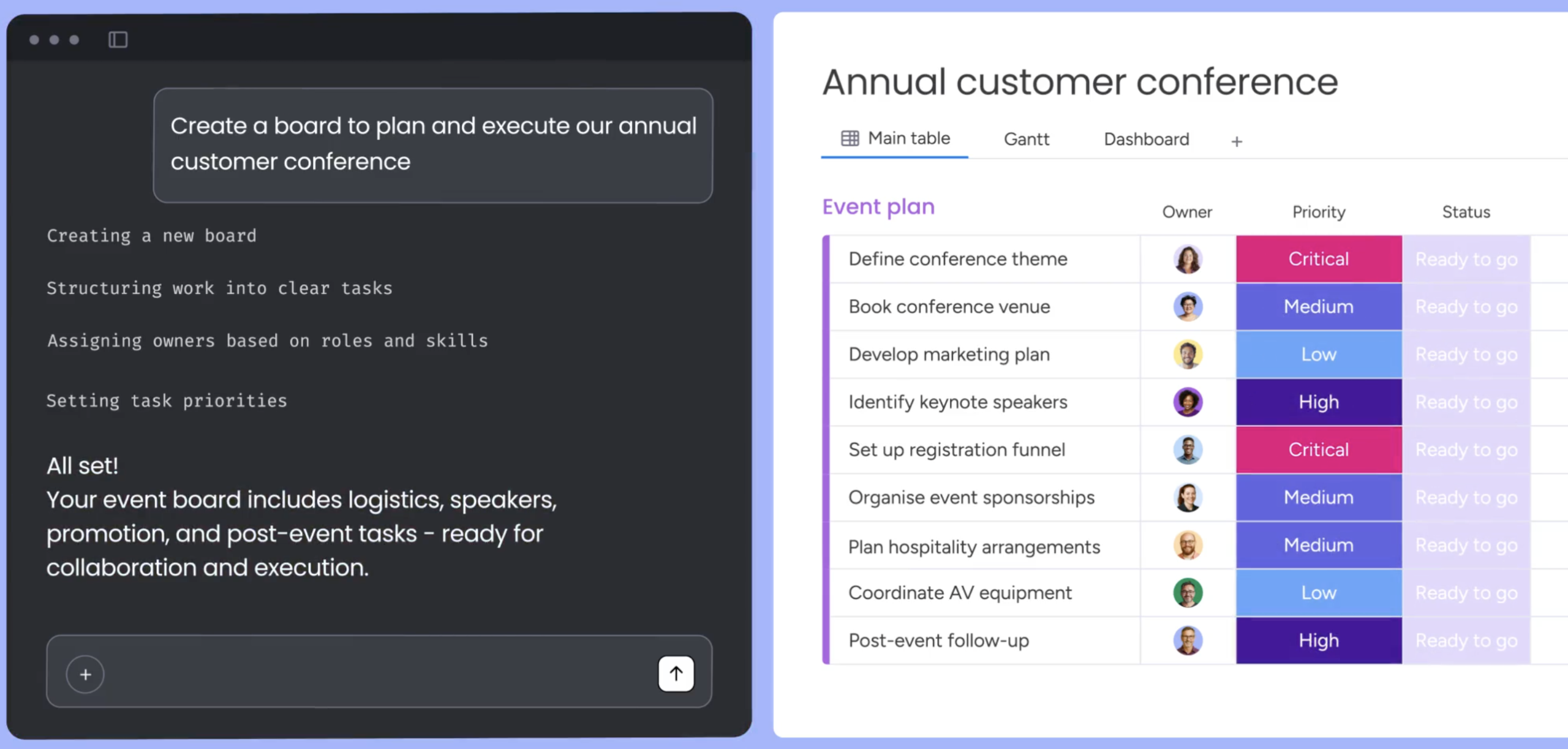
monday MCP connects AI assistants like Claude and ChatGPT to your CRM data within your existing permissions. Your team can ask questions about deals, stages, and cycle length in plain language and get answers grounded in live pipeline data. It brings the insight you need to manage the cycle without extra reporting work.
Turning your sales cycle into predictable revenue
A well-run sales cycle is the difference between hoping you’ll hit target and knowing where every deal stands. When you understand each stage, measure your cycle length, and manage the process with intent, forecasting stops being guesswork.
Buyers will keep arriving informed and moving quickly, so the teams that win are the ones with visibility and the flexibility to adapt. An adaptable platform like monday CRM, used as your sales management software, gives revenue leaders the real-time insight and control to turn a repeatable sales cycle into predictable growth.
FAQs
What are the 7 stages of the sales cycle?
The 7 stages of the sales cycle are prospecting, connecting, qualifying, presenting, resolving objections, closing, and following up. Together they move a prospect from first awareness to a closed deal and an ongoing relationship.
What is the difference between a sales cycle and a sales pipeline?
The difference between a sales cycle and a sales pipeline is perspective: the sales cycle is the sequence of stages a deal moves through, while the pipeline is the visual snapshot of every active deal in those stages right now.
How long should a B2B sales cycle typically last?
A B2B sales cycle typically lasts anywhere from one to twelve months, depending on deal size and complexity. Smaller, simpler deals close in weeks, while complex enterprise deals with multiple stakeholders often take six months or more.
How can I shorten my sales cycle without rushing buyers?
You can shorten your sales cycle without rushing buyers by qualifying earlier, automating follow-ups, and giving clear, tailored answers to each stakeholder. Removing friction and manual delays speeds the cycle while still respecting the buyer's pace.
What is sales cycle management and why does it matter?
Sales cycle management is the practice of overseeing and optimizing every stage of the cycle, from prospecting to follow-up. It matters because it turns inconsistent results into predictable ones by showing exactly where deals slow down.
How does monday CRM handle the sales cycle?
monday CRM handles the sales cycle with customizable pipelines, no-code automations, real-time dashboards, and AI sales agents that source, qualify, and prioritize deals. These tools give revenue teams the visibility to move deals through every stage faster.