
Your open rates look strong and your click rates keep climbing, but those numbers don’t pay the bills or prove your team’s worth. Your email conversion rate is the real scorecard. It measures how many recipients take the action you care about, whether that’s a purchase, a signup, or a demo request.
Get this metric right and you can connect every campaign to revenue. This guide covers what email conversion rate is, how it compares to other email metrics, and how monday campaigns helps you track it from click to closed deal.
Key takeaways
- Benchmark: A 2% to 5% conversion rate is a strong range, so focus on improving your own performance over time instead of chasing industry averages.
- Tracking: Follow the complete customer journey from email click to revenue using UTM parameters, conversion pixels, and CRM integration to prove real business impact.
- Quick wins:Mobile-first design and advanced segmentation based on behavior and lifecycle stage are the fastest ways to boost conversion rates.
- Revenue per email: This metric matters more than conversion rate alone, since a 2% rate generating $100 per conversion beats a 5% rate generating $10 per conversion.
- Automation with monday campaigns: Automate conversion tracking, act on AI-powered personalization recommendations, and optimize send times in one place.
What is email conversion rate?
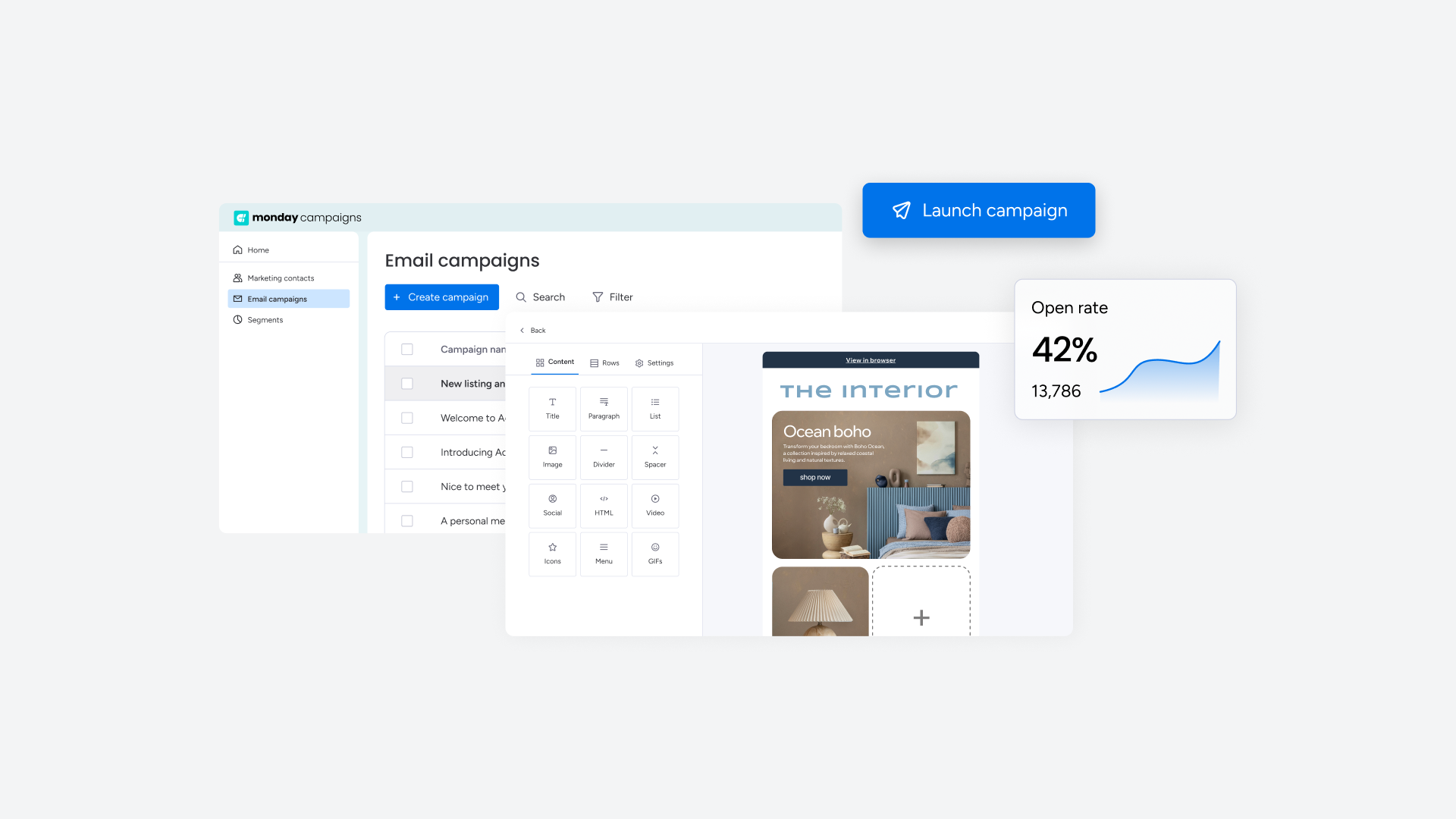
Email conversion rate is the percentage of email recipients who complete a desired action after opening your message. This means tracking whether people actually do what you asked them to do, like making a purchase, signing up for a webinar, or downloading a resource.
Think of it as the final scorecard for your email campaigns. While open rates tell you if your subject line worked, conversion rates reveal if your entire campaign achieved its goal.
Email marketing conversion rate definition
Email marketing conversion rate measures how many delivered emails result in a completed action. You calculate it by dividing conversions by delivered emails, then multiplying by 100.
Here’s what counts as a conversion:
- E-commerce: Completed purchases
- SaaS: Demo requests or trial signups
- Nonprofits: Donations or event registrations
- B2B: Whitepaper downloads or consultation bookings
The key is defining your conversion goal before launching any campaign. This keeps your measurement consistent and your strategy focused.
Conversion rate vs. CTR vs. CTOR
These 3 metrics track different stages of email engagement. Understanding each one helps you diagnose exactly where campaigns succeed or struggle.
Metric | What it measures | Formula | What it tells you |
|---|---|---|---|
Conversion rate | Recipients who complete your goal | (Conversions ÷ Delivered emails) × 100 | Campaign effectiveness |
CTR | Recipients who clicked any link | (Clicks ÷ Delivered emails) × 100 | Email engagement |
CTOR | Openers who clicked a link | (Clicks ÷ Opens) × 100 | Content relevance |
High CTR but low conversion? Your landing page needs work. Low CTOR? Your email content isn’t compelling enough.
How to calculate email conversion rate
Calculating conversion rate requires just 2 numbers: total conversions and total delivered emails. Getting these numbers right makes all the difference in understanding your true performance.
Email conversion rate formula
The formula is straightforward:
(Number of conversions ÷ Number of emails delivered) × 100
Remember to use delivered emails, not sent emails. Bounced messages never reached anyone, so including them inflates your results and gives you false data.
Step-by-step calculation example
Let’s say you send a product launch campaign. You send 5,000 emails, but 150 bounce. That leaves 4,850 delivered emails. From those, 145 recipients make a purchase.
Your calculation:
- Conversions = 145
- Delivered emails = 4,850
- (145 ÷ 4,850) × 100 = 2.99%
Your conversion rate is 3%. Now you can compare this to past campaigns or industry benchmarks to gauge success.
Setting up conversion tracking
Accurate tracking requires the right setup from day one. Without proper tracking, you’re flying blind. Here’s what you need:
- UTM parameters: Add tracking codes to every link so analytics platforms can attribute conversions to specific campaigns
- Conversion pixels: Place tracking code on thank-you pages to capture completed actions
- Platform integration: Connect your email system with your CRM or analytics platform for unified reporting
- Clear goals: Define exactly what counts as a conversion for each campaign type
Modern email marketing platforms like monday campaigns streamline this entire process. The best solutions automatically track conversions and connect them to revenue data in your CRM, giving you the full picture without manual setup.
What is a good email conversion rate?
A good conversion rate typically falls between 1% and 5%, so a 2.5% rate sits comfortably in the good range. For context, Brevo’s 2026 benchmark puts the average marketing email click-through rate at 2.27%, with top performers reaching 5.22%, a reminder that even earning the click is competitive before conversion comes into play. Context still matters more than averages, since your industry, audience quality, and campaign type all influence what’s realistic for your business.
Different email types naturally convert at different rates. Understanding these benchmarks helps set realistic expectations:
Email type | Typical conversion range | Why the difference |
|---|---|---|
Promotional | 1% – 3% | Broad audience, general offers |
Transactional | 3% – 6% | Timely, relevant to recent actions |
Welcome series | 2% – 5% | High engagement from new subscribers |
Re-engagement | 0.5% – 2% | Targeting inactive users |
Event invitations | 2% – 4% | Clear action with deadline |
Factors that impact conversion benchmarks
Several variables determine whether your rates fall above or below average. Understanding these helps you focus optimization efforts:
- List quality: Permission-based lists with engaged subscribers always outperform purchased or stale lists.
- Message relevance: Targeted campaigns based on behavior or preferences convert higher than generic blasts.
- Sales cycle length: B2B campaigns with longer decision processes often have conversion cycles that extend over a longer period.
- Seasonal timing: Retail sees spikes during holidays while B2B slows during summer months.
- List age: Newer lists may start lower but improve as you learn what resonates.
Email marketing conversion rate benchmarks by industry
Industry context shapes what’s achievable. A 2% rate might be excellent for B2B software but disappointing for e-commerce.
B2B email conversion benchmarks
B2B conversions happen over weeks or months, not minutes. Decision-makers research, compare options, and seek approval before converting.
Industry | Typical range | Conversion examples |
|---|---|---|
SaaS/software | 1.5% – 3% | Free trial signups, demo requests |
Professional services | 1% – 2% | Consultation bookings, quote requests |
Manufacturing | 0.8% – 1.5% | Catalog downloads, sample requests |
Financial services | 1% – 2.5% | Account applications, appointment bookings |
B2C and retail conversion rates
B2C buyers make faster decisions, leading to higher immediate conversion rates. Impulse purchases and seasonal promotions drive quick action.
Segment | Typical range | Peak conversion periods |
|---|---|---|
E-commerce | 2% – 5% | Black Friday, holiday seasons |
Retail | 2.5% – 4.5% | End-of-season sales |
Consumer services | 2% – 4% | New year, back-to-school |
Travel & hospitality | 1.5% – 3.5% | Summer planning, last-minute deals |
SaaS and technology industry rates
SaaS companies track multiple conversion types throughout the customer lifecycle. Each represents different value to the business.
Conversion type | Typical range | Business impact |
|---|---|---|
Free to paid | 2% – 6% | Direct revenue generation |
Demo requests | 1% – 3% | Sales pipeline growth |
Feature adoption | 1.5% – 4% | Reduced churn risk |
Upsells | 1% – 2.5% | Expansion revenue |
Nonprofit and education benchmarks
Mission-driven organizations measure success differently. Conversions focus on engagement and support rather than sales.
Sector | Typical range | Common conversions |
|---|---|---|
Nonprofit | 1% – 4% | Donations, volunteer signups, petition signatures |
Education | 1% – 3% | Course enrollments, event registrations, resource downloads |
Key email metrics that drive conversions
Three metrics directly influence your conversion success. Monitoring these helps identify where recipients drop off and why, and pairing them with deeper email marketing analytics gives you the full performance picture.
Click-through rate (CTR)
CTR shows what percentage of delivered emails generated at least one click:
(Clicks ÷ Delivered emails) × 100
Low CTR signals problems with:
- Subject lines that don’t match content
- Weak or buried calls-to-action
- Poor email design or formatting
Most industries see 2% to 5% CTR. If yours falls below, focus on making your emails more engaging before worrying about conversions.
Click-to-open rate (CTOR)
CTOR reveals how compelling your email content is to those who opened it:
(Clicks ÷ Opens) × 100
This metric isolates content performance from subject line effectiveness. Low CTOR means your email didn’t deliver on the promise of your subject line.
Revenue per email
Revenue per email connects your campaigns directly to business outcomes. Divide total campaign revenue by delivered emails to see the dollar value of each send.
This metric matters most for proving ROI. Software like monday campaigns automatically calculates this by connecting email performance to sales data, showing exactly how campaigns impact revenue.
Conversion rates bridge the gap between marketing activity and business results. They prove whether your campaigns actually drive revenue or just generate vanity metrics.
Revenue per email is also where automation earns its keep. Klaviyo’s 2026 benchmarks show automated flows generate about 41% of email revenue from just 5.3% of sends, which is why revenue teams track dollars per send, not opens.
Connecting email conversions to ROI
ROI calculation shows the real value of your email program:
(Revenue from conversions – Campaign costs) ÷ Campaign costs × 100
A campaign generating $5,000 in revenue with $1,000 in costs delivers 400% ROI. This data helps justify budget increases and strategic investments.
Impact on customer lifetime value
Email drives both acquisition and retention. A customer acquired through email who makes repeat purchases has higher lifetime value than a one-time buyer.
Strong email programs increase CLV by:
- Nurturing relationships: Regular touchpoints keep your brand top-of-mind
- Driving repeat purchases: Targeted offers based on purchase history
- Reducing churn: Proactive engagement before customers drift away
8 proven strategies to improve email conversion rates
Ready to boost your conversion rates? These strategies address the most common barriers between opens and conversions.
1. Optimize for mobile-first design
Mobile opens dominate email engagement. If your emails break on small screens, you lose conversions instantly.
Mobile optimization essentials:
- Single-column layouts: Content flows naturally without horizontal scrolling.
- 44×44 pixel tap targets: Buttons stay clickable on touchscreens
- 14-point minimum font: Text remains readable without zooming
- Compressed images: Fast loading on cellular connections
2. Implement advanced email segmentation
Generic emails convert poorly because they ignore individual needs. Segmentation lets you send relevant messages to specific groups.
High-impact segmentation strategies:
- Behavioral triggers: Cart abandoners, recent purchasers, inactive subscribers
- Lifecycle stages: New leads, active customers, at-risk accounts
- Engagement levels: Highly engaged, occasionally active, dormant
- Purchase patterns: Big spenders, bargain hunters, seasonal buyers
3. Personalize content throughout the journey
Personalization goes beyond using someone’s name. It means delivering content that matches their specific situation and needs.
Effective personalization tactics:
- Dynamic product recommendations: Show items based on browsing history.
- Behavior-based content: Different messages for first-time vs. repeat buyers.
- Location-specific offers: Highlight local events or weather-based promotions.
- Role-based messaging: For example, use different content for a CEO vs. manager vs. individual contributor.
4. Create compelling calls-to-action
Your CTA is where interest becomes action. Weak CTAs kill conversions even when everything else works perfectly. CTA best practices:
- Action-oriented language: “Start your free trial” is more effective than “Learn more” because it’s action-oriented.
- Visual prominence: Use contrasting colors, white space, and larger size.
- Strategic repetition: Consider multiple CTAs in longer emails.
- Urgency elements: Use “Today only” or “5 spots left.”
5. Deploy high-converting automated workflows
Automation delivers the right message at the perfect moment without manual effort. These workflows run continuously, capturing conversions you’d otherwise miss.
Essential automated campaigns:
- Welcome series: Convert new subscribers while engagement peaks.
- Abandoned cart recovery: Rescue lost sales with timely reminders.
- Post-purchase follow-up: Drive reviews, referrals, and repeat purchases.
- Re-engagement campaigns: Win back dormant subscribers.
6. Test and optimize campaign elements
Small changes can dramatically impact conversions. Testing reveals what actually works for your audience.
Priority testing elements:
- Subject lines: Length, personalization, urgency
- Send times: Day of week, time of day
- Content length: Short and punchy vs. detailed
- Design elements: Button color, image placement, layout
7. Maintain list quality and deliverability
An email must reach the inbox to have a chance to convert. List hygiene protects your sender reputation and email deliverability.
Deliverability essentials:
- Regular list cleaning: Remove hard bounces and chronic non-openers.
- Double opt-in: Confirm subscribers genuinely want your emails.
- Authentication protocols: Ensure SPF, DKIM, and DMARC setup.
- Engagement monitoring: Watch for declining open rates.
8. Perfect your email send timing
Timing impacts whether recipients even see your email. The perfect moment varies by audience and industry.
Send time optimization approaches:
- Time zone scheduling: Reach everyone during business hours.
- Behavioral analysis: When do your subscribers typically engage?
- Day-of-week testing: Assess weekday vs. weekend performance.
- Frequency optimization: Find the sweet spot between too much and too little.
How AI improves email conversion rates
AI takes the guesswork out of optimization. Instead of manual analysis and testing, AI continuously improves your campaigns automatically.Modern AI-powered platforms analyze recipient data, predict behavior, and personalize content at scale, turning one campaign into thousands of customized versions that drive higher conversions.
- Real-time content personalization: AI analyzes each recipient’s behavior, preferences, and lifecycle stage to customize content instantly, delivering higher relevance without creating multiple campaign versions manually.
- Predictive send time optimization: AI learns when each subscriber typically engages with email and schedules delivery for their optimal moment, beating broad time zone scheduling with individual-level precision.
- Automated audience segmentation: AI identifies patterns humans miss by continuously analyzing engagement data to create and refine segments for maximum conversion potential.
These AI-powered capabilities in monday campaigns work together seamlessly. Segments update dynamically as subscriber behavior changes, keeping your targeting precise without manual maintenance.The result is consistently higher conversion rates with less effort from your team.
In monday campaigns, these capabilities show up as ready-made monday agents. The Content agent adapts messaging per channel and learns from engagement. The Performance Marketing agent connects campaign performance to revenue data. The Outbound Sequencing agent drafts personalized outreach and follows up automatically.
Turn email clicks into tracked revenue with monday campaigns
Most email tools stop at opens and clicks, right before the metrics that decide budget. monday campaigns is a product in the monday CRM suite that brings campaign execution, CRM data, and revenue tracking into one place, so you can see exactly which emails drive real outcomes.
Because email engagement sits next to pipeline activity, you can follow the full customer journey from first click to closed deal. Marketing proves impact beyond vanity metrics, and sales gains context on what each prospect has already seen and clicked.
monday agents that work on conversions

monday agents are AI teammates that reason through tasks and handle exceptions, which sets them apart from fixed automations. The Content agent adapts messaging for each channel and learns from engagement, while the Outbound Sequencing agent drafts personalized outreach and follows up automatically. You build them with a no-code agent builder, so there is no need to wait on an operations team.
AI-powered revenue tracking
The Performance Marketing agent connects campaign performance to revenue data in your CRM. Instead of stitching together UTM tags and conversion pixels by hand, you see conversions and revenue per email automatically. That makes it simple to show which campaigns earn their budget.
Smart segments and send-time recommendations
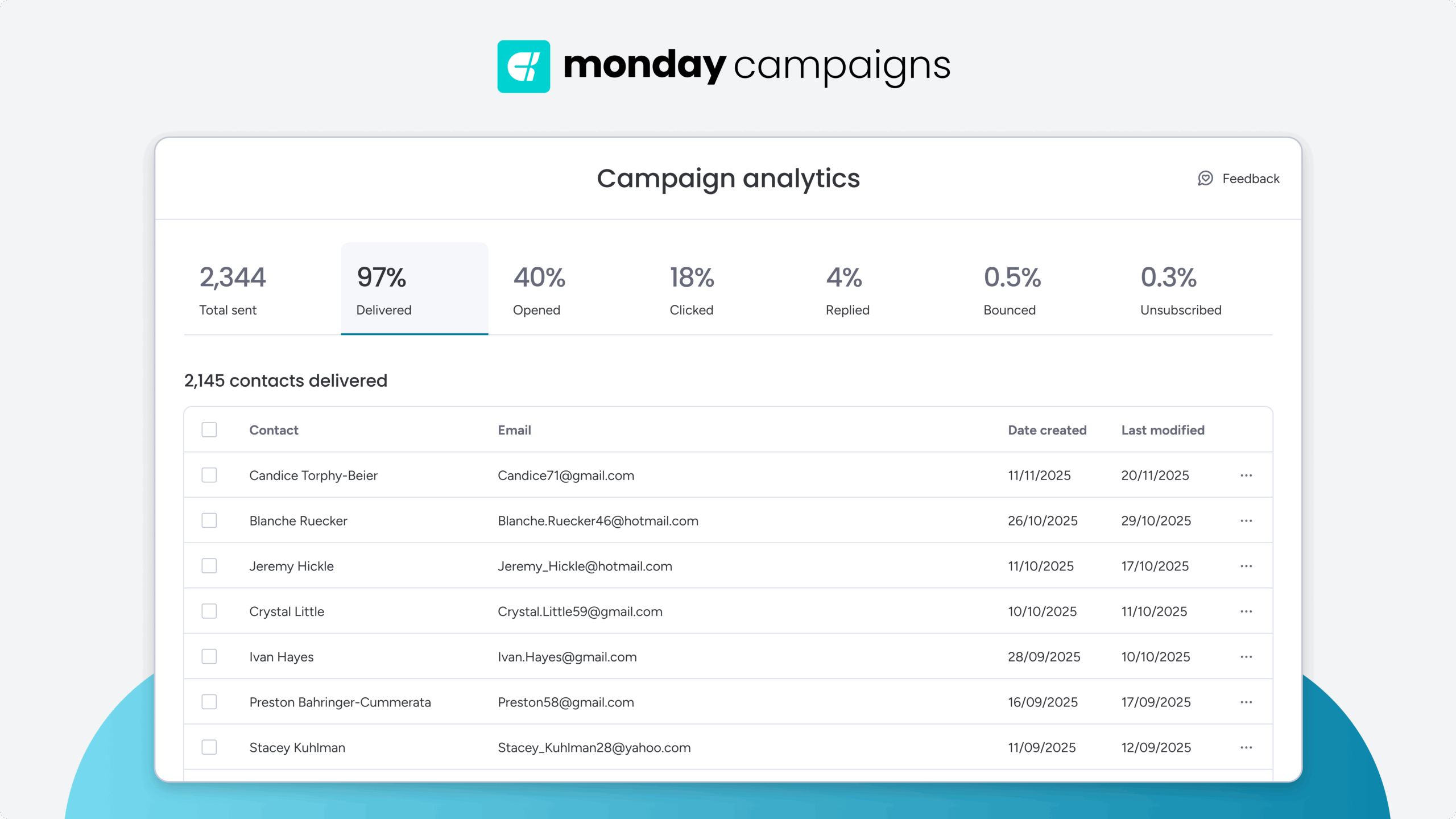
Dynamic segments refresh automatically from CRM data and subscriber behavior, so your targeting stays relevant without manual list updates. AI send-time recommendations suggest when each audience is most likely to engage. Together, they help the right message reach the right person at the right moment.
Custom conversion views with monday vibe and monday MCP
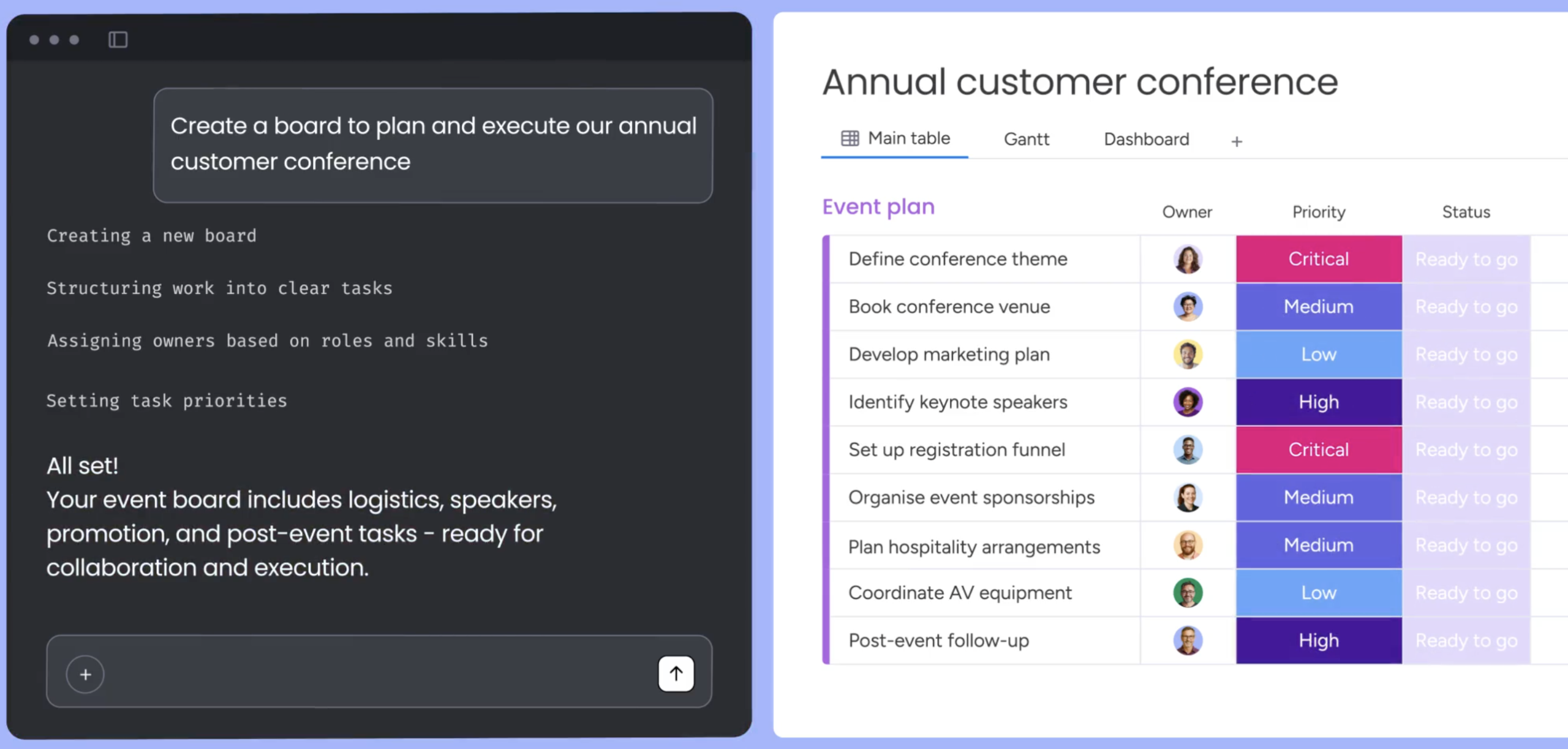
With monday vibe, an AI no-code app builder, you turn a plain-language prompt into a custom dashboard, widget, or app on monday.com, like a conversion-tracking view built exactly the way your team reports. monday MCP connects monday data and agents to any marketing platform through open APIs. Your conversion data then flows across your whole stack instead of sitting in one tool.
Turn email metrics into measurable revenue
Your email conversion rate reveals the true impact of your campaigns, not just who opened or clicked, but who actually took action. The strategies in this guide work together to turn more subscribers into customers. Mobile-first design helps everyone engage, segmentation delivers relevant messages, and AI-powered optimization removes the guesswork.
Track the complete journey from email to revenue, and you’ll prove exactly how your campaigns drive business growth. With monday campaigns, you can build automated workflows that convert, act on AI recommendations, and connect email directly to revenue through native CRM integration.
FAQs
What’s a good conversion rate for email marketing campaigns?
A good email marketing conversion rate typically ranges from 2% to 5%, though this varies by industry and campaign type. B2B campaigns often see 1% to 3% due to longer sales cycles, while e-commerce might achieve 3% to 5% during promotional periods. Focus on improving your own rates over time rather than chasing industry averages.
How does monday campaigns track email conversions?
monday campaigns tracks email conversions through native CRM integration that records conversions and revenue automatically for every campaign. AI agents assist by connecting performance to revenue data, so you see business impact without manual UTM tagging or pixel setup.
What’s the difference between email conversion rate and click-through rate?
Email conversion rate measures the percentage of recipients who complete your desired action, like making a purchase. Click-through rate (CTR) only measures who clicked a link in your email. You might have a 10% CTR but only 2% conversion rate, indicating that people are interested but something prevents them from completing the action.
How can I improve low email conversion rates?
Improving low conversion rates starts with identifying where recipients drop off. Check if your emails display correctly on mobile, segment your audience for more relevant messaging, test different CTAs, and ensure your landing pages match your email promises. AI-powered platforms can automate much of this optimization process.
What factors affect email conversion rates the most?
List quality has the biggest impact on conversion rates, followed by message relevance and timing. Permission-based lists of engaged subscribers will always outperform purchased lists. Sending the right message to the right person at the right time drives the highest conversions.
Should I focus on conversion rate or revenue per email?
Both metrics matter, but revenue per email often provides clearer business value. A campaign with 2% conversion rate generating $100 per conversion delivers more value than one with 5% conversion rate generating $10 per conversion. Track both metrics to get the complete picture of campaign performance.

 Get started