

Most B2B deals don’t stall because of product fit. They lose momentum in the final stretch, when approvals wait for signoff, stakeholders go quiet, and follow-ups get buried in someone’s inbox. A sales closing strategy is what separates teams that close predictably from those that rely on a rep having a good week.
A technique is what you say in the moment, while a strategy is the system that gets you there, with the right people aligned, proof delivered, and next steps locked in. This guide covers the difference between the two, 14 proven closing moves, a 6-step closing process, and a framework for building a repeatable system. You’ll also see how revenue teams use monday CRM to keep deals moving.
Key takeaways
- A sales closing strategy is the plan: It’s the repeatable system that moves a qualified buyer from late-stage interest to a signed agreement. It covers stakeholder alignment, objection handling, proof, and next-step control.
- A closing technique is the move: It’s a specific phrase or ask used near the decision point, like a summary close or direct close.
- Repeatable closing needs structure: Stage exit criteria, stakeholder mapping, mutual action plans, and disciplined follow-up beat rep instinct every time.
- Cross-functional alignment often decides the deal: When legal, finance, and post-sales work from the same context, deals get signed instead of stalling.
- Revenue teams find success using monday CRM to centralize deal history, automate follow-ups, and give managers a live view of deal health across every stage.
What is a sales closing strategy?
A sales closing strategy is your repeatable plan for moving a qualified buyer from late-stage interest to a signed agreement. It’s bigger than one clever line. And it starts way before the final ask.
A strong strategy helps buyers make a decision they can defend internally. That matters in B2B sales, where one “yes” rarely closes the whole deal.
Here’s what makes a deal closeable instead of just feeling close. These components show up in every strong late-stage deal.
| Component | What it means | Why it matters |
|---|---|---|
| Buyer readiness | Signals like pricing, implementation, or contract questions | Helps time the ask |
| Stakeholder alignment | The right approvers agree on the problem and fit | Reduces surprises late in the deal |
| Value proof | Proof tied to the buyer's stated goal | Gives internal justification |
| Objection plan | Responses to price, risk, timing, or fit concerns | Lowers friction |
| Next-step control | Every meeting ends with an owner and date | Keeps momentum alive |
Picture a software deal. The strategy might include:
- Confirming the operations lead and IT approver are aligned
- Showing how the platform cuts manual reporting
- Preparing for migration questions
- Locking the next action before every call ends
- Asking for signature once blockers clear
What is closing in sales?
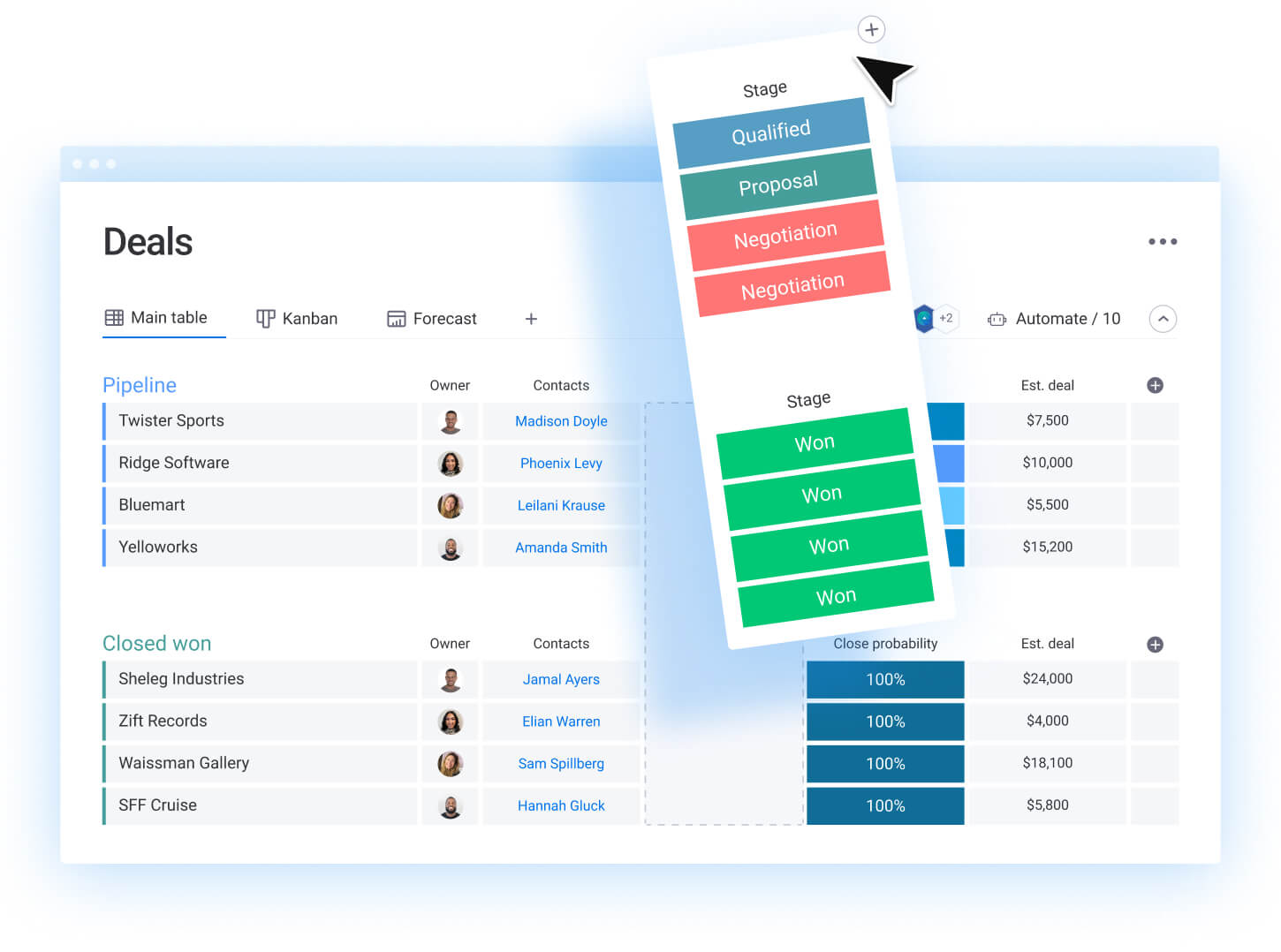
Closing in sales is the final stage in the sales cycle, or sequence of stages, where the buyer commits to the purchase. In smaller deals, that’s a single conversation, but in B2B it’s usually a chain of approvals.
That chain often includes:
- Proposal approval
- Legal review
- Procurement
- Budget sign-off
- Signature
- Kickoff planning
So the answer to “what is closing in sales?” depends on the shape of the deal.
| Term | What it is | Scope |
|---|---|---|
| Sales closing | The decision point or final commitment sequence | One part of the sales process |
| Sales closing strategy | The repeatable plan that helps that commitment happen | The full late-stage approach |
Sales closing strategy vs. sales closing technique
A lot of sales advice turns closing into theater: the right line, the clever question, and the deal appears won. In reality, closing takes far more preparation than a single moment.
Strategy and technique do different jobs. One builds the conditions for a decision. The other helps you act when it’s time.
| Dimension | Strategy | Technique |
|---|---|---|
| Purpose | Create the conditions for commitment | Move the deal with a specific ask |
| Timing | Spans late-stage selling | Used at a specific moment |
| Scope | Stakeholders, proof, objections, approvals, next steps | One interaction |
| Example | Mutual action plan from proposal to signature | Summary close |
Techniques are the phrases reps use near the decision point, and they work best when they match buyer readiness. Used at the right time, they feel natural and land with impact. It shows whether the deal has the right people involved, proof delivered, and approvals scheduled. That’s what makes forecasts reliable. “Commit this month” means more when it’s backed by evidence, not hope.
Techniques are the phrases reps use near the decision point. They work when they match buyer readiness. Used too early, they feel forced. Used at the right time, they feel natural.
What helps teams close with fewer surprises? A steady, repeatable process that everyone follows.
Why closing strategies help teams close more deals
Late-stage deals move more predictably when the team follows a shared system instead of relying on rep instinct alone. A strategy makes closing visible across the whole revenue team, which improves planning, coaching, and execution.
Here’s what a strong closing strategy does for a team:
- Improve forecast confidence: Leaders can see whether key stakeholders, approvals, and objections are actually resolved.
- Reduce sales cycle drag: Sellers surface blockers earlier, instead of discovering them at contract stage.
- Build buyer trust: Organized process signals competence, and competence makes buying easier.
- Support cleaner handoffs: Sales, legal, finance, and post-sale teams know who owns what and when.
Revenue teams use monday CRM to keep deal stages, stakeholder notes, emails, and next steps in one place. That gives managers a live view that improves sales opportunity management by showing what’s moving and what’s quietly aging.
Try monday CRM14 sales closing techniques and when to use them
Closing techniques are situational. Each technique fits a specific buyer situation, so context matters more than repetition. Is the buyer ready to act, or are they still aligning internally?
The right technique depends on where the buyer is in their decision process. Use this table as a fast reference before the detailed breakdown below.
| Technique | Best used when | Main risk if misused |
|---|---|---|
| Assumptive close | Buyer acts like the decision is made | Feels premature |
| Summary close | Buyer needs a recap of value | Sounds scripted |
| Question close | You need to test readiness | Feels evasive |
| Direct close | Buyer is ready to decide | Feels pushy |
| Soft close | Buyer needs a small next step | Can slow a ready deal |
| Sharp angle close | Buyer asks for a concession | Feels transactional |
| Scale close | You need to diagnose hesitation | Feels clinical |
| Urgency close | Timing reason is real | Hurts trust if fake |
| Scarcity close | Availability is truly limited | Backfires if false |
| Takeaway close | Buyer is fixated on one element | Feels confrontational |
| Puppy dog close | Experience lowers risk | Attracts poor-fit buyers |
| Choice close | Buyer needs help picking a path | Feels manipulative |
| Ben Franklin close | Buyer is highly analytical | Can overexpose cons |
| Collaborative close | Deal has many stakeholders | Takes longer |
Foundational techniques every rep should master first
If you only master a handful, start with these. The direct, summary, assumptive, question, and soft close cover most real deal situations.
- Assumptive close: Speak as if the buyer is ready. “Would the week of the 15th work for kickoff?”
- Summary close: Recap the goal, value, and fit, then ask. “You said reporting time was the main issue, and we mapped that to automated dashboards. Ready to move forward?”
- Question close: Surface what’s missing. “What would need to happen for you to move forward this quarter?”
- Direct close: Ask plainly. “Are you ready to sign the agreement?”
- Soft close: Ask for a smaller commitment. “Would it make sense to review the contract together?”
9 situational techniques to reach for when the deal calls for it
These techniques work in specific moments. Use them when the deal calls for it, not by default. Each one addresses a specific buyer state or deal dynamic.
- Sharp angle close: Trade a concession for commitment. “If we include onboarding, can you sign by Friday?”
- Scale close: Ask the buyer to rate readiness from 1 to 10, then ask what moves them higher.
- Urgency close: Use a real timing reason. Anchor urgency in a real timing reason. Buyers respond to authentic context and quickly notice anything less.
- Scarcity close: Point to genuinely limited capacity. This only works when supply is truly constrained.
- Takeaway close: Remove part of the offer to test what matters most when a buyer is stuck on scope.
- Puppy dog close: Offer a trial or pilot. Firsthand experience lowers risk faster than another slide deck.
- Choice close: Offer two real forward paths. “Would you rather start with a pilot or full rollout?”
- Ben Franklin close: List pros and cons together for analytical buyers who want to reason it through.
- Collaborative close: Map the final approval path with the buyer. Who needs to weigh in, and what’s their process?
What's the simplest way to close a sale without sounding pushy?
The simplest close? A calm, direct ask tied to value. Restate the outcome the buyer cares about, confirm blockers are resolved, then ask for the commitment plainly.
Match the technique to where the buyer is, not your quota pressure. If the buyer is still aligning internally, a direct close often lands flat. Inspect buyer readiness first, then stakeholder coverage.
What should you say when closing a sale?
What you say shifts by channel, but the structure stays the same: recap value, confirm readiness, ask directly. Here’s how that looks across common closing scenarios:
- On a call: “You mentioned cutting reporting time was the priority. We’ve mapped that out. Are you ready to move forward this month?”
- In a meeting: “It sounds like the team is aligned. What’s left before we can get this signed?”
- By email: “Based on our last call, the next step is signature. Are you good to sign this week, or is there an open question I can help with?”
How to close a sale in 6 steps
Most deals close because the process was handled well from start to finish. These 6 steps keep late-stage deals grounded, giving managers something concrete to inspect at every stage.
Step 1: Confirm the business need
Restate the problem in the buyer’s own words. Confirm why it matters now and what happens if it stays unsolved.
Step 2: Identify the decision makers
Map the champion, economic buyer, technical approver, and anyone in legal, procurement, or finance. Mapping every approver early keeps healthy deals moving forward.
Step 3: Prove the value
Connect the offer to the buyer’s stated outcome. Give them proof they can repeat internally, not generic product talk.
Step 4: Handle objections
Treat sales objections as buying questions. Surface the real issue, respond directly, then confirm the concern is addressed.
Step 5: Confirm the next step
End every meeting with one action, one owner, and one date. Teams often track these directly in the deal record on monday CRM so follow-up stays organized across notes and inboxes.
Step 6: Ask for the sale
Once stakeholders align and blockers clear, ask for the right commitment for that stage. Sometimes that’s signature. Sometimes it’s legal approval or contracting.
How to build a repeatable sales closing system
A closing system turns rep-by-rep improvisation into something the whole team can do. If your team can’t define what “commit” means, can the forecast really be trusted?
These building blocks matter when you want closing to scale beyond one strong rep. They give managers something concrete to inspect and replicate.
- Stage exit criteria: Define what must be true before a deal moves stages.
- Mutual action plans: Track buyer and seller actions, owners, and due dates.
- Deal review rhythm: Review late-stage deals weekly with real evidence.
- Standard approval workflows: Make quotes, discounts, redlines, and handoffs consistent.
- Cross-functional visibility: Include sales, legal, finance, and onboarding in the same process.
With monday CRM, teams can customize deal stages, fields, and workflows without heavy technical work, so the pipeline reflects how they actually sell. Leaders can build close-stage checkpoints that match how their team actually sells.
Turn your closing strategy into a system with monday CRM
A closing strategy works better when the whole process lives in one place. Teams get sharper late-stage control when they use monday CRM to run the close, instead of only logging outcomes after the fact.
With deal context, stakeholder notes, and next steps tied to every opportunity, reps walk into close-stage conversations prepared and managers see risk before it becomes a missed quarter. Here are the capabilities that matter most when deals reach the final stretch.
AI timeline summary
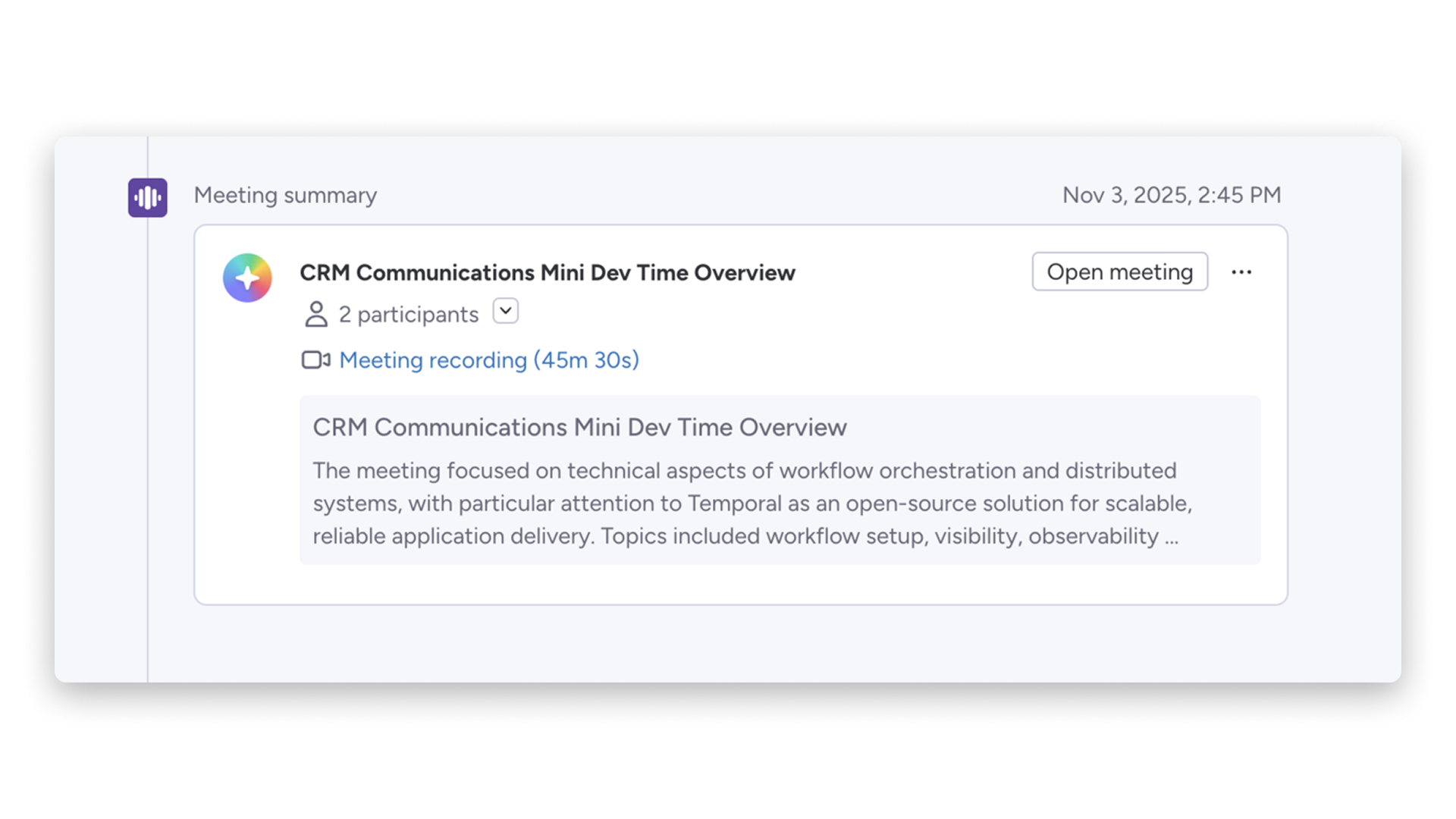
Late-stage deals carry long histories of calls, emails, and notes. AI timeline summary condenses that history into a quick recap, so reps can prep for the next buyer call in minutes. It also helps legal, finance, and post-sales teammates get up to speed without digging through threads.
AI-assisted follow-ups and next steps
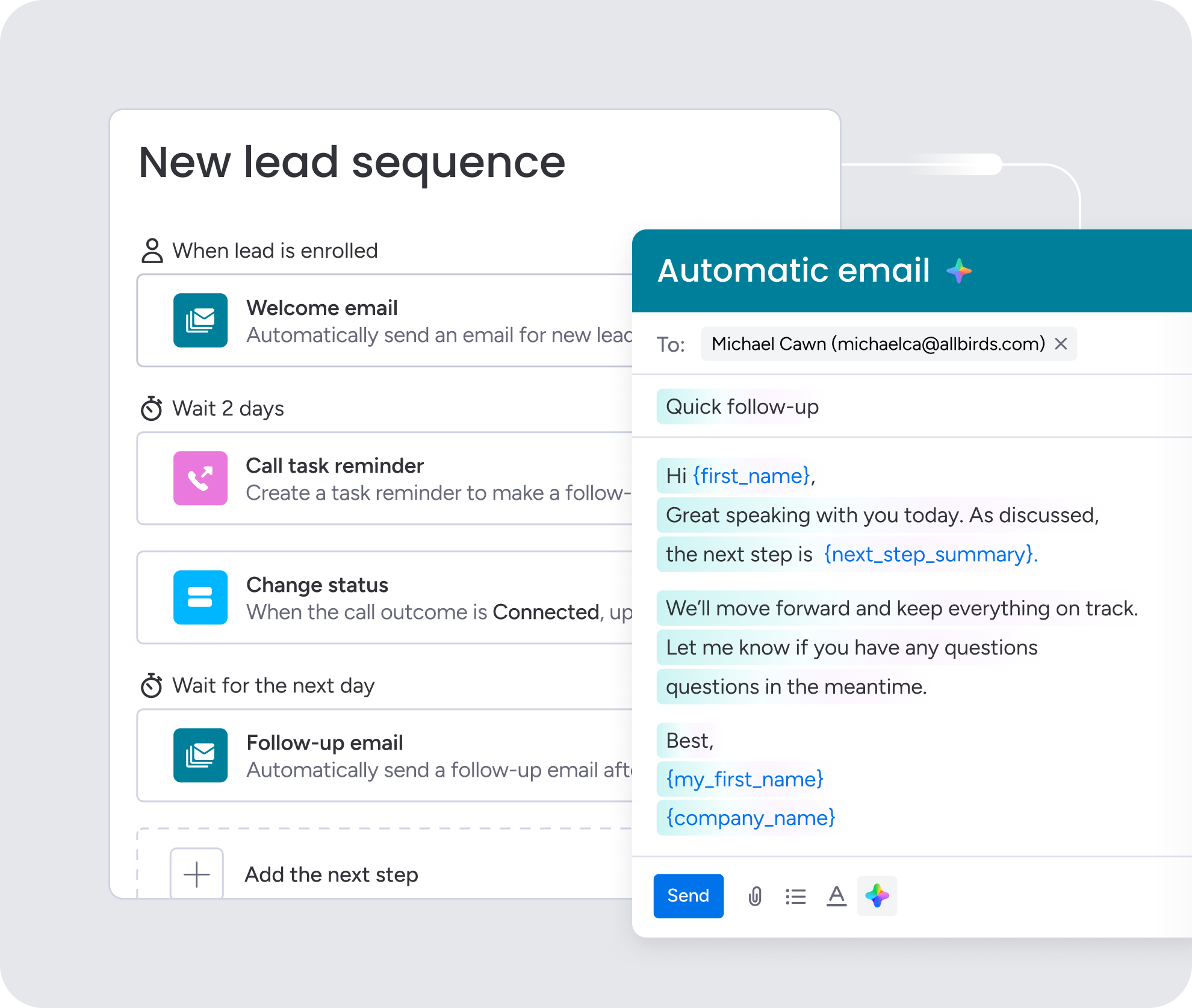
Deals stall when follow-ups slip through the cracks. monday CRM’s AI features help draft emails and summarize conversations, so reps can send a clear recap and lock in one action, one owner, and one date faster. Reps still review and personalize every message before it goes out.
Custom pipelines with automated workflows
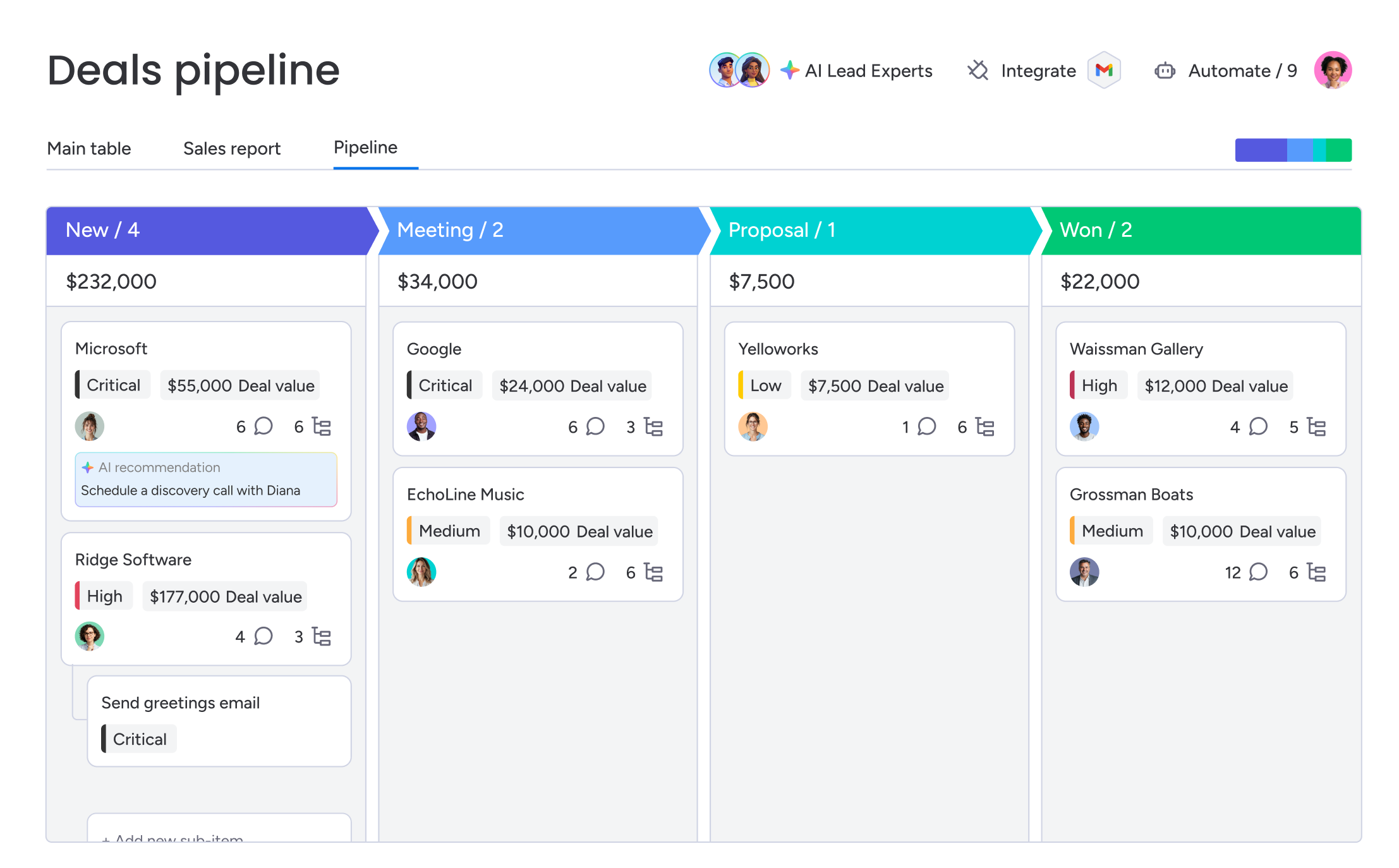
Not every deal moves through the same stages. Customize drag-and-drop pipelines to reflect legal review, procurement, and handoff, then automate reminders, manager alerts, and handoff triggers at each stage. That keeps momentum alive without relying on rep memory.
Real-time dashboards

Managers shouldn’t have to chase status updates to understand deal health. Live dashboards show deal aging, close dates, approvals, and forecast versus actuals in one view. That makes weekly deal reviews faster and forecasts easier to trust.
How to make closing repeatable across your revenue team
A sales closing strategy is your plan, and a closing technique is the move. In B2B sales, closing is usually a sequence of approvals, not a single moment, and the teams that treat it that way win more consistently. Strong closing comes from preparation, buyer alignment, and next-step discipline, while repeatable closing comes from process, visibility, and coordination.
If you’re unsure whether your team has exit criteria, stakeholder alignment, and clear next steps on every late-stage deal, start there. With monday CRM, revenue teams get the structure, visibility, and automation to make closing a repeatable process across every deal.
Try monday CRMFAQs
What are the 8 most common sales closing techniques?
The 8 most common sales closing techniques are the assumptive close, summary close, question close, direct close, soft close, urgency close, choice close, and collaborative close.
What is the 2-2-2 rule in sales?
The 2-2-2 rule in sales is a follow-up rhythm that suggests reaching out two days after contact, two weeks later, and two months after that, though teams often adjust timing based on deal complexity.
What are the 7 C's in sales?
The 7 C's in sales usually refer to Connect, Clarify, Confirm, Convince, Collaborate, Commit, and Continue, though wording varies by methodology.
What is a soft close in sales?
A soft close in sales is a smaller ask that moves the deal forward, like reviewing contract terms or scheduling the next meeting, instead of asking for full commitment at once.
What is the golden rule of sales in business?
The golden rule of sales is to focus on the buyer's needs and give them clarity, rather than applying pressure to hit your own number.
How does monday CRM support a repeatable sales closing strategy?
monday CRM supports a repeatable closing strategy by giving teams customizable stages, centralized deal history, AI summaries, automated follow-ups, and shared visibility into approvals and handoffs.