
Most sales follow-up emails stall because the message gives the buyer no reason to respond, not because the rep stopped too soon. The fix is sending the right email at the right moment, with context that feels relevant and an ask that makes replying easy.
This guide shares 12 ready-to-use templates for every scenario, from post-call and post-demo notes to re-engagement emails and respectful close-the-loop messages. You’ll also find tips on subject lines, timing, and personalization, plus ways to connect follow-up activity to real pipeline outcomes. With monday campaigns, you can build, send, and track every follow-up right next to your CRM data.
Key takeaways
- Match your follow-up to the moment: Every scenario, whether post-call, post-demo, or no response, calls for a different message, timing, and ask to earn a reply.
- Structure beats talent every time: A strong follow-up recaps the last interaction, adds one piece of value, and ends with one specific next step.
- Personalization means more than a first name: Reference what the buyer actually said or did, and your reply rate will reflect it.
- Timing is part of the message: Send post-call follow-ups the same day, wait 2–3 days after a proposal, and use the 2-2-2 rule to pace cold outreach while protecting the relationship.
- Keep follow-ups close to your pipeline with monday campaigns: Build, send, and track emails from the same workspace as your CRM data, so your team always knows who engaged, when, and what to do next.
What is a sales follow-up email?
A sales follow-up email continues a conversation after a real interaction: a call, demo, voicemail, proposal, event chat, or a quiet stretch after interest was shown. The job is simple: reconnect the buyer to the last conversation and guide them toward one next move.
Some follow-ups earn replies. Others sit untouched. The difference usually comes down to context, value, and one specific ask. Every strong sales follow-up email is built on 4 core elements:
- Recap the prior interaction: Mention what happened last time so the buyer places you fast.
- Reference relevant buyer context: Include their role, goals, pain points, or recent activity.
- Offer one useful piece of value: Share something that helps them evaluate or decide.
- Ask for one specific next step: Make the CTA easy to answer.
Not all sales emails serve the same purpose. Here’s where follow-up emails fit compared with other email types, so you can match the right message to the right moment:
| Email type | Purpose | Timing |
|---|---|---|
| Cold email | Starts a conversation with someone who hasn't engaged yet | First touch |
| Sales follow-up email | Continues a conversation after an interaction | After calls, demos, proposals, events |
| Marketing nurture email | Educates a broader audience over time | Ongoing, automated |
| Customer email | Supports an existing relationship after purchase | Post-sale |
12 sales follow-up email templates for every scenario
Templates save time, but only when they match the moment. To hit the mark, match the template to the moment: a demo follow-up fits a demo, and a cold follow-up fits early-stage outreach.
Use this table to match the right template to the buyer’s last interaction and your next goal, then dive into each one below:
| Scenario | Best timing | Main goal | Recommended CTA |
|---|---|---|---|
| After a sales call | Within 24 hours | Confirm next steps | Confirm date or reply with feedback |
| After a demo or meeting | Same day or next morning | Connect demo to buyer needs | Involve another stakeholder |
| After a voicemail | Same day | Acknowledge the call attempt | Reply or choose a time |
| After a trade show or event | Within 48 hours | Reconnect while memory is fresh | Continue the discussion |
| Cold prospect follow-up | 3–5 days after first touch | Offer a fresh angle | Small, realistic ask |
| After no response | 5–7 days after last touch | Reopen with new value | Easy one-line answer |
| After a trigger event | Within 24–48 hours | Connect timing to relevance | Business conversation |
| After sending a proposal | 2–3 days after send | Reduce friction in review | Feedback or decision conversation |
| Client or existing customer | Based on account activity | Support expansion or renewal | Account progress action |
| Re-engagement for cold lead | When context changes | Reopen with new relevance | Renewed conversation |
| Breakup email | After 4–6 touches | Close the loop respectfully | Yes, no, or later |
| After a closed deal | Within 24 hours of signature | Confirm handoff | Kickoff timing or key contacts |
Template 1: Follow-up email after a sales call
Subject: Next steps from our call, [First Name]
Hi [First Name], thanks for today. You mentioned [priority], and we discussed how [approach] could support that. Does [date/time] work for the next step, or would [alternative] fit your schedule?
Why this works: It proves you listened and gives them 2 easy reply options.
Template 2: Follow-up email after a demo or meeting
Subject: [Topic from demo] — next steps for [Company]
Hi [First Name], great meeting today. Based on your focus on [challenge], I wanted to highlight [1–2 relevant takeaways] and send [promised asset]. What’s the best way to involve [stakeholder] in the next conversation?
Why this works: It ties the demo to their goals instead of your feature list.
Template 3: Follow-up email after a voicemail
Subject: Just left you a voicemail
Hi [First Name], I just called and left a voicemail about [reason for call]. If email is easier, reply here and I can share more context or send over a few time options.
Why this works: It makes responding easier.
Template 4: Follow-up email after a trade show or networking event
Subject: Following up from [Event Name] — [topic]
Hi [First Name], it was great meeting you at [Event Name]. I enjoyed our conversation about [topic], and I wanted to share [resource or idea] as you think about [priority]. Would it make sense to continue the conversation?
Why this works: It helps them place you right away.
Template 5: Cold prospect follow-up email
Subject: Different angle on [topic]
Hi [First Name], I reached out last week about [topic]. I wanted to share a different perspective: [new angle]. If this is relevant, I’m happy to send more detail.
Why this works: You’re adding something new instead of repeating yourself.
Template 6: Follow-up email after no response
Subject: Quick thought on [topic]
Hi [First Name], following up on my last note about [topic]. I know things get busy, so I’ll keep this short: [new insight or useful point]. If [challenge] is still on your radar, I’d be glad to help.
Why this works: You’re adding value, not pressure.
Template 7: Follow-up email after a trigger event
Subject: Congrats on [trigger event] — quick thought
Hi [First Name], I saw the news about [event]. Congrats. Teams in your position often run into [challenge], so I was curious how you’re approaching [priority]. Would a quick conversation make sense?
Why this works: The timing makes it relevant.
Template 8: Follow-up email after sending a proposal
Subject: Following up on the [Company] proposal
Hi [First Name], I wanted to follow up on the proposal I sent on [date]. The key point to review is [pricing, timeline, or deliverable], and I’m happy to walk through any questions with your team. What’s the best next step on your side?
Why this works: It makes the proposal easier to review.
Template 9: Follow-up email for a client or existing customer
Subject: Quick check-in on [initiative]
Hi [First Name], I wanted to follow up on [milestone or account activity]. Based on what I’m seeing, there may be room to [expand usage, prepare renewal, or align stakeholders]. Would a short sync be useful?
Why this works: It reflects where they are in the account, not cold prospecting.
Template 10: Re-engagement email for a cold lead
Subject: Things have changed since we last talked
Hi [First Name], it’s been a while since we connected. Since then, [new reason for relevance], so I wanted to reach back out in case [original challenge] is active again.
Why this works: It gives them a reason to pick the conversation back up.
Template 11: Breakup email to close the loop
Subject: Should I close the loop?
Hi [First Name], I’ve reached out a few times and understand if this isn’t a priority right now. I’ll close the loop on my end, but if the timing changes later, I’m happy to reconnect.
Why this works: It keeps the relationship intact and often earns a final response.
Template 12: Follow-up email after a closed deal
Subject: Next steps now that we’re official
Hi [First Name], thanks again for your trust. Here’s what happens next: [key contact] will reach out by [date], and in the meantime you’ll receive [next item]. Looking forward to getting this moving.
Why this works: It bridges the handoff from sales to onboarding.
Why sales follow-up emails drive replies
Follow-up emails work because they build on a conversation that already started. The buyer already knows your name, the topic, and why the conversation matters, so you’re not starting from zero.
Four things drive the lift in replies:
- Continuity: The thread already exists, so the buyer doesn’t need to start from zero.
- Relevance: The message connects to a real priority, question, or decision.
- Reduced effort: The ask is small, specific, and easy to answer.
- Momentum: The email helps the deal keep moving while interest is still active.
Silence often signals a busy buyer or a next step that wasn’t specific enough, and both are worth re-engaging. Sometimes the buyer got pulled into other work, or the ask left too much room for interpretation. That’s why generic “just checking in” emails rarely earn a reply. Messages with real context, one useful point, and one next action consistently drive higher response rates.
Try monday campaignsHow to write a sales follow-up email in 5 steps
Writing a strong follow-up comes down to structure, not talent. Know what happened last time and what should happen next. You already have the core of the message. Here’s how to build it:
Step 1: Recap the prior interaction and set your goal
Start with 2 questions: what happened last time, and what do you want from this email? Keep the goal singular: one email, one outcome.
| Vague goal | Focused goal |
|---|---|
| Follow up and see where they're at | Confirm the demo date we discussed |
| Touch base about next steps | Identify the right stakeholder for review |
Step 2: Write a subject line that earns the open
A good subject line sounds familiar and specific; it helps the buyer recognize the conversation right away. Useful patterns include:
- Referencing the interaction: “Following up from our call Tuesday”
- Naming the topic: “Quick question about your Q2 rollout”
- Pointing to the next step: “Next steps for the [Company] proposal”
Step 3: Add buyer context in the first 2 lines
Your opener should show this email was written for this buyer. Mention their role, a challenge they shared, or a business event that matters to them. Skip the generic greeting that could go to anyone.
Step 4: Deliver one piece of value
Value might be a recap, an answer, a promised resource, or a relevant example. Keep it to one item so the buyer knows what matters most. More than one dilutes the message.
Step 5: End with a single specific CTA
Ask for one action only. One simple question beats 3 requests in the same email.
| Weak final line | Strong final line |
|---|---|
| Let me know your thoughts and if you want to chat | Does Thursday at 2:00 p.m. work for a quick call? |
Sales follow-up email subject lines that boost open rates
Subject lines decide whether the email gets opened at all. The strongest ones are short, honest, and tied to real context. Favor plain language that helps the buyer grasp the point right away.
Here are solid options organized by scenario:
- After no response: “Quick thought on [topic],” “Different angle on [topic],” “Closing the loop on [topic].”
- After a call or meeting: “Next steps from our call,” “Quick recap from today,” “The timeline we discussed”
- For cold prospect follow-ups: “Different perspective on [topic],” “One idea for [challenge],” “Saw [trigger event] — thought of you”
- For customers: “Quick check-in on [initiative],” “Thought for your Q2 planning,” “Renewal coming up — quick sync?”
When and how often to send a sales follow-up email
Your timing should match buyer intent. A post-demo follow-up should move faster than a cold re-engagement email. Send at the right window, and you’ll earn the reply while intent is still active.
| Situation | First follow-up timing | Why |
|---|---|---|
| After a live call or demo | Same day or next morning | The conversation is fresh |
| After sending a proposal | 2–3 business days | Time to review, but momentum stays active |
| After a cold outbound touch | 3–5 business days | Gives space to consider the first note |
| After a re-engagement attempt | 5–7 business days | Softer timing fits dormant leads |
For most sales motions, 4–7 touches is a practical range. Stop when:
- You’ve run out of new value to offer
- The buyer has said “later” or gone quiet across all channels
- The relationship would benefit from a lighter nurture path instead
The 2-2-2 rule offers a simple starting point: follow up 2 days after the initial outreach, continue for 2 weeks of follow-up activity, and wait 2 months before re-engaging a cold lead.
How to personalize sales follow-up emails at scale
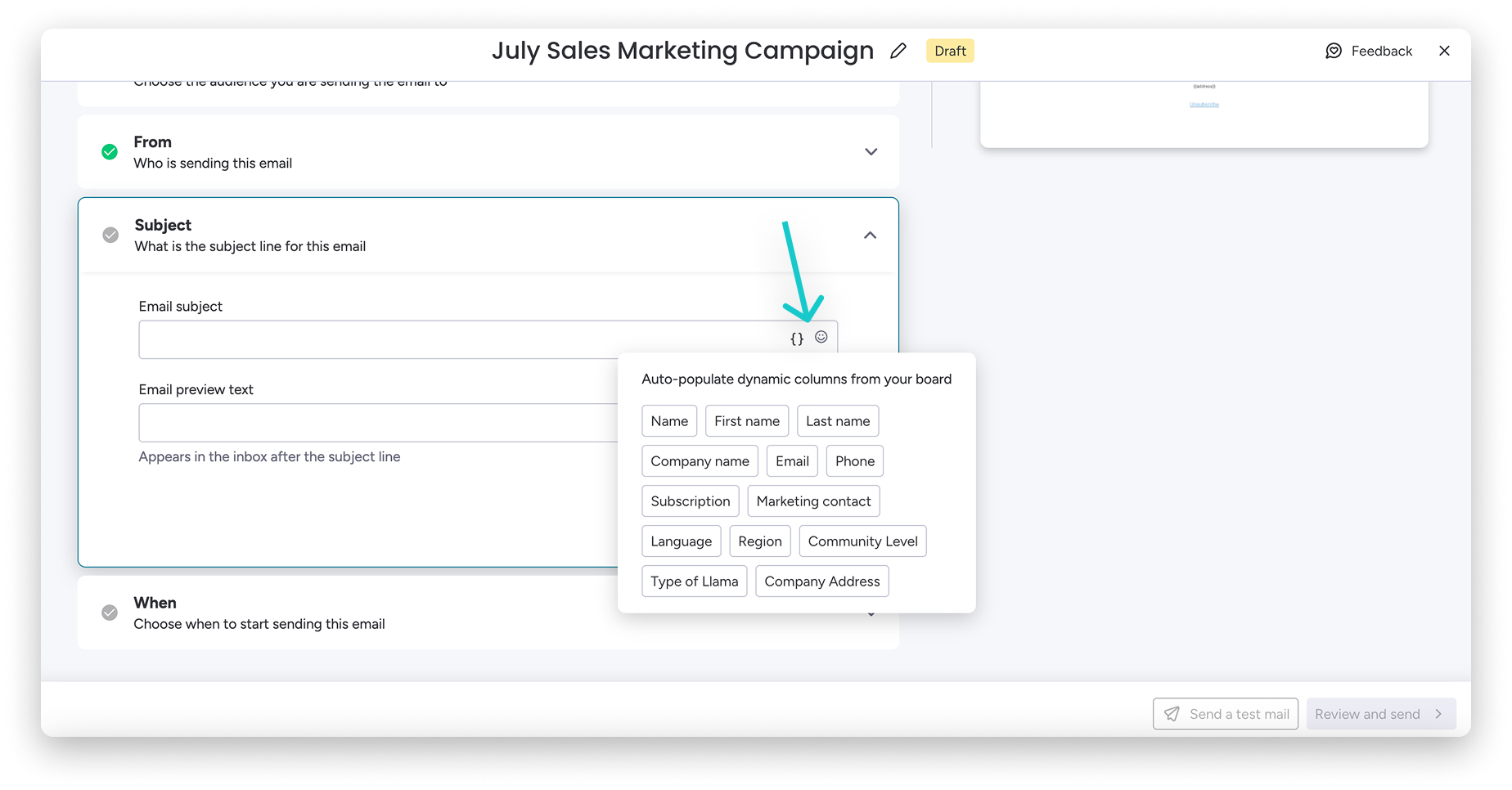
Personalization at scale starts with real data instead of guesswork. What separates a message that earns a reply from one that lands flat? How specifically it reflects the buyer’s situation.
Strong personalization inputs include:
- Prior meeting notes and call summaries
- Job title and role responsibilities
- Company name and industry
- Deal stage and proposal status
- Recent interactions and engagement signals
Shallow personalization swaps in a first name. Real personalization references what the buyer said or did. According to McKinsey’s 2026 Global B2B Pulse, more than 90% of organizations now personalize content across email and other touchpoints, yet market leaders are four times more likely to deploy true one-to-one personalization than laggards. When follow-up campaigns connect to CRM data, marketers can create messages that reflect live buyer context instead of generic filler. AI-generated campaign, like those from monday campaigns, s can analyze sales call notes, add external context, identify the right audience, and aggregate CRM data into the draft.
How to trigger sales follow-up emails from buyer behavior
Calendar-based follow-up has value, but behavior-based follow-up is usually more relevant. Better yet: follow up because the buyer gave you a reason to.
Signals worth acting on include:
- Attending a demo: Send a recap or next step fast.
- Opening a proposal resource: Answer questions while they’re actively reviewing.
- Requesting pricing: Move toward a decision conversation.
- Visiting a high-intent page: Connect the page topic to their likely interest.
- Experiencing a trigger event: Tie the event to a timely business conversation.
Workflow automation connected to CRM updates and customer behavior allows teams to send automated sales follow-ups as stand-alone emails or as part of an automated sequence, so the right message reaches the right buyer at exactly the right moment.
How to connect sales follow-up emails to pipeline and revenue
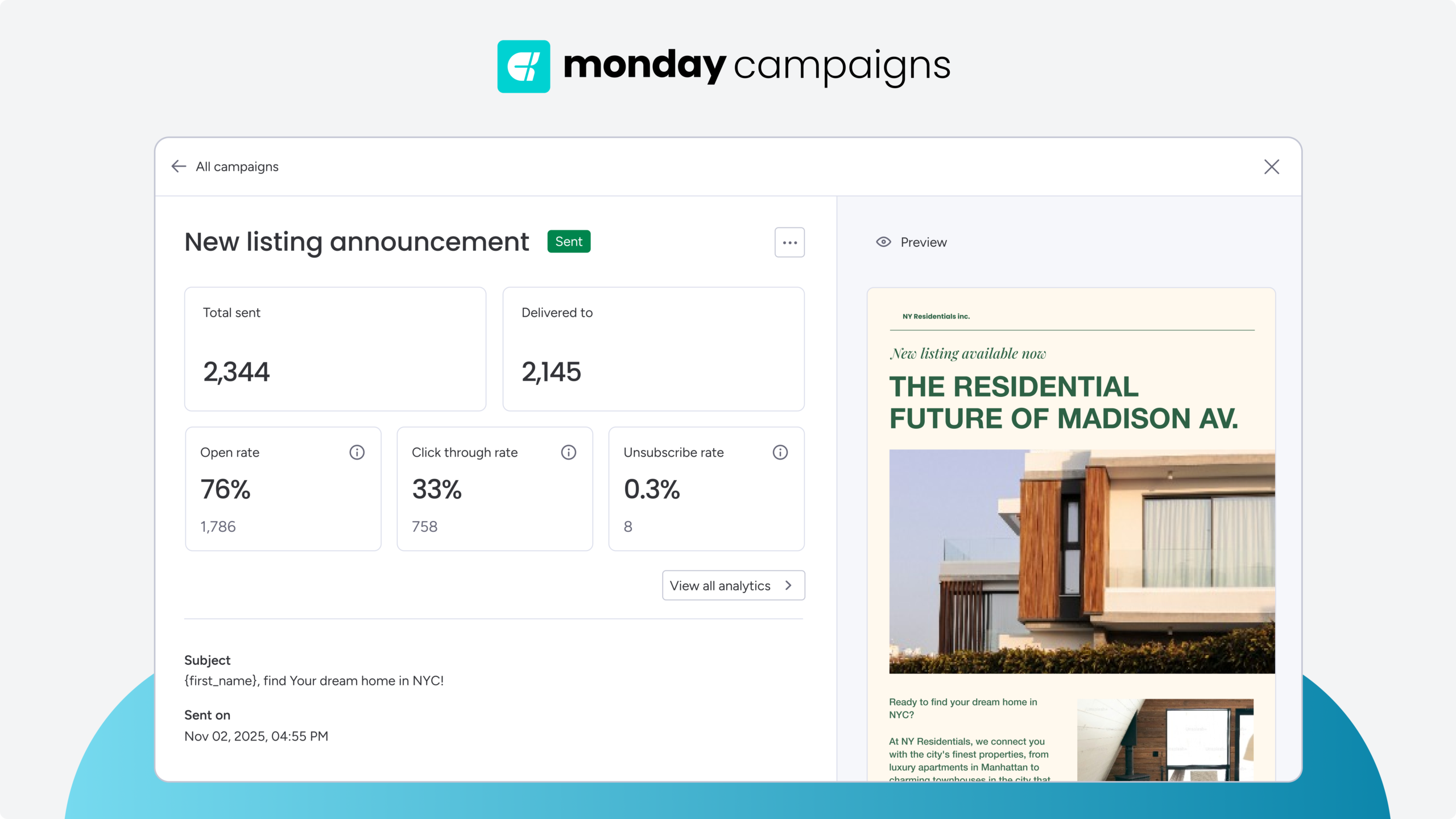
Follow-ups matter most when they move deals forward. Leaders want to know whether those emails created replies, meetings, and pipeline movement, and which adjustments actually move the needle.
| Metric | What it tells you | What to adjust |
|---|---|---|
| Reply rate | Whether the email started a conversation | Subject lines, relevance, opening |
| Meetings booked | Whether the email created momentum | CTA, timing, value offered |
| Pipeline influenced | Whether the email touched real opportunities | Segmentation, stage alignment |
Deliverability matters too. The strongest email still fails if it lands in spam. Common issues to watch for:
- Stale contacts: Bounces hurt sender reputation over time.
- Low-relevance messaging: Mass-send patterns reduce trust with inbox providers.
- Too many links or attachments: Extra clutter can hurt placement.
Campaign analytics that track total recipients, delivered rate, open rate, click rate, and unsubscribe rate (combined with native CRM connection) keep campaign activity close to lead conversion tracking.
7 sales follow-up best practices that get replies
Your execution habits shape results over time. These 7 practices help teams send follow-ups that feel more relevant and easier to act on, regardless of where the buyer is in the sales cycle:
- Keep it mobile-friendly: Use short paragraphs and one easy CTA.
- Reply in the same thread when it helps: Thread history saves the buyer time.
- Match the sender to the relationship: People reply to people, not generic team inboxes.
- Use buyer language: Mirror their wording from the call or meeting notes.
- Limit links and attachments: Include only what supports the next decision.
- Coordinate across channels: Space out email, calls, and LinkedIn touches with intent, a priority worth taking seriously given that B2B buyers now use an average of 10 channels across the purchasing journey, according to McKinsey’s 2026 Global B2B Pulse.
- Refresh templates regularly: Update language based on reply patterns and objections.
How monday campaigns supports sales follow-up emails
Great follow-ups depend on context. When campaign tools live inside your CRM, reps and marketers can see contact history, deal stage, and past engagement before they hit send. monday campaigns is part of the monday CRM suite, so every follow-up stays connected to the buyer it’s meant for, with no tab-switching or duct-taped spreadsheets.
That shared view also brings sales and marketing together around one goal. Marketing can support re-engagement and nurture paths, sellers can see who opened and clicked, and leaders get a full picture of campaign activity alongside deal progress. How much faster could your team move if everyone worked from the same data?
AI-generated follow-up campaigns
monday campaigns can build a follow-up campaign draft for you based on your sales insights and external data. It analyzes sales call notes, identifies the right audience, and drafts relevant copy in minutes. Your team spends less time piecing together scattered notes and more time acting on buyer intent.
On-brand email design with AI support
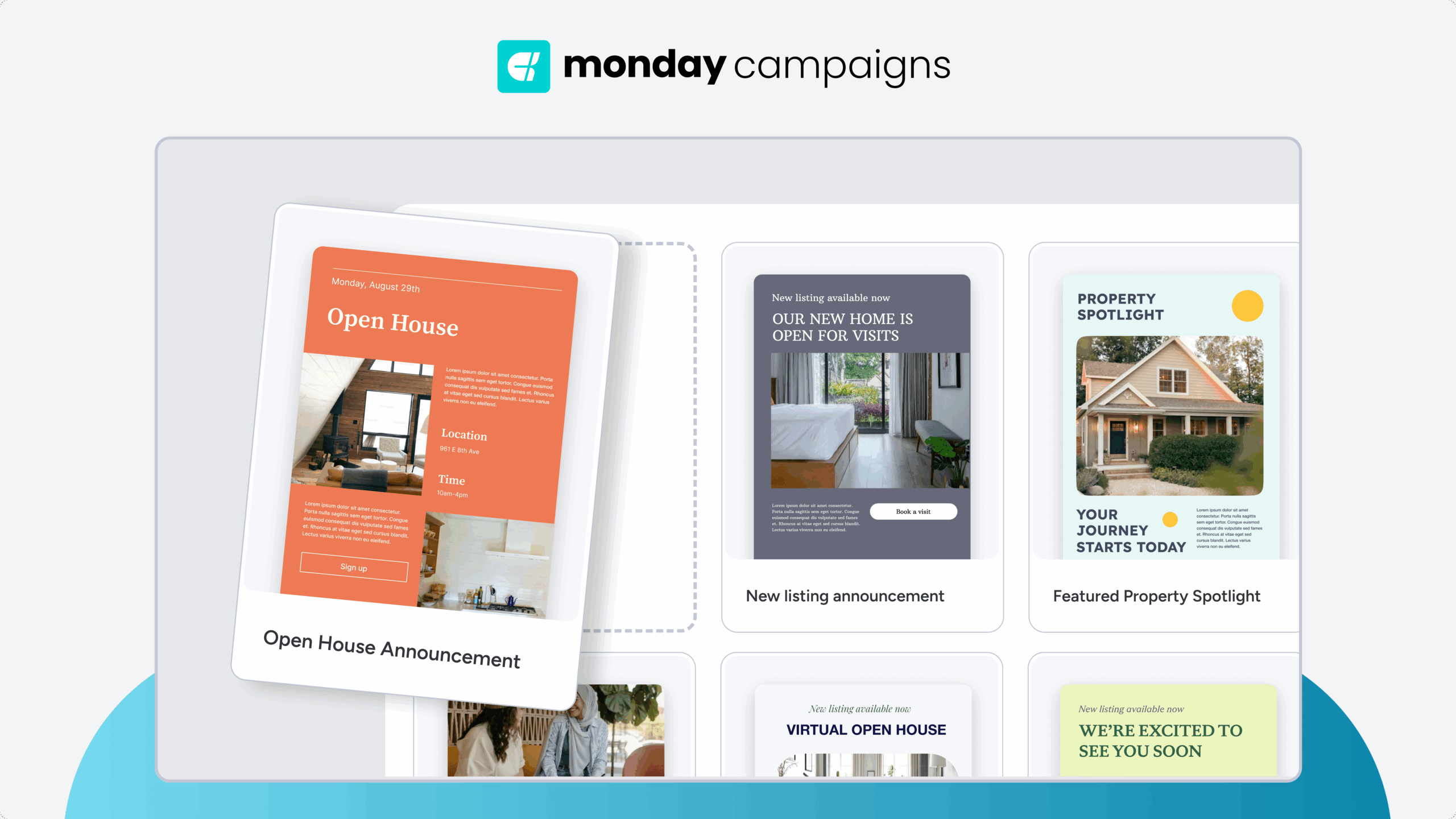
Use the drag-and-drop email editor to design follow-ups that match your brand, from text and images to dynamic fields. AI helps generate copy and checks for brand consistency along the way. Every post-demo note or proposal nudge looks polished and sounds like you.
CRM-powered dynamic segments
Build audiences straight from your CRM data, and watch them refresh as contact details change. AI can also suggest segments based on deal stage or recent activity, so the right message reaches the right buyer. Re-engagement emails and proposal follow-ups land with the relevance buyers expect.
Smart sending and performance tracking
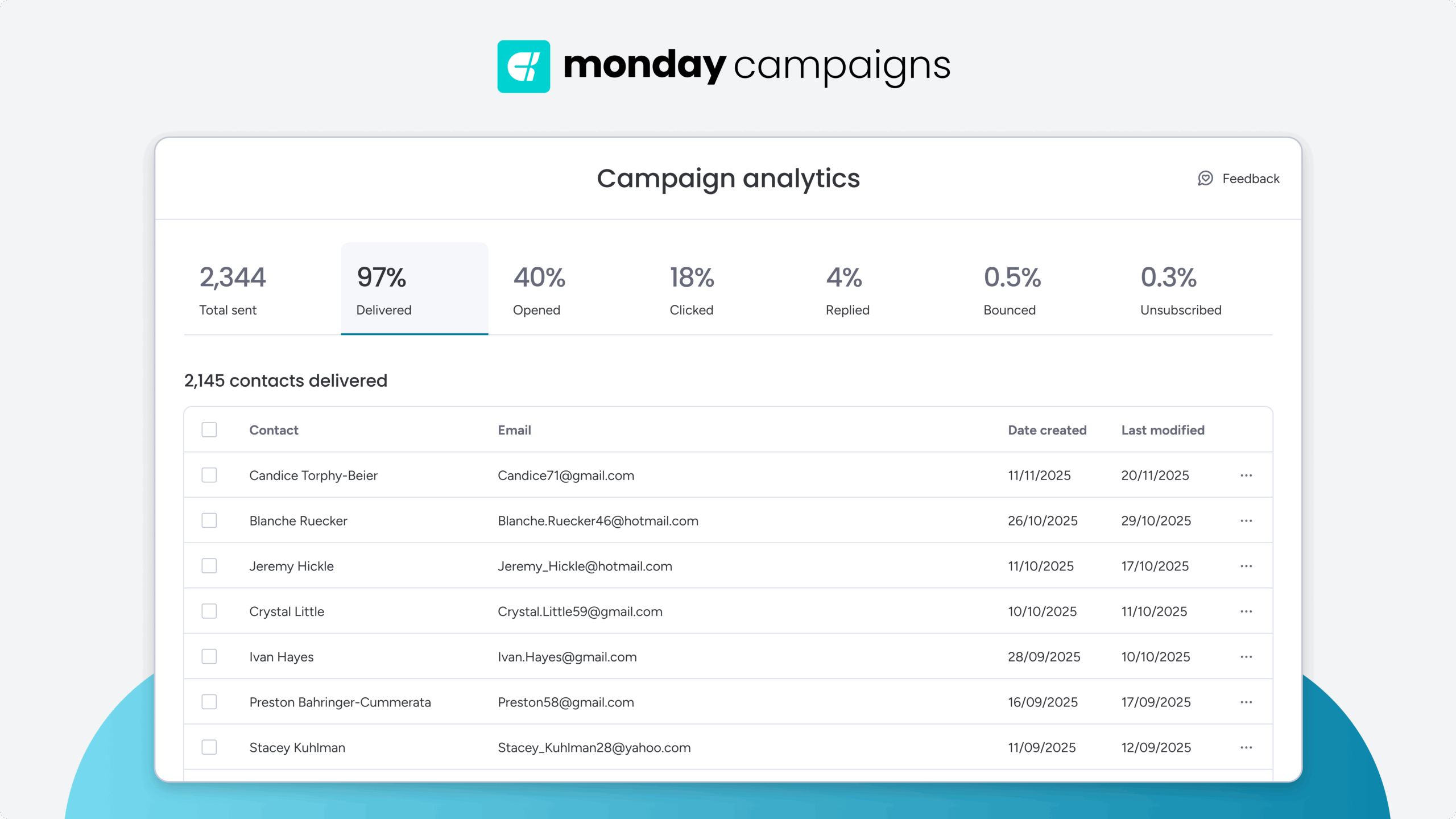
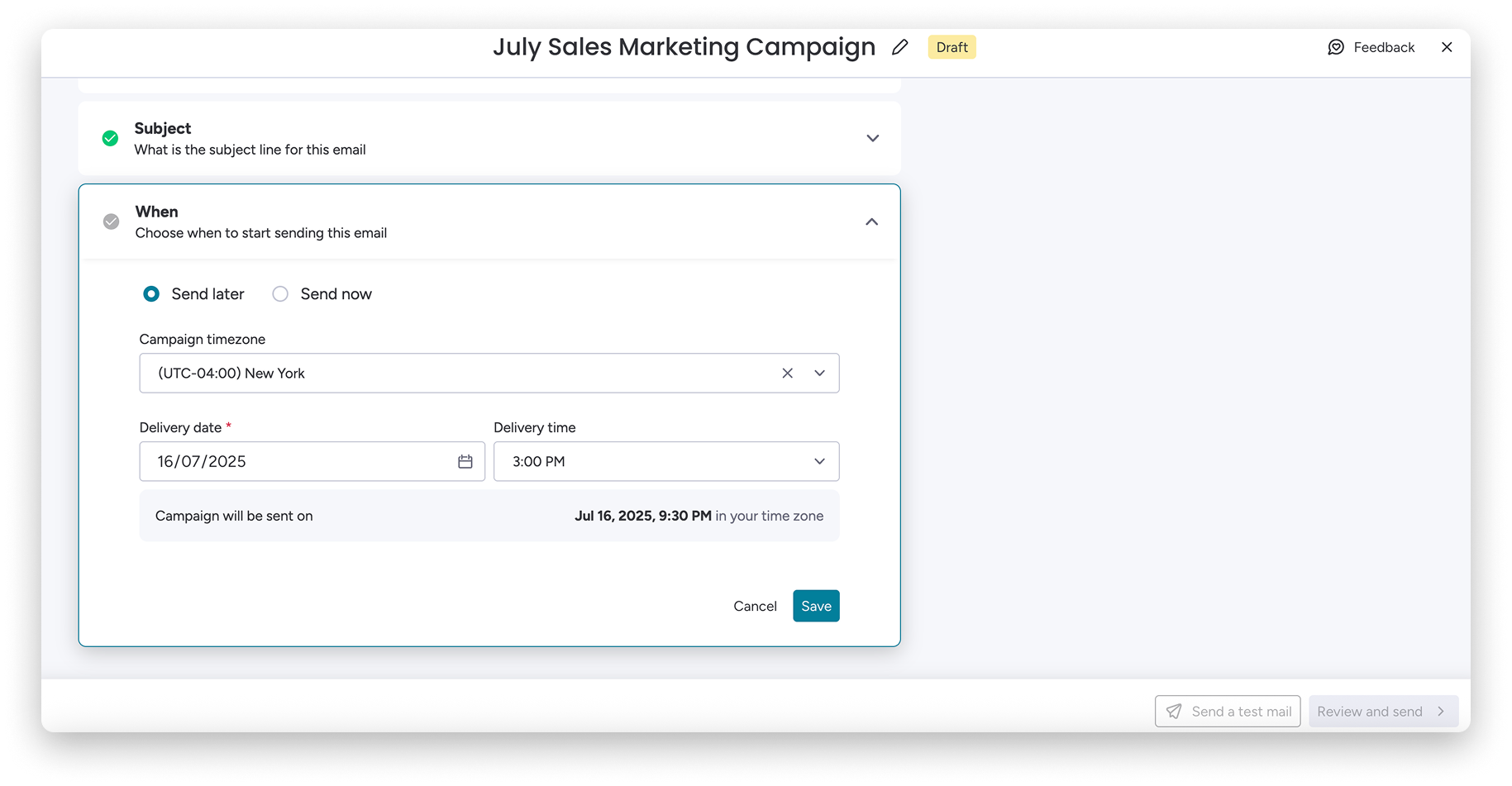
Schedule emails by date, time, and time zone, and use AI recommendations to find the best send time for your audience. Then track delivered, open, click, and unsubscribe rates in one place. Those insights show you what’s working and help you refine your next follow-up.
Turn every follow-up into your next opportunity
A well-timed, well-written follow-up email does more than keep a deal alive. It moves it forward. The templates, timing guidance, and personalization tips above give you a repeatable foundation for any scenario.
The real gain is consistency. When you tie follow-up activity to buyer signals, CRM data, and measurable outcomes, your team sends the right message at the right time to the right person. Ready to bring your follow-ups closer to your pipeline? With monday campaigns, you can build, send, and track every message from one connected workspace.
Try monday campaignsFAQs
What is the 2-2-2 rule in sales follow-up emails?
The 2-2-2 rule in sales follow-up emails is a simple pacing guide. Follow up 2 days after your first touch, keep the conversation going for 2 weeks, and wait 2 months before re-engaging a cold lead. It helps you stay present without overwhelming the buyer, and it gives each message room to land.
How do you professionally say you will follow up in an email?
To professionally say you will follow up in an email, name the timing and the purpose so the buyer knows what to expect. For example, write "I'll follow up next Tuesday with the timeline we discussed." A specific commitment sounds confident and respectful, and it shows you plan to keep your word.
What is a good example of a sales follow-up email after a call?
A good sales follow-up email after a call recaps one specific point from the conversation, confirms the next step, and asks for one easy reply. For example: "Thanks for today. You mentioned onboarding speed is a priority, so does Thursday at 2:00 p.m. work for a quick demo?" Short, personal, and simple to answer.
How many sales follow-up emails should you send before moving on?
How many sales follow-up emails you should send depends on the deal and the buyer, but 4-7 touches is a practical range. Each email should add something new, like a fresh insight or a useful resource. After that, move the lead into a lighter nurture path or close the loop respectfully.
What is the best time of day to send a sales follow-up email?
The best time of day to send a sales follow-up email is often mid-morning or mid-afternoon in the buyer's time zone, when inboxes are active but less crowded. Treat that as a starting point. Your own open and reply data will show you what works best for your audience, so test and refine.
How do you write a sales follow-up email without sounding pushy?
To write a sales follow-up email without sounding pushy, lead with real context from your last conversation, add one useful point, and ask for one specific next step. Focus on helping the buyer move forward instead of pressing for a decision. A friendly, low-effort ask keeps the tone warm and the reply easy.

 Get started